Who made the world? Who made the swan, and the black bear? Who made the grasshopper? This grasshopper, I mean- the one who has flung herself out of the grass, the one who is eating sugar out of my hand, who is moving her jaws back and forth instead of up and down- who is gazing around with her enormous and complicated eyes. Now she lifts her pale forearms and thoroughly washes her face. Now she snaps her wings open, and floats away. I don’t know exactly what a prayer is. I do know how to pay attention, how to fall down into the grass, how to kneel down in the grass, how to be idle and blessed, how to stroll through the fields, which is what I have been doing all day. Tell me, what else should I have done? Doesn’t everything die at last, and too soon? Tell me, what is it you plan to do with your one wild and precious life?
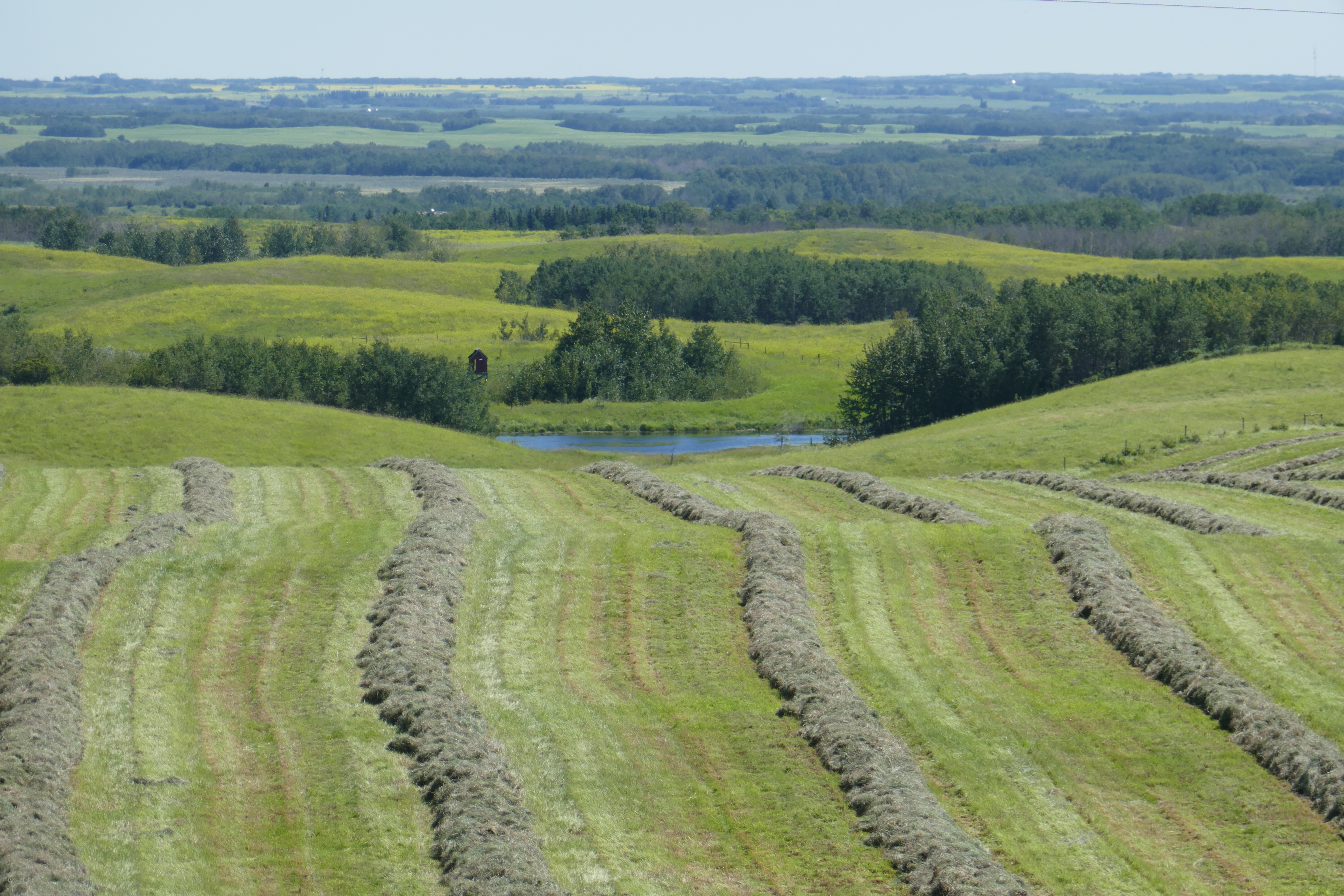
Driving along a prairie east west highway, see tawny hawks sit still and solemn on weathered wooden fence posts gazing out over the sun yellow canola fields bordered by green grass and blue sky. While crows hop on the edges of pot-hole ponds, and others soar on invisible cloudless slipstreams.
The linden tree we planted to replace the “sacred” grove of aspens, (those four slender white trunks and limbs finally reached their natural end) is now in full golden blossom, gives off that subtle, yet distinguishable sweet fragrance attracting big-bottomed bumblebees by the dozen.
This day I sit on the café patio of a favourite garden store. The masked hostess initially said there’d be an hour wait, then quickly waived it and me to the perfect table. Such kindness these days so easily brings me, touches me, moves me to tears. Thankful for sunglasses. I can see out. She can’t see in.
Creamy globes of hydrangea, some in pots, others topiary trees. Their petals flutter in a balmy breeze I’ve longed for ages to feel.
Piano muzak and signature water fountains, my aural companions. Another day of cloudless blue soothing warmth. Background melodies blur nearby conversations, but accentuate my silent solitude. Those familiar invite a slippery slope of remembering when
I was last here…lunch with friends, Winter cold. Swaddled in sweaters and down, toques, gloves and coats. Warm in the glow of time shared.
Floating down the river as a teenager with my girlfriends, or lounging on the air mattress in the cold quarry waters. Music blasting from the boom box above. Carefully passing the joint, we be jammin’.
My spoon glides through the layers of light whipped cream, denser coconut cream, then break though oven crisp pastry. My raison d’etre this favourite dessert.
Pachelbel’s canon whispers, evokes body memory to breathe slower, deeper. And then, like that golden dragonfly I watch my thoughts lift and land lightly
a friend who lost her husband to suicide another her brother won’t linger too long here, just enough for a steady pause and heartfelt prayer.
Finally a long awaited week of summer where the yellow circle weather icons make it possible to plan
a picnic, a patio visit, an alfresco dinner with friends, another day long road trip.
Slugs shrivel. Flowers flourish. Farmers’ crops and home gardens ripen, promising a bounty this week.Hallelujah! Cohen’s chords now proclaim. Bill received and paid. Thanks be given.
This being human is a guest house. Every morning a new arrival.
A joy, a depression, a meanness, some momentary awareness comes as an unexpected visitor.
Welcome and entertain them all! Even if they are a crowd of sorrows, who violently sweep your house empty of its furniture, still, treat each guest honorably. He may be clearing you out for some new delight.
The dark thought, the shame, the malice. meet them at the door laughing and invite them in.
Be grateful for whatever comes. because each has been sent as a guide from beyond.
I first wrote this post six months ago, before the pandemic, before life as any of us had known it would come to an abrupt stop. I kept it the draft folder, thought about it every week. I had just created this blog, A Wabi Sabi Life, wherein the beauty of my imperfect, sometimes broken, mostly well-lived life is acknowledged and honoured. Like my previous blog, A Moment Rescued, it’s premised on knowing that by naming and noticing life’s bits, one makes meaning and gives value to life. And this time, it’s the committed space to keep my promise to write, for if I am to become a writer, then write I must.
Six months ago I felt too vulnerable posting this. But after writing some about grief – mine, and loneliness – mine, while feeling no less vulnerable, I now have a bit more in the guts and gumption department to pull it out, dust it off and press “publish.” And too, knowing I have the companionship of others who have felt similarly in these covid days helps me call out “anxiety” as my on again, off again companion.
Arriving mostly unbidden…it’s like a cloud covering the sun, turning it suddenly chilly. Or the wind that moves through the just-a-moment-ago-motionless spruce and willows, as darkness gives over to dawn. Subtle. Nuanced. Insidious. And then, there it is, colouring my insides like an ink drop in water. Chest tightens. Thoughts on overdrive. Adrenaline racing. Washed over with dread and wrung out. And too, the gnawing visceral pain. During its visits, I’d often withdraw socially, mustering energy enough to get by and through to other side. In its aftermath, often the lingering fatigue and yes, shame.
“Sweetheart, you are in pain. Relax, take a breath.”
Sylvia Boorstein
For as long as I can remember, I’ve worried, been told I over-think, over-analyze. Told myself it’s a habit of mind that I was convinced helped me make sense and stable, the senseless and chaotic. Realized it’s like an addiction wreaking havoc with my energy, focus, and sleep; wasting my time, which becomes more precious with every day; withering my enjoyment and enthusiasm for life.
Named it anxiety. Now have learned it’s a manifestation, and not exaggeration, of “trauma.”
“Trauma is not an event. Trauma is the body’s protective response to an event – or a series of events- that it perceives as potentially dangerous. This perception may be accurate, inaccurate, or entirely imaginary.”
Resmaa Menakem, My Grandmother’s Hands, 2017
These words too, like those of Dr. Vivek Murthy’s on loneliness, are a stone dropped into the pond, rippling out in concentric circles of awareness, connection, awakening, and compassion.
These words, and others of Menakem’s – “we can have a trauma response to anything we perceive as a threat, not only to our physical safety, but to what we do, say, think, care about, believe in, or yearn for”– pretty well cover, for many of us, the territory of living, particularly now during the pandemic. Recognizing when something happens too fast, too much, too soon to the body, and causes it overwhelm, may create trauma. Understanding a body-embedded trauma response manifests as fight, flee, freeze, or as a combination of constriction, pain, fear, dread, anxiety, unpleasant thoughts, reactive behaviors, and other physical sensations.
Bessel van der Kolk, a global expert in the field of trauma research and treatment, and Rachel Yehuda‘s work on epigenetics, or cross generational trauma, brought a contemporary lens to my growing understanding. And Canadian physician Gabor Mate’s study of addiction, attachment-attunement, stress and illness, make more connections within and across disciplines and experiences.
“Trauma really does confront you with the best and the worst… you also see resiliency, the power of love, the power of caring, the power of commitment to oneself, the knowledge that there are things that are larger than our individual survival. And in some ways, I don’t think you can appreciate the glory of life unless you also know the dark side of life.”
Bessel van der Kolk, On Being with Krista Tippet, July 13, 2013
When I feel anxiety’s pain, relax, take a breath and ask “Sweetheart, are you feeling safe?” I create a sliver of space and that space, for a moment, makes possible a different story, and invites in a kindness.
“There is a crack in everything, that’s how the light gets in.”
Leonard Cohen
I’ve grown to appreciate, too, that I’m sensitive and empathic. True, the wounded healer‘s cocktail when mixed with anxiety, but not without bearing several double-edged gifts: a certain “prescience,” the ability to listen into the silence of words not spoken, to notice and name elements of the emotional field for people to feel deeply seen and heard, and to see connections and patterns among the disparate and barely perceptible, helping identify root causes.
Learning to claim and cherish my quirks and qualities, my flaws and features, naming this particular brokenness of anxiety and trauma gives me rest and brings me comfort. Perhaps in naming it here, you, too, may come to name and cherish those of yours.
With love and kindest regards.
“There are days I drop words of comfort on myself like falling rain and remember it is enough to be taken care of by my self.”
Last night as we ate dinner my husband remarked that it was all homemade. Yes, I had cooked and composed while he grilled, but what he meant was that every ingredient, except the seasonings and Italian olive oil and parmesan cheese, was locally produced. From the Hutterite grown potatoes, boiled and smashed, then mottled pink with a sauté of chopped beet greens and garlic scapes from our bi-weekly CSA bag of freshly harvested vegetables, and topped with a grating of that Italian cheese; to the grilled “cowboy” thick-cut pork chops purchased from our local butcher and CSA drop-off, smeared with a piquant carrot-top chimichurri; to the salad of brilliant green leaf lettuce and dark wild arugula, topped with cherry tomatoes and cucumbers, dressed in a light vineagrette. Every mouthful bursting with colour, alive with freshness, deeply satisfying.
Several years ago I won the big prize of a basket of locally produced good for the night’s best tweet, “live local with love.” Since, it’s become my slogan and hashtag for supporting local producers, artists, entrepreneurs and efforts. During the pandemic, it’s become the basis for choices and decisions to spend our resources of time, energy and money on these local mainstays, hopefully to ensure their current and future livelihood.
Last week, when a member of the CSA Facebook community mentioned the smallness that week’s harvest, I took a moment to kindly reply:
“Purchasing this CSA means helping “share” the risks that our producers take on for us. Bringing that risk to my doorstep, not having it anonymously “out there.” Sometimes that might mean abundance in the bag, other times it might mean fallow. Regardless, I am surprised, delighted, curious and appreciative. And I feel good knowing I am, in a very small way, doing what I can to say thank you, that what you (and other local producers we support) do matters a great deal. I notice your efforts. I care.“
Yesterday, walking Annie, I enjoyed a spontaneous conversation with a couple walking their dog. From across the street he recognized Annie and asked if sometimes we rode her off a bicycle. Yes, that’s my husband’s way of exercising both him and her, and that she, as have all our dogs, love the pull and rigor of it. One thing led to another and we started talking about life in these pandemic days, how we were coping, the gratitude for the companionship of our aging dogs, theirs, twelve years, ours ten. Then we talked food and the pleasure we take from its sourcing and preparation. Wine and meat, bagels and bread, cheese and fruit, we flitted on the surface, landing lightly on where to find, how to make, what to enjoy.
Bidding them a good day, I reveled in the sweetness of this brief encounter with strangers, who like me, love their dog, good food, and wine. I savored the knowing that cooking has been a main source of creative expression and consolation these many weeks. I felt the love for my Oma whose presence watches over me as I cook with utensils from her kitchen, shipped off to me years ago in her meticulously wrapped “care packages,” and with whom I pulled my first carrots from the warmth of her garden during cherieshed childhood summers spent at her home in New York state. And for a few moments, I welcomed back the grief of missing her, and of being unable to share a lovingly prepared homemade meal with friends, as now so much depends on weather to cooperate to be safe.
“When you learn to make things with your hands, you begin to awaken an awareness of the beauty and value of things in your life. Handmaking teaches us about slowness: the antidote to brevity and efficiency. It shows us, through the patience of our own hands, what goes into a thing. When we put those long efforts into bringing beauty into the world, we are honouring that which made us by creating as we have been created. We are taught to respect the slow, attentive piecing together of the life we yearn for.”
All the old signposts have fallen,
wood cracked and rotted,
atlases crumble, a pile of maps
flutter and dart like hummingbird
wings, the GPS signal is out of range.
Her compass slips from her hand,
the only thing she knows is that
she walks in circles now,
the trees ahead familiar
but really nothing is the same.
She wanders for hours, days,
weeks, loses track of the nights
as one tumbles into another.
Finally, she stops, builds
a bonfire from all the old maps
still in her pack, invites others
who wander by to gather,
each of them savor warmth
from flame and kindness,
laugh while they tell stories
of how they once knew the way.
Her eyes meet another,
hand outstretched, together
their breath rises in white spirals
into cold air and they
stay still long enough
to learn to love the quiet ache,
the old longing to be sure,
to see the country of certainty
as a memory receding
like an evening horizon until
there is only the black bowl of sky.
They begin to hear the whisper
of breezes, the secrets of birds,
follow the underground stream
that runs through each of them,
and they no longer ask
which way to go,
but sit and savor this
together, under night sky
illumined by fire and stars.
Today’s blog is late. Moved to write, I got up at four, and while I finished before my usual 7 am posting time, I needed to sit awhile with this before pressing “publish.”
I’m lonely.
I think this might be, in part, why I’ve been having a hard time finding words, why I’ve been feeling fallow of late. Realizing this, admitting this, to myself, here, feels vulnerable. Yet it’s absolutely true. And perhaps in doing so, words might now come easier for me. I don’t know.
I do know, that when I walked Annie last week and I listened to Brene Brown’s podcast with Dr. Vivek Murthy, the 19th Surgeon General of the United States and author of Together: The Healing Power of Connection in a Sometimes Lonely World, I felt a big penny drop deep inside. In mid-April, a month into the global COVID-19 lockdown, they talked about loneliness and its huge physical and emotional toll on social connection. Three months later and I’m feeling its price.
The early days of COVID-19, when winter hung on with its snow and cold, the days had not yet appeared significantly lighter and longer, I enjoyed the prolonged cocooning it invited. While odd to see few cars on the streets, and even fewer folks around, I felt comfortable and at home in the stillness and quiet that would only come during those occasional holydays or snow days when everyone stayed home. But now, four months later, into summer with its longer days, and our staged re-entry, I find it harder to navigate. Each week it becomes more apparent that life as I have come to know it, with its felt rhythms and routines, conversations and connections, is no longer, at least not yet. Too, the utter uncertainty as to what I might next conjure in the way of work baffles and confounds.
Grief. I’ve spoken of it here on this platform over the months.
But when I heard Dr. Murthy define loneliness as the gap between the connections that you need and the social connections that you currently have, I knew “I am lonely.”
Murthy describes three dimensions of loneliness to reflect the particular type of relationship we might be missing:
Emotional loneliness is missing that close confidant or intimate partner with whom you share a deep mutual bond of affection and trust.
Relational or social loneliness is the yearning for quality friendships and social companionship and support.
Collective loneliness is the hunger for a network or community of people who share your sense of purpose and interests.
“Loneliness is not a concept, it is the body constellating, attempting to become proximate and even join with other bodies, through physical touch, through conversation or the mediation of the intellect and the imagination.”
David Whyte, “Loneliness, ” in Consolations: The Solace, Nourishment and Underlying Meaning of Everyday Words, 2015
So despite, blessedly, having a loving, steadfast husband of forty years, and family including my healthy, alert, fully engaged parents, I feel lonely.
I have dear friends, near and far. We stay in touch. Yet, I feel lonely for the in person, physical, face to face, exchange of energy and ideas and feelings and smiles and tears and embraces. For that “mediation of the intellect and the imagination.”
Now living into a different age and stage of life, my felt sense of community has shifted. Those ready-made places and affiliations, conveniently arrived at through work, are no longer. So how to create new connections? And how to do so under these peculiar circumstances induced by the pandemic?
As I’m writing this, I feel my body sigh in relief, with recognition. And, too, the toll. Anxiety that hurts. Insomnia, most often for me early morning waking at two or three. Lethargy. Lack of focus. Aimlessness.
In the last few days, I’ve begun to talk about this.
I’m reaching out to friends to find ways to “safely” meet together, in real time, in our real bodies.
I have “professional” support. When I arrived home from three months living in Europe, culture shocked, rattled to the bone by family upheavals, destabilized with the news my position at work had been “abolished,” grieving the passing of our Lady dog, I sank. And from that place I reached out to make an appointment with a therapist I’d once recommended to friend. I knew I needed to take my own advice. I’ve been seeing her ever since. Ten times a year. Like a zen sitting – calming, soothing, regulating. Having myself worked as a therapist, and years ago been involved in analytic process work, I recognize how the practice has changed, now informed by research in trauma and its neuro-physiological-emotional impacts. That hour, with me and her, helps me show up well in this world. I smile imagining I’ll maintain this part of my self-care practice for the rest of my days.
“Allow your loneliness time To dissolve the shell of dross That had closed around you; Choose in this severe silence To hear the one true voice Your rushed life fears: Cradle yourself like a child Learning to trust what emerges, So that gradually You may come to know That deep in that black hole You will find the blue flower That holds the mystical light Which will illuminate in you The glimmer of springtime.”
John O’Donohue, “For Loneliness,” an excerpt in To Bless the Space Between Us, 2008
Loneliness. One of the hidden, insidious impacts of life during this pandemic. Even more so. Because of it.
Paradoxically, I know I’m not alone with loneliness. So, let’s not suffer this one alone. Talk about it. Reach out. Get help.
Sorrow, it is not true that I know you; you are the nostalgia for a good life, and the aloneness of the soul in shadow, the sailing ship without wreck and without guide.
Like an abandoned dog who cannot find a smell or a track and roams along the roads, with no road, like the child who in a night of the fair
gets lost among the crowd, and the air is dusty, and the candles fluttering — astounded, his heart weighed down by music and by pain;
that’s how I am, drunk, sad by nature, a mad and lunar guitarist, a poet, and an ordinary (wo)man lost in dreams, searching constantly for God among the mists.
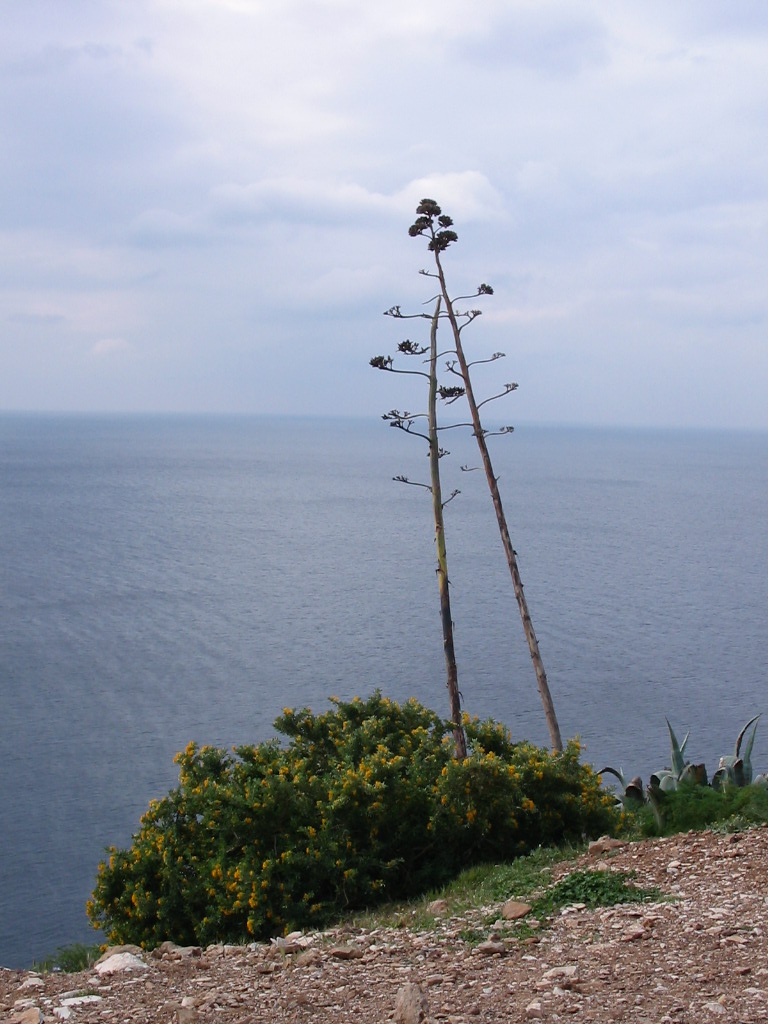
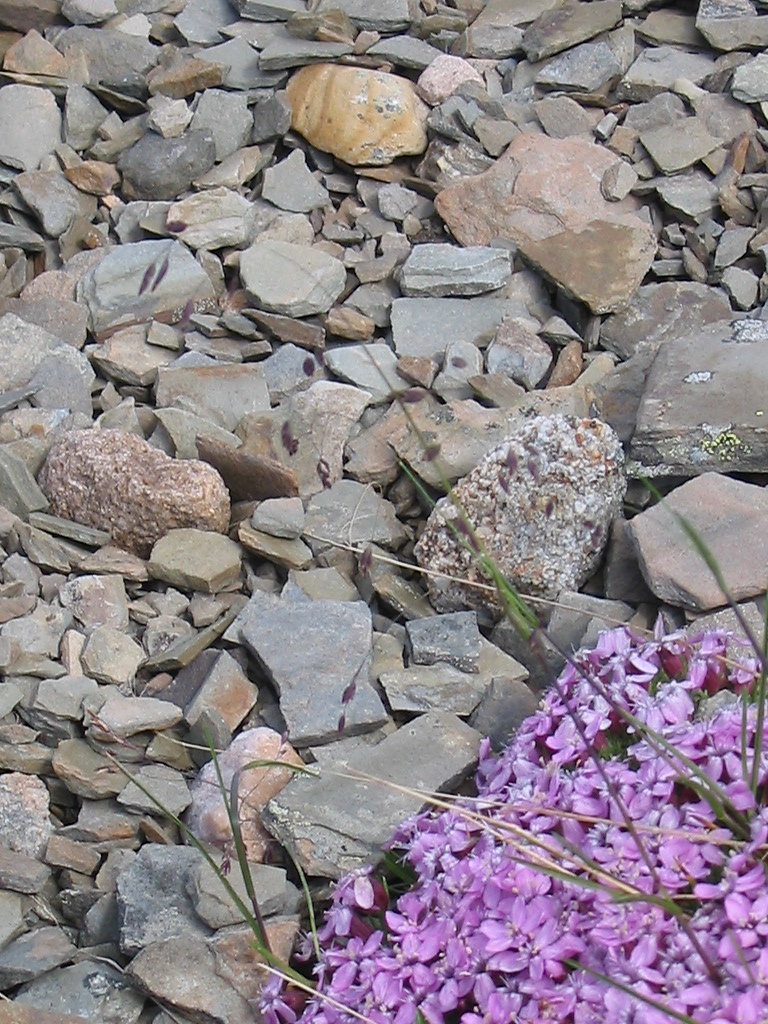
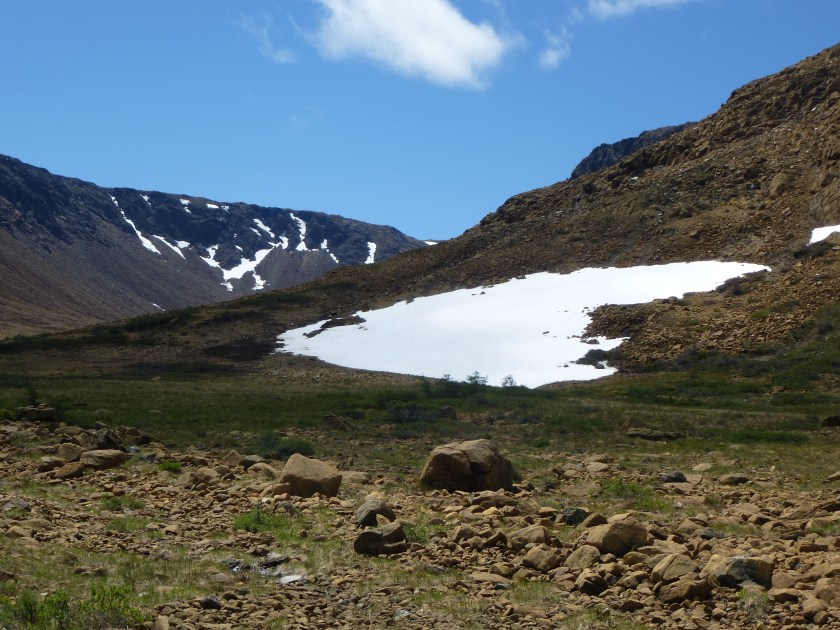
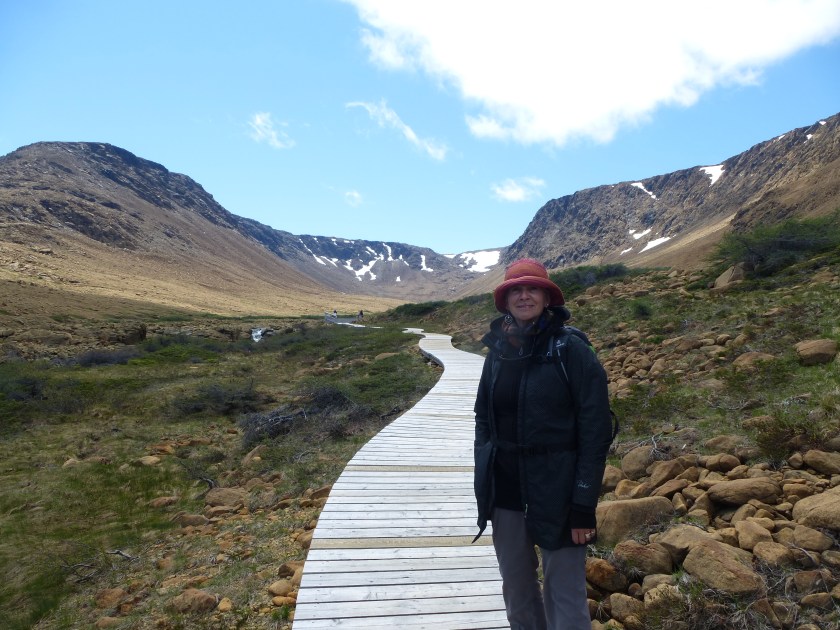
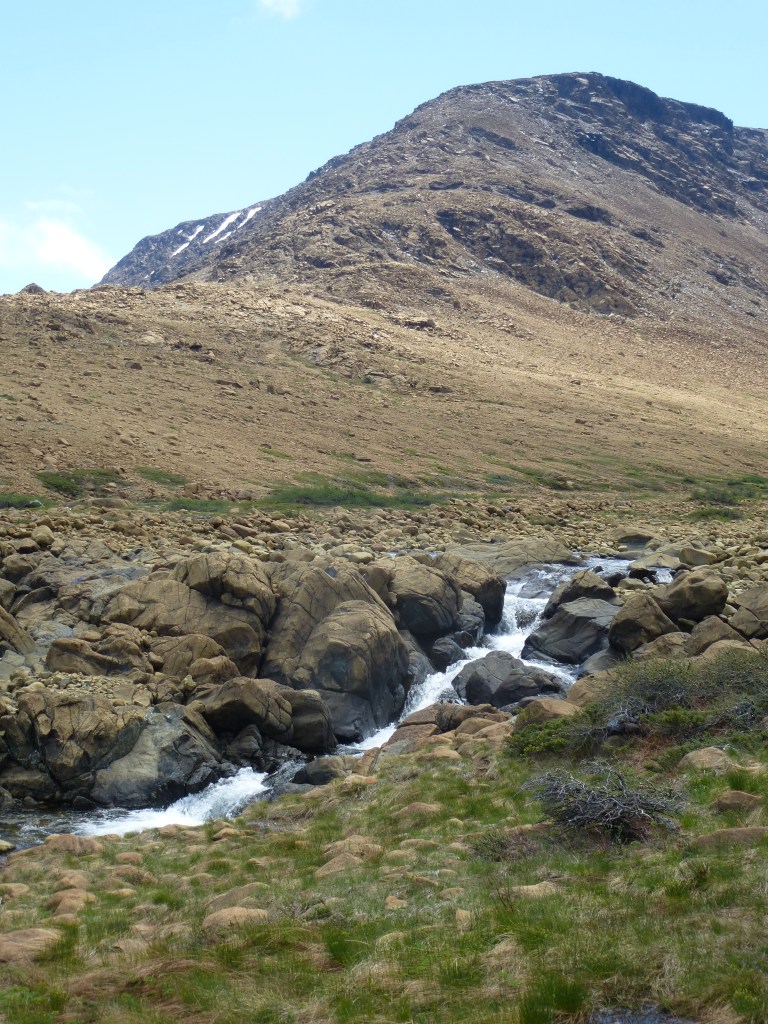
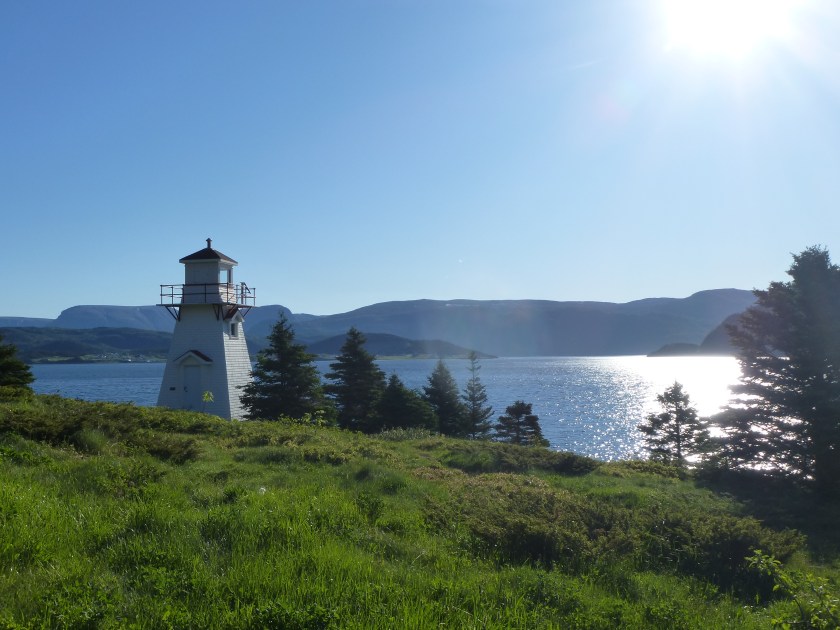
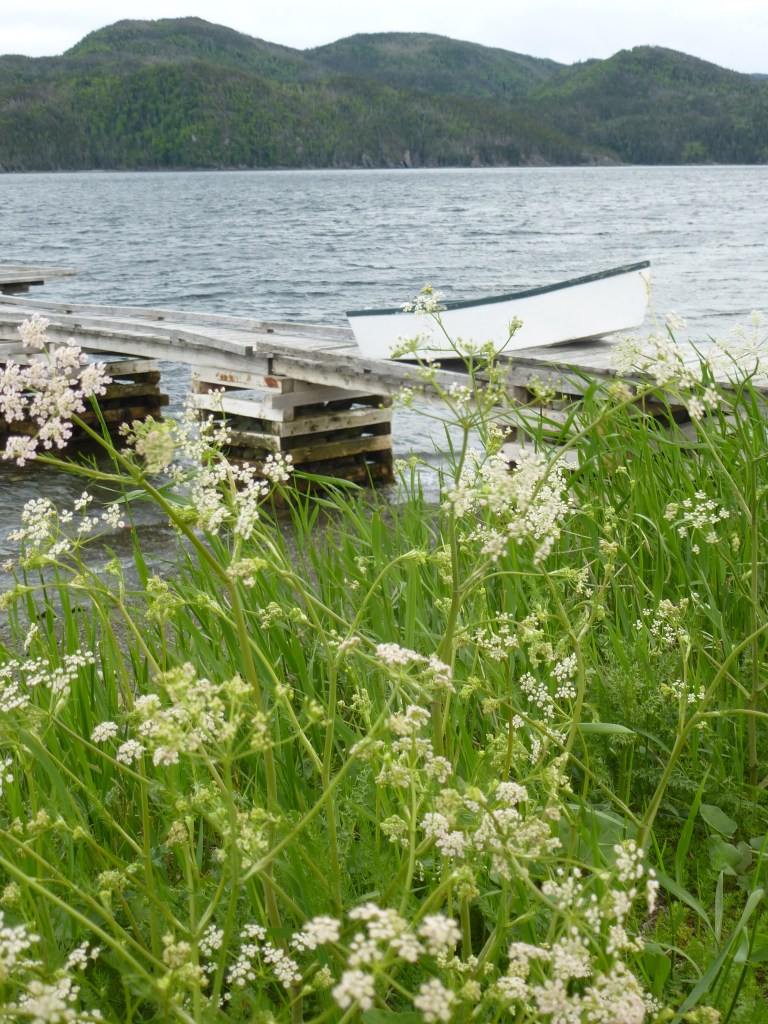
Memories of traveling to Newfoundland five years ago were evoked this week, thanks to photos I’d posted on Face Book coming back to remind me, and viewing the beautifully shot episode “Strange & Familiar: Architecture on Fogo Island.” I didn’t get to Fogo Island then. Hadn’t even known about it. But it’s been on my list since, and visiting may come sooner than later as international travel might now be a thing of the past.
That trip, with its magnificent vistas of land, sea and sky, awakened a deep love for the wild and inspired words that remarkably won me a writing contest sponsored by the tour company.
It’s been good during these my fallow days – when the only vistas I’m seeing are those in my back yard and community, and the only words that come are few and far between – to remember back then, to trust in now.
Seeing Newfoundland in Six Vignettes
I The Table Lands, Gros Morne June 20, 2015
The vastness of this Island’s spirit, holding the Earth’s very own heart exposed to all the elements.
A paradox of deep beauty, magnificence and awe, with a cutting desperation for survival.
A people who, fierce and proud – despite what we mainlanders think – know what matters.
This mater.
This Mother.
Earth.
II Woody Point, Gros Morne Early Sunday Summer Solstice Morn June 21, 2015
A Bonne Bay full of Sun on this Sacred Sunday Summer Solstice morn.
Shhhh… the only sounds…
A choir of birds. Robin singing, thrilling, trilling. Black Crow cawing. Meadow Lark warbling. Red winged Blackbird wooing.
Blood red blossoms about to burst forth on the front yard crab apple tree.
Water softly lapping on the stony shore.
Locals sitting on their front porch stoops, sipping coffee, smoking the day’s first cigarette.
The “from aways” their laughter and chatter break the spell.
I stand on yet another threshold looking for the middle way.
III Norris Point, Gros Morne Our Summer Solstice Prayer June 21, 2015
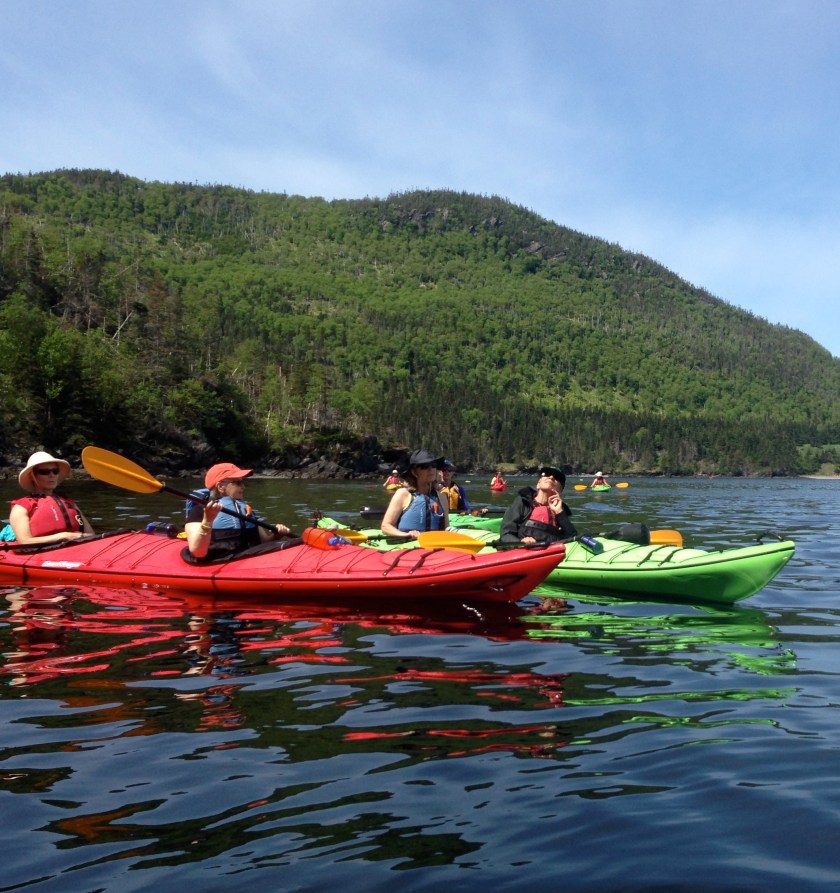
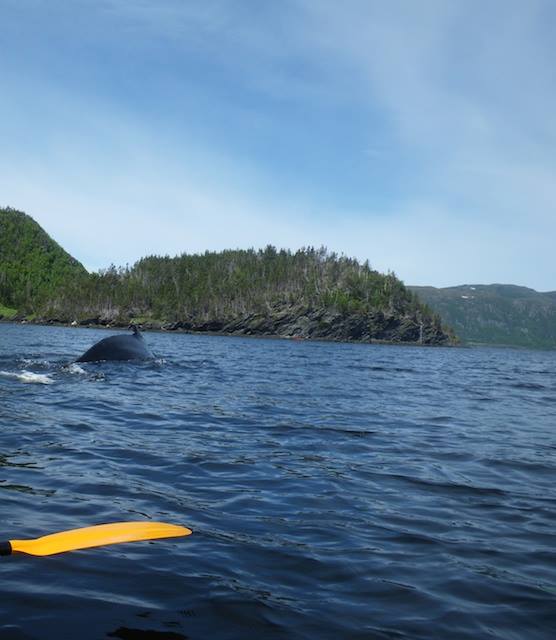
Intention held in the hearts and minds of twelve women wild to witness the whale, grand dame of our species.
A blow…once, twice seen along the rock and tree faced cliff.
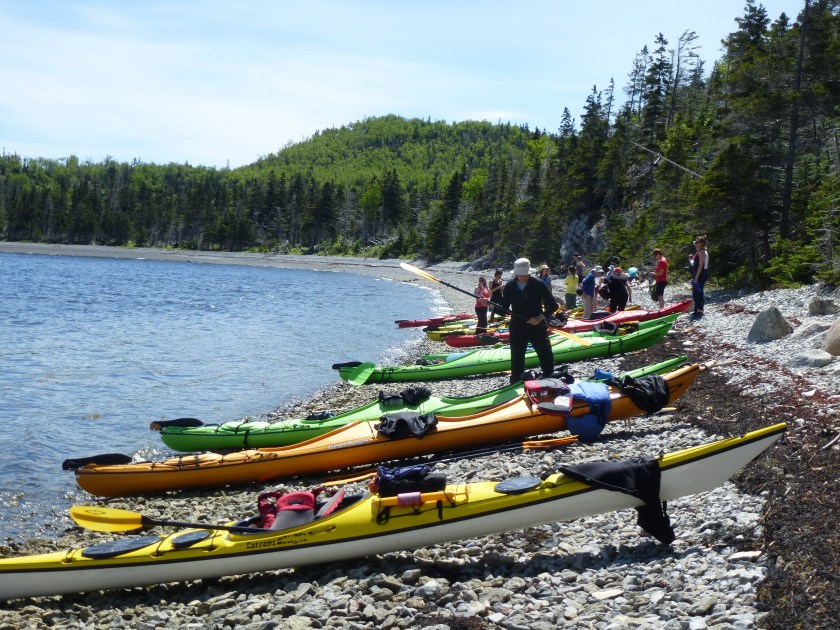
Colour full kayaks skim the surface, carry us Home.
Our hands drum the chant of welcome, invoking her wisdom, calling her in.
A tail sighted…once, twice breaking though the glassy bay.
A sudden breach.
Our collective Heart leaps with the closeness of her show.
A prayer received and delivered.
IV Woody Point, Gros Morne Last Breakfast at the Granite Cafe June 22, 2015
“I’d be nervous all the time,” explains the sweet young server (can’t be more than twenty-two, eyebrow piercing twinkles a delicate blue, matches her eyes), sharing a bit about her baby girl, why she’ll stay put on Woody Point, where the closest traffic light is in Corner Brook, so Adrianna can run free.
V Western Brook Pond, Gros Morne June 22, 2015
At last.
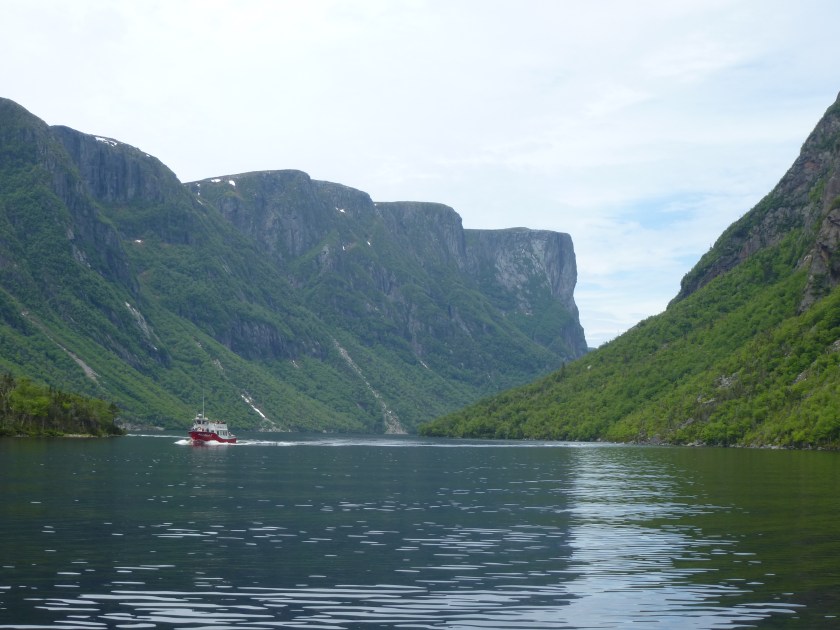
That long-awaited landscape. The one I first saw on TV. You know, the one that grabbed my Heart and fired my Imagination. The one with the cliffs.
“I’d like to go there one day.”
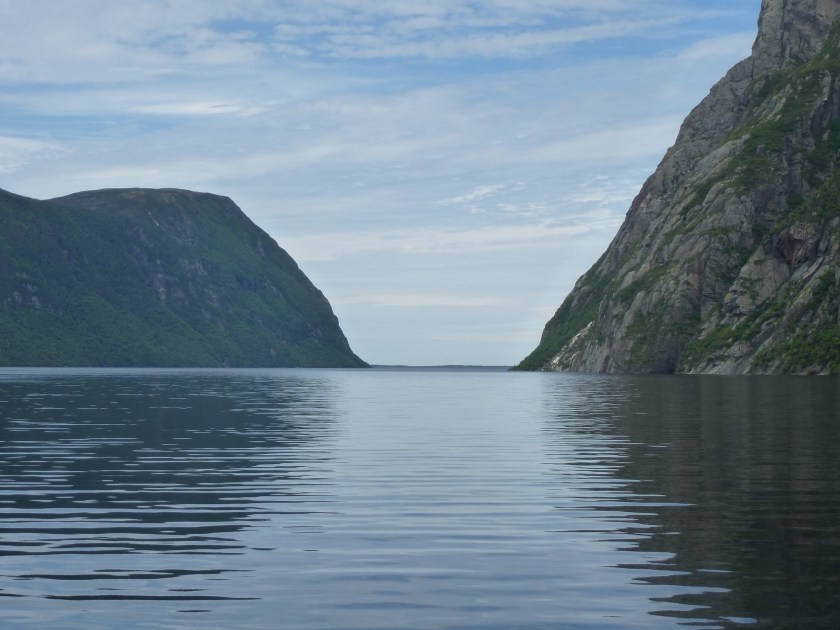
So what fired the Imagination of those ancient mariners? The ones whose fjords evoke the very one I’m travelling down right now?
VI Long Time Home L’Anse aux Meadows and Home July 7, 2015
Two days travelling then waiting. Anticipation grows with the wish to be settled back home. Thankful all uneventful, as a day later, and for several more, re-routing, premature landings, delays, all in response to bomb threats on my airline.
The world’s madness – is it more than ever, or the consequence of instantaneous connection – hits my consciousness broadside, closer to home.
And what of those ancient mariners and the many days’ and weeks’ and months’ anticipation and sailing across the ocean? What bold imagination and steel-hearted courage, madness even, drove them from their Nordic homeland to what we now call Iceland, Greenland? And then further south, to be the first of their kind, my kind, to settle on this, my home and native land?
L’Anse aux Meadows, the very tip of Newfoundland’s northern most shore. One thousand years ago. We now know centuries before the likes of men we call Cabot, Columbus, Cartier.
When I recall the day I disembarked from the van, set foot on and looked out over that first “from away settlement,” over the bare expanse of naked land and sea and sky – cold and windy and grey and raining – I can hardly imagine, in a thousand years, their first reaction to seeing and setting foot. Unless I search in my own DNA and evoke that of my father’s, when he first saw, from the ship carrying him across the ocean from post-war Germany, and set foot on the land that he would claim and make home, that day over a mid-century ago.



 Hallelujah! Cohen’s chords now proclaim.











 A Wabi Sabi Life