The Perfect Place, The Right Time

โ€œAnd the road is plenty wide and welcoming,
speaking out to all,
This is the perfect place,
this is the right time,
this is where wish becomes possible.โ€

Susan Frybort, โ€œOn the Road of Great Wonder,โ€
in Hope is a Traveler, 2015

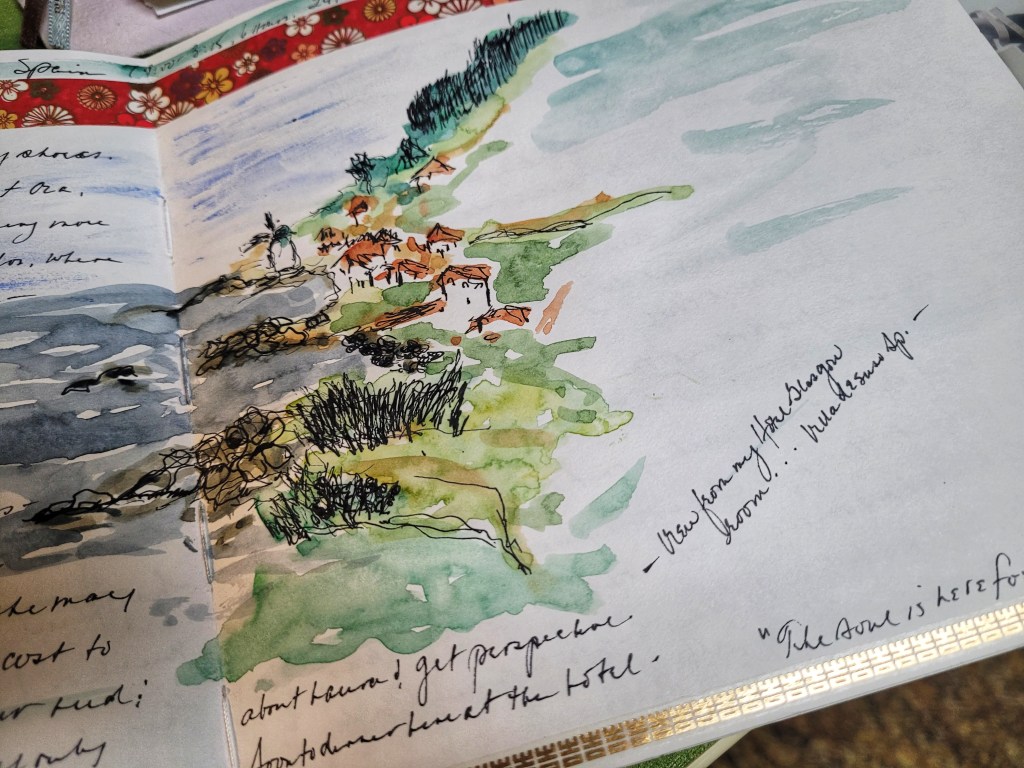
This is the opening quote to a story I wrote about walking my Camino last year. Always intent to write more about that month long experience, one over twenty years in the making, but having felt stuck for months, I enrolled in an eight-week online course beautifully taught by local author and scholar Jenna Butler and hosted by Calgary’s Alexandra Writers’ Centre. I’d reached out to Jenna with hope that by using the sensory explorations and writing prompts in “Chronicling Our Personal Relationship with Place,” I’d be inspired to write. I took as kismet – “the perfect place… the right time… where wish becomes possible” – the course’s starting date as it coincided with the evening before I began walking my Camino a year ago. To deepen into the course’s invitation, I posted on social media a few select Camino photos and salient recollections from each day I had walked last year, May 10-30. Too, I’ve been drawn to learn about some literary forms that I thought would lend themselves to my vision of combining the reworked lyric essays from last year’s Portuguese Coastal Camino blog, my journal entries, and those from the guide book provided by Portugal Green Walks, and my newly emerging poetry.
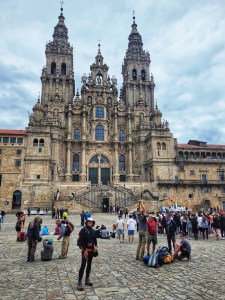
Half way through the course and my hesitation to begin has persisted. Iโ€™ve felt afraid to take the first step, not knowing what Iโ€™m getting myself into, or where this is going to take me, despite having reached Santiago a year ago. Iโ€™ve wondered if Camino doesnโ€™t want, or isnโ€™t yet ready for me to walk on or with him again. Yes, I am animating Camino, doing so out of reverence and regard for its centuries of history, people and their traditions, cultures and stories, and the more than human elements continuously making for its beauty and its challenges. And yes, I admit, maybe itโ€™s simply me who hasn’t been ready, with it simply being a matter of not yet the right time. Then, after a few hours over the past month preparing – compiling my blog posts into a single document and adding my recent Instagram posts; propping up on my writing table my photo journal with its cover photo of me standing in front of the cathedral the day I arrived; stacking beside me my travel journal, course notes, and Portugal Green Walks’ self guided program notes – this week I finally lifted open my laptop and began. While I’d thought I’d use for incentive the June 30th chapbook submission deadline with a literary journal who recently published one of my poems, given the experimental nature of this undertaking, braiding together from several sources, and wanting to embody in my writing now how I walked then – sauntering to enjoy the vistas – I’ve decided wisely let that go.

Albeit reluctantly and with regret, I’m using the gift of time received by finally having conceded a week ago that I must step away from playing pickleball. A game I enjoy for its physicality and camaraderie with women, who like me, love being fully engaged in life. A game my chiropractor has suggested I may need to sit out as for the past three months I’ve been nursing an injured metatarsal. Despite regular appointments, taking a few days off from the game here and there, icing, and copious applications of extra strength Volartin, it’s been one healing step forward and several back. Compounding this is the pressure, with worry enough to wake me, of needing to seriously train for another long walk in September. This one not a saunter. This one strenuous with nearly double the daily kilometers over sixteen days, and steady ascents and descents. All a natural consequence of aging, this has brought its own grief as I face such realities. My foot and body as whole are feeling better, and I’m hoping this, too, will become “the perfect place… the right time… where wish becomes possible.”

***

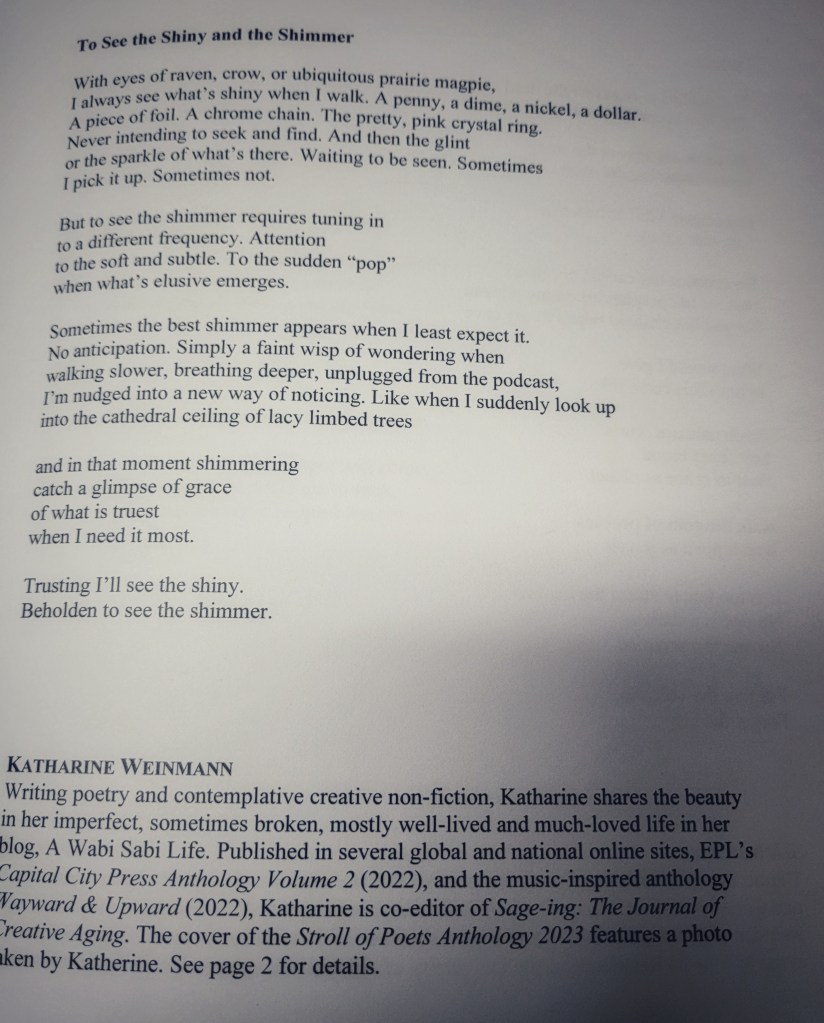
As I’ve written here before, the writerly life is a lonely one, rife with rejection. Just this morning I received two. On the up side, I finally received a print copy of the local poetry anthology featuring both my photo as cover and poem inside, and in the past month, several other photos have been accepted by literary journals making me wonder if I should shift my genre!

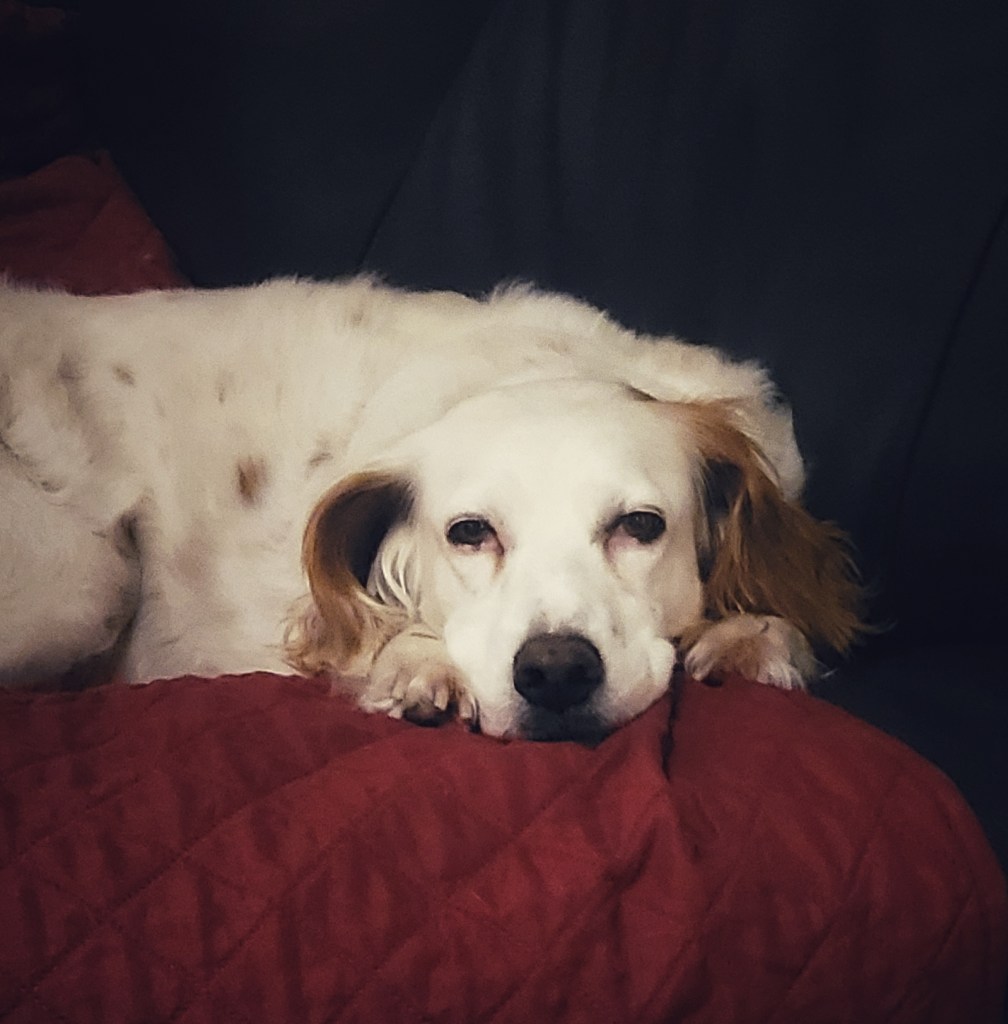
As it’s been several weeks since I posted a Monday morning blog, by way of update, our dear Annie dog has had a remarkable recovery from the stroke she suffered the end of April. So much so, I call her our “Lazarus,” as it truly feels she rose from a near death listlessness during those early days. Today, she has returned to all the ways in which she is uniquely Annie to and with us, including interrupting my work at noon by persistently placing her big right front paw on my lap or keyboard. Now I kiss it and her in ever welcome gratitude.

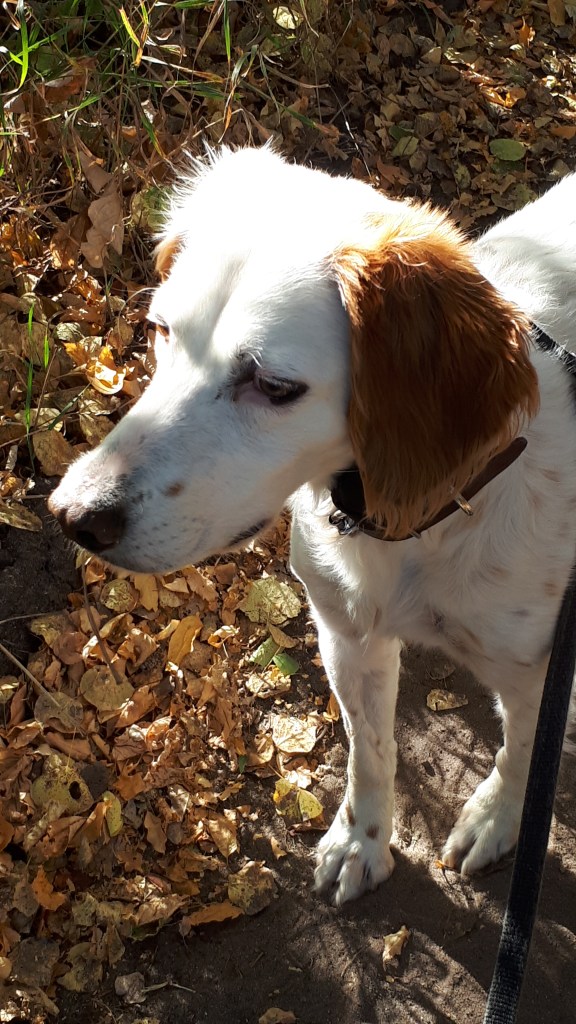
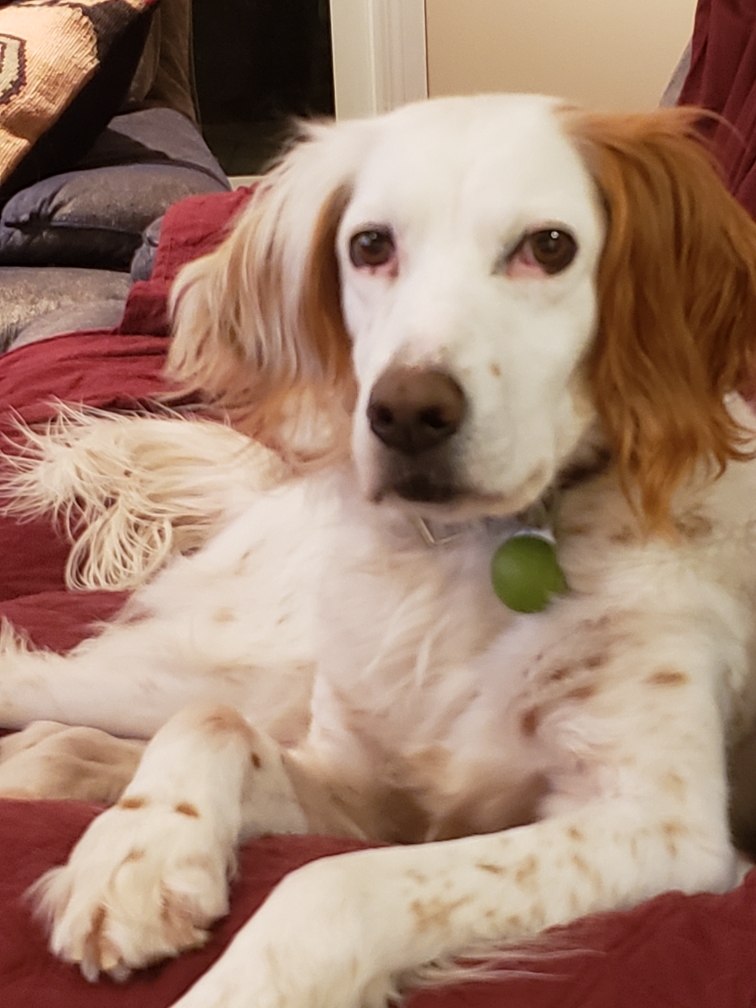
walking with Annie “Bright Eyes”, June 5, 2023

Much love and kindest regards, dear friends. May this post find you on roads plenty wide and welcoming.

How to Walk an Old Dog

…so maybe just relax…

HOW TO WALK AN OLD DOG

Give up on your agenda – this
is exploration, not exercise.
She can’t hear you calling her on,
but then, you can’t smell whatever
is so intriguing about that clump of grass,
so maybe just relax. Stop counting steps.
Don’t even count birds, or minutes
or the things you have left to do
on your pressing and eternal list.
Move gently into the immeasurable.
Stop to greet children. Consider
that the most fascinating thing in the world
could be your neighbor’s garbage can.
Observe without judgement
what is near to hand – even if what you see
is the halt in her step, the way
her spine has begun to show. Walk
just long enough to remember
that love is not an antidote to death,
but loss is not the opposite of life.

– Lynn Ungar, May 2, 2023 –

Over the past year at least, I’ve been saying that walking Annie is no longer exercise. It’s fresh air, the gift of being outside noticing life around us. That I may walk 10,000 steps, but certainly not aerobically. And I’ve long known for a dog, walking is “scent shopping,” so I best be prepared for meandering. But in the last two weeks, the gift of this oh-so-perfectly-timed poem, could not be truer.

Some of you might know that two weeks ago yesterday – after our morning walk, treats in the kitchen, sleeping…errrr…supervising our work in the office, and then going outside to her kennel when the house cleaners arrived – Annie suddenly was not ok. Disoriented, barely able to walk let alone stand upright, shallow breathing, drooling, incontinent – the ER vet clinic gave us a diagnosis of THC poisoning, an increasingly common incident given our carelessness with roaches and edibles. We were given a prognosis, took her in to see our vet the following morning, who confirmed the diagnosis, but by Sunday her condition was not improving. No appetite nor eating, so we bought electrolytes for her water (on the suggestion from a Facebook friend who saw my posting). Her walk had not improved, in fact we were seeing more weakening. But of most concern was seeing her paw at her right eye, and when I did the reflex test I’d seen the vets do, she didn’t blink, leading us to believe she’d suffered vision loss. A return visit to the vet on Monday morning confirmed my first, and our worst suspicions: she’d most likely had a stroke. “She’ll not live to 17,” the vet said, referring to Annie’s predecessor, Peggy, who died late into her 17th year. And with further examination, and seeing Annie’s lethargy, I wondered if she’d last the week.

After deliberation, we decided to pass on the neuro consult, not wanting to add further distress to Annie with the battery of tests required pre-exam. We know she is happiest with us, and so we’d keep her home, tend to her best we could, hope for the best, and pray for a miracle.

This is my “Lazarus” story, because with every passing day, Annie has returned to herself, engaging in all the patterns and endearing ways she is who she is, with us. Looking eagerly for me to get her leash to walk, barking at the neighbors (fulfilling her job as guard dog), finally eating regularly with creative concoctions of smelly canned fish to pique her interest, remembering to remind us to fetch her favourite dessert of dentistix, and following me down into the office where she takes her place on her supervisor’s cushion. The big right front paw she would persistently, heavily place on my keyboard at noon to signal lunch and a walk…the one I would curse for interrupting my work…that has been slow to return being the side that became weakened. But tonight, she placed it on me as I napped, reminding me of dinner time. It comes. I pray it comes in the office, on my keyboard, and I will kiss and welcome it back.

Annie is a bird dog, smelling her particular stock in trade. We think her loss of vision and diminished sense of smell have been the most disorienting for her, with her hearing less for the past couple of years. Sleeping more than usual with the trauma of it all, and the neurological stress has been exhausting. At yesterday’s chiropractic session, we learned that dogs have the ability to reroute blood to injured areas of the brain. We’re hopeful that as we see her eating and sniffing with more precision and focus outside and during our walks, coming into the kitchen while we cook and eat dinner, her scenting is returning. We pray, too, that her eyesight might improve as pressure comes off the optic nerve, because the eye itself is in good health.

In the last week, I’ve read of several friends having to say goodbye to their beloved fur companions. Each time I feel my heart squeeze. With Annie being our sixth dog, this is a heartbreak I know too well, yet wouldn’t trade for the joy each brings, the love I feel, that grows with each one, in return. Lynn Ungar writes it one way. Mary Oliver in her volume Dog Songs, writes it another: โ€œWe would do anything to keep them with us and to keep them youngโ€[1].

At thirteen years, walking slower, needing my help to be lifted onto the bed, and now ensuring she makes it up and down the stairs safely, with this health crisis, I know Annie isn’t young, and that I can’t keep her forever. I am simply so thankful to have her with us now, for as long as now is.

Much love and kindest regards, dear friends. And deep gratitude to you who replied to my posting on Facebook. Your love, thoughts and prayers have helped immeasurably.


[1] โ€œDog Talkโ€ in Dog Songs, 2013, 115.

Wisdom Without Words

Birthday celebrations over, and I’ve got one foot in the other out of the season. April in Alberta is like that. So warm and dry this past week that the county opened all the outdoor pickleball courts last week, but snow is forecast early this week. Buds and blossoms are slowly making their appearance through skiffs of snow and mounds of dried and dead leaves. Yet with one or two sunny, warm days and like the Easter miracle, they are risen. I’ve laundered and stored my winter down and blanket coats, those super warm Hestra mitts, and winter Blundstones, but still have wool toques ready to wear during the morning chill and nippy northern winds. Too, I washed Annie’s coats and mitts as her natural coat is plenty warm, too much so during our nearly 10,000 step walk today. Despite an old pattern of switching over my clothes closet from fall-winter to spring-summer Easter weekend, my bones are saying wait at least another week.

โ€œIโ€™m coming, but be patient,โ€ Spring scolded. โ€œYou know Winter
likes to take her sweet, snowy time leaving. A bit slow and sluggish.
Likes to dig in her heels when she feels my push to get
going and growing.โ€

excerpt from my poem, “Call Me Caprice”

I wish I’d heeded that visceral nudge last week, when finally overcoming what I thought was inertia, I went to replace the outdoor winter wreath – a faded resplendence of red amaryllis, holly berries and evergreen – with the similarly faded spring circle of forsythia and willow. Laying the winter version on the carpet in the hallway while I placed the spring wreath on the door, I noticed Annie sniffing intently and gently nosing into it. Putting it inside its storage bag, I noticed on the carpet an egg, exactly the size and colour of those Easter mini eggs. At first glance and baffled I thought it was one, but where would a mini egg have come from? Then, taking the wreath outside and exploring, I discovered hidden within a masterfully constructed sparrow’s nest, camouflaged with sprigs of cedar just like the wreath’s own. No sooner had I carefully pried it out, when I replaced it, and the egg, hoping against hope for an Easter miracle. In hindsight, I had noticed two birds in the nearby tree paying close attention to me, but hadn’t put together that my actions around the wreath were worrying them. And Sig said he’d seen on the security cam, sparrows flying by the door for several days prior. While not the wisest place to build a nest – on the door that is our main entrance – I felt sad for having interfered. And several days later, when the temperature dropped below freezing, and I’d not seen the parent birds since, I ventured a look and found the egg cold, beyond hope. It now rests on my alter, inside its nest, with other found nests, sea glass and stones, dragonflies…each reminders of nature and the elements and seaons, and this time, the price paid for over-riding that visceral nudge.

Last night, the reverse. Pulling into our driveway, I noticed in the dark a neighborhood cat skulking in the hedge in front of my car. I got out, shooo’d and out it came with something in its mouth, whimpering softly. Not a mouse, but perhaps a baby rabbit? This time I didn’t interfere, knowing even if the cat had dropped it, given another cold night, where would I put the tiny being to ensure its survival? I felt sad.

Interfering. Not interfering. Who’s to say? Just as there is a wisdom deep in my bones that says “Too soon your spring-summer clothes (granted a small thing),” I trust there is deep and old wisdom among those more than human that asks of me to pay attention, to witness, and yes, to feel sad.

Earlier today I read “Spring Renewal, Rebirth, and the Purifying Activity of Grief,” this week’s e letter from oft cited therapist-contemplative, Matt Licata. I had actually finished this post when I felt the nudge to re-read his words:

…”There is no lasting, embodied, visionary renewal without passing through the portal of grief, which requires us to slow down, come into the earth and the ground, and honor all that weโ€™ve lost. It requires that we provide a home for shattered ones and for the integration of the dying pieces of an old dream. 

…Itโ€™s a process where we collect the shattered pieces into a holy place and place them onto an altar in front of us, where we can enter into relationship with the shards of soul that must move on without us. And we can participate with a whole heart with the death of an old dream, and the way we were so sure that it was all going to turn out. 

The nature of this altar and this vase will be different for each of us, with calligraphy, engravings, colors, and in a shape that is crafted for our unique soulprint. We donโ€™t design the vase ourselves, at least not by way of ordinary ego-consciousness. The vase is outside our deepest hopes, fears, desires, and unfolds apart from our personal sense of will. 

It is given to us by the transpersonal Self, by the Divine, however we come to conceive of that and is ours and ours alone – no one else can perceive or apprehend it, or design the vase on our behalf.

…The vase, the altar, and any aspect of the soul wanting to come into our conscious experience will present itself in unexpected ways, through our dreams, out in nature, in a moment of intuitive knowing, or even through a disturbance in our mood or emotional activation.”

Something about altar and vase… coming to us in unexpected ways… out in nature… through a disturbance in our mood… resonates deeply, and inexplicably for the time being. That old and deep wisdom within my human bones and the more than human. A wisdom without words.

altar and nest-vases, heart stones, dreams and peace

Much love and kindest regards, dear friends.

Starkly Beautiful Truths

It’s early Sunday night and I’m sitting in my usual space for writing. Hot cup of tea to the side. My radio station playing low in the background. The space heater blowing warm, taking off the foreboding chill. Last week I read that here in Edmonton we were having the longest run of October +20 C degree days since 1944, and today tied the record for the latest first frost. But this weekend, winter made its arrival in other parts of the province and I know it’s simply a matter of time. The wheel turns…

It’s been nearly three months since my last post, one wherein I’d announced the need for a pause…to settle into my breath, body and bones after my month long Camino, to prepare for traveling to Italy with my husband, to re-centre to purpose. Since returning from Spain in early June, I’ve had the felt sense of standing yet again on a cusp. It was an atypical summer, late in coming, the hottest August on record giving us warm, sultry, bug free evenings, and one of illness: my lengthy recovery from Covid; then my husband developing a viral infection – non Covid but with a similar symptom pattern leaving him fatigued and coughing for weeks; and I succumbing to the same a few weeks later. Our Annie dog sustained sprains and pulled muscles. My elderly father’s ever robust and vital presence began to dim.

“I’ve lost my edge,” is how my husband put it, and for the first time I saw glimpses of a wavering frailty that comes with aging. While we’ve both recovered, and are feeling well having enjoyed our unstructured time sauntering in Rome, and then touring the exquisite landscapes of Puglia (albeit in overcast skies and rain), there’s the indelible realization we have entered a new life stage. Grief with facing the endings of ways of living and being, we are staring – starkly, undeniably -at our mortality and that of those we love and cherish.

In readying myself to write tonight and to return to it as my vocation, I spent a couple of hours today catching up on the myriad of e-newsletters in my inbox, a cursory glance telling me they held a pearl or several. Below are some of the more salient bits holding my attention:

“I have this belief that an internal monoculture of peace and clarity and smooth sailing is what normal people experience, so itโ€™s what I should experience. And if I donโ€™t feel peaceful and clear and focused, then thereโ€™s something that needs fixing inside me…
I want to reframe messiness as holy. I want to slide down and immerse myself in the murky waters of my messy heart.”

Barb Morris, “a messy mind is a healthy mind,” e-letter, September 29, 2022

“Iโ€™m curious to know if you have a line you repeat to yourself when youโ€™re trying to sink into that necessary solitude that is at the heart of every human relationship: the relationship of yourself to yourself.”

Padraig O’Tuama, “the solitude at the heart of human relationship,” Poetry Unbound Newsletter, October 2, 2022

“We reach for hope as the antidote to despair,
but actually hope is the cause of despair.
The problem with hope is that itโ€™s bipolar.  Every time we rely on hope, we always bring in fear. Buddhist wisdom teaches that hope and fear are two sides of the same dynamic.”

Margaret Wheatley, “We Have to Talk About Hope,” October 19, 2022

“The rhythms of the seasons play a significant role in my own discernment. Honoring the flowering of spring and the fruitfulness of summer, alongside the release of autumn and the stillness of winter, cultivates a way of being in the world that feels deeply reverential of my body and soulโ€™s own natural cycles. We live in a culture that glorifies spring and summer energies, but autumn and winter are just as essential for rhythms of release, rest, and incubation. When we allow the soulโ€™s slow ripening, we honor that we need to come into the fullness of our own sweetness before we pluck the fruit. This takes time and patience.”

Christine Valters Paintner, Love Notes, Abbey of the Arts newsletter, October 22, 2022

My synthesis, in poem…

the necessary solitude
that is my messy heart and mind
that I sink into as an antidote
to the bipolarity of hope and fear

seasons’ rhythms
a discernment where now autumn’s release
and soon winter’s stillness allow
my soul’s ripening

I took time and patience
the needed pause
to recover and reveal
life’s holy starkly beautiful truths

Much love and kindest regards, dear friends. It’s good to be back.

re-Wintering

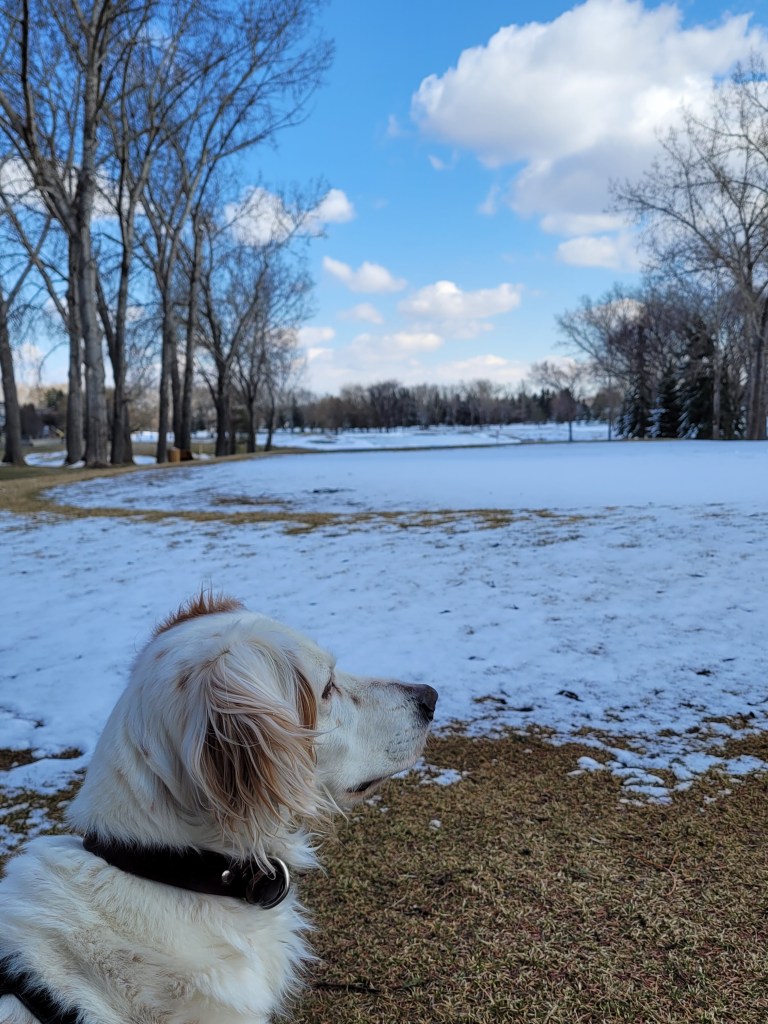
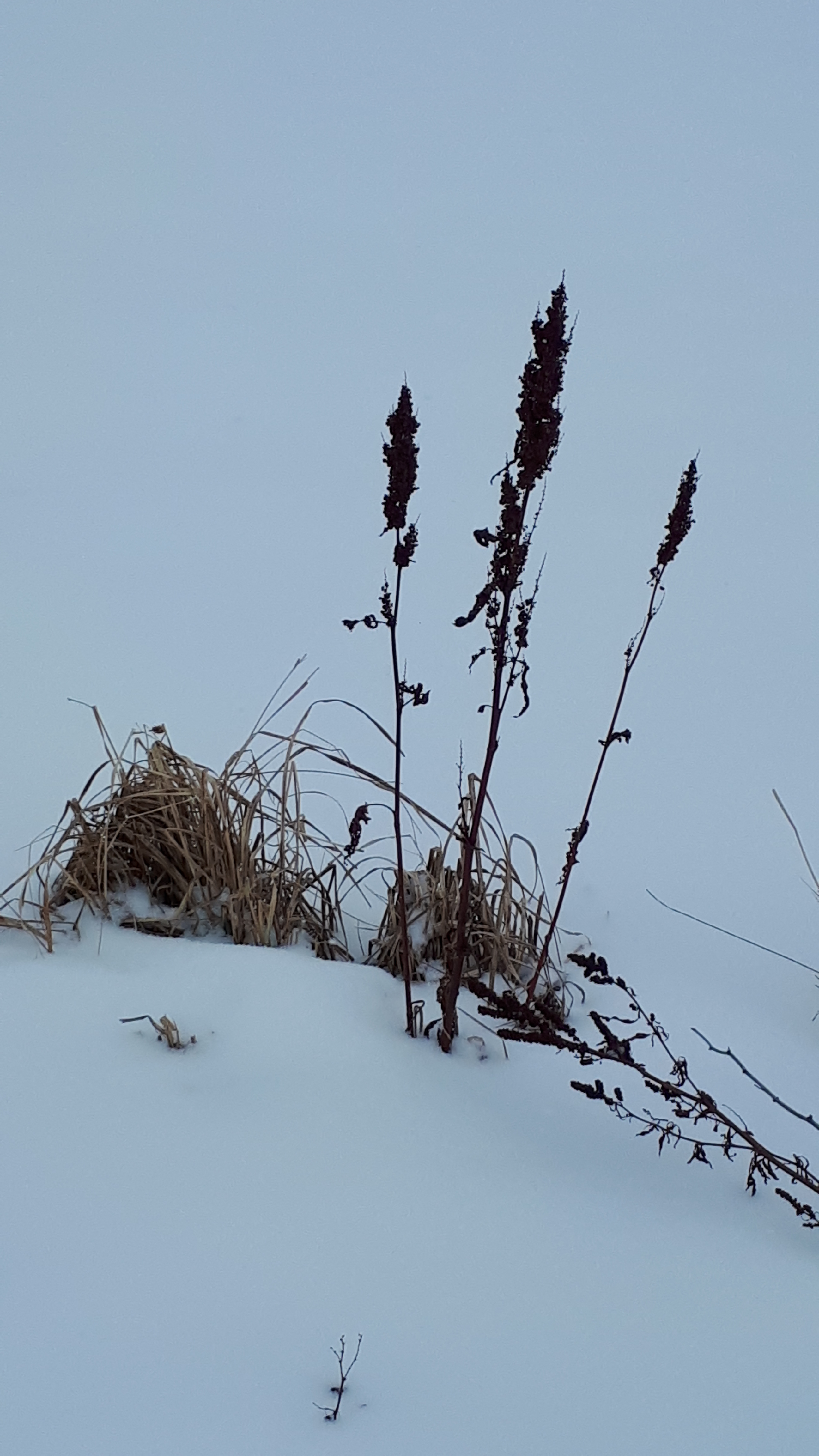
“re-wintering” – what caught my eye as Annie and I walked this week

Every other week I circle up virtually with some dear woman friends. Itโ€™s been a way to feel connection and offer support to each other during these continued covid times. We begin, as is our way, following The Circle Way practice, with a reading of some kind to help us land and settle in with each other and ourselves. A bell rung once, twice and we begin to check in with each other, often in response to what has been evoked by the reading, or by whatever is personally stirring and needing to be spoken aloud to the centre.

Last week I as I walked past my bookshelves to fetch my bells, grabbed by the title on the spine, I grabbed โ€œThe Wild In You: Voices from the Forest and the Seaโ€ (2015) by Canadian poet, Lorna Crozier. (Lovely synchronicity in that as Iโ€™m sitting here tapping away, in the background I hear The Road Homeโ€™s Bob Chelmick read from Lornaโ€™s 2018 volume, The God of Shadows.) A beautiful compilation of poetry and Ian McAllisterโ€™s photography, I quickly flipped through the pages, arriving at “A Winterโ€™s Sleep,” companioned by a magnificent wolf sleeping on the seaside sand.

A Winterโ€™s Sleep

So much sleeping
in this place. Think of all
that lies beneath the snow, lake trout
below the ice, bears in their dens,
their warm snores drifting above
the treetops that are sleeping, too,
high above your own long sleep.

Even raven, with so much
to say and do, closes his eyes,
tucks his beak under his wing
and sinks into the seasonโ€™s
dream-rich dark where all
his stories start.

Lorna Crozier, 2018

As is our way, we meander in a conversation punctuated that evening by long pauses and the shared recognition of how fatigue, grief and the need for Natureโ€™s stillness were embroidering our days of late. One shared another poem, another mentioned a book, Wintering, the title of which evoked a memory that Iโ€™d written about it. When I read aloud from the post Iโ€™d written last February, I knew it was an idea worth repeating here. That even though my interior state has shifted from what I described then, today, as the winds blew a constant icy cold, the temperature plummeted, and too, the hours of daylight here on the Canadian prairies, it is wintering.

WINTERING, originally posted February 1, 2021

โ€œDashed and disheartened โ€“ again,โ€ I emailed a friend. What with last weekโ€™s winds having blown in Arctic cold temperatures and flat light skies, reading up on my countryโ€™s vaccination rollout debacle and delays, virus variants that are proving to be highly contagious and perhaps more deadly than the original, and a speculated move to mandated mask wearing outside, this might be an understatement. Certainly enough to have been stalled again in writing here, having missed two of my usual Monday postings. Plumbing a bit deeper, what with my husband having celebrated his first “Covid” birthday two weeks ago, we realized with age, and life as weโ€™ve known it โ€œon hold,โ€ weโ€™re feeling quite wistful. Most apparent for me is missing traveling and all that it gives me, more fully appreciated now in its absence. Iโ€™m resigned to the probability that this will be another year, and most likely then some, of staying put. Too, the whisper of a question held this past year, “Will I โ€“ we โ€“ ever travel again as in the past?”

A few days ago, somewhat warmer with soft snowflakes fluttering down, Annie and I walked, she happy for her full-length coat, and NOT having to wear her fleece boots. I plugged into a recent On Being podcast, curious having read Kristaโ€™s weekend letter:

“Katherine May, in her book, Wintering โ€“ The Power of Rest and Retreat in Difficult Times (2020), meditatively explores โ€˜winteringโ€™ as a season of the natural world but also as a place our bodies and psyches need to go, a season that recurs again and again across a life. We cheat and dismiss this in life as weโ€™ve been living it, but it has presented itself insistently in a pandemic year we might reimagine as one long communal wintering.

We canโ€™t move forward without grieving all weโ€™ve lost in the past year. Closer to the ground, this means we have to let in the fact of sadness โ€” a precursor to pain and fear โ€” with some reverence. If happiness is a skill, Katherine May says, so is unhappiness. Winter embodies the strange complexity of reality. It is the bitterest season, we blithely say. And all the while it manages not to be the death of the life cycle, as Katherine May reminds, but its crucible.”

Krista Tippet, The Pause, January 23, 2021

Wintering.

That would be the odd place in which I found myself last spring and summer. Whereas Iโ€™d used the words โ€œfallowโ€ and โ€œlostโ€, as I listened to Katherine May, I recognized in her words a fuller, more accurate description of those several months lying cold and low, when all around me blushed and blossomed.

“โ€ฆwintering is a metaphor for those phases in our life when we feel frozen out or unable to make the next step, and that that can come at any time, in any season, in any weather; that it has nothing to do with the physical coldโ€ฆ”

Katherine May, On Being podcast, January 21, 2021

Not bound to season as we know it, but a necessary and recurrent place to drop into when we appreciate the cyclical nature of our lives. Thinking back, during an actual winter fifteen years ago, I dropped into depression. Not major, but enough that I and others noticed I was not myself. Little energy and enthusiasm, waning concentration, major exertions of effort to get through a day of work and home chores. Enough that once on the other side that spring, Iโ€™d mentioned it to my family doctor, and upon closer examination, recognized its cyclical nature. Perhaps a bit of seasonal affective disorder with some inherited family predisposition towards the winter โ€œblahs.โ€ Never since as severe, though I have a letter I wrote to myself then, upon the suggestion of my doctor, โ€œto be opened in the dark days, to remember.โ€ I’ve never needed to, though I know itโ€™s perched on my desk amidst a collection of mementos. And that brings reassurance enough.

“Plants and animals donโ€™t fight the winter; they donโ€™t pretend itโ€™s not happening and attempt to carry on living the same lives they lived in the summer. They prepare. They adapt. They perform extraordinary acts of metamorphosis to get them through. Wintering is a time of withdrawing from the world, maximizing scant resources, carrying out acts of brutal efficiency and vanishing from sight; but thatโ€™s where the transformation occurs. Winter is not the death of the life cycle, but its crucible.”

Katherine May, On Being podcast, January 21, 2021

I wonder if because we are mostly acculturated out of such natural rhythms and rituals, those embedded deep within our DNA and beneath our consciousness, we find ourselves in โ€œwinterโ€ out of season? That if we heeded Natureโ€™s signs and stirrings, weโ€™d ready ourselves, with each other, for winteringโ€™s alchemical invitation. I feel a growing love and appreciation for winter, the season, since being unfettered by workโ€™s imposed schedule, demands, and need for driving. And as many of us have felt during the pandemic, in lives slowed and diminished of obligation, its paradoxical gifts.

“Itโ€™s a time for reflection and recuperation, for slow replenishment, for putting your house in order. Doing these deeply unfashionable things โ€” slowing down, letting your spare time expand, getting enough sleep, resting โ€” is a radical act now, but itโ€™s essential.”

Katherine May, On Being podcast, January 21, 2021

Recently I came upon these words from Toko-pa Turner’s book, Belonging: Remembering Ourselves Home. They echo the hidden transformative gifts in this crucible of winter and wintering:

“Like the bowl that has yet to be filled, there is an emptiness that precedes creativity that is alive with potential. With ordinary eyes, itโ€™s easy to mistake this emptiness for stagnancy. We may think, โ€œI have nothing of substance to offer! I have no original ideas!โ€ But down at the invisible base of things, there is a holy dance taking place. Though we may want to run from the tension, the polarities are in constant motion, readying themselves into harmony. Far from dormant, this dance is the active receptivity that calls things into form. We are such a vessel. These times of nothingness are actually busy with living into a new capacity.

Originality comes when you stay close to that emptiness, making it a welcoming place, adorning it with your divine longing, learning the shape of it, and filling it with your questions. Every great artist I know is obsessed with a question, and their artworks are less attempts to answer that question than they are exaltations of asking. As Jean Cocteau says, ‘The poet doesnโ€™t invent. He listens.'”

I listened last summer as I wintered, lost and fallow. I remembered it as a familiar season of my life and followed its nudges to find my way through. Walking with Annie. Reading and writing. Photography and painting. Making love notes to friends. Cooking and circling up with women friends. And now in the fullness of its season, I sleep longer, nap more, give myself permission to pause the writing until I feel stirred. I let myself feel, once again, dashed and disheartened, trusting them to be worthy of these times. And I wonder.

“I recognized winter. I saw it coming a mile off, since you ask, and I looked it in the eye. I greeted it and let it in. I had some tricks up my sleeve, you see. Iโ€™ve learned them the hard way. When I started to feel the drag of winter, I began to treat myself like a favored child, with kindness and love. I assumed my needs were reasonable and that my feelings were signals of something important. I kept myself well fed, and I made sure I was getting enough sleep. I took myself for walks in the fresh air and spent time doing things that soothed me. I asked myself, what is this winter all about? I asked myself, what change is coming?”

Katherine May, Wintering โ€“ The Power of Rest and Retreat in Difficult Times (2020)

Much love and kindest regards, dear friends.

Stitches Through Time

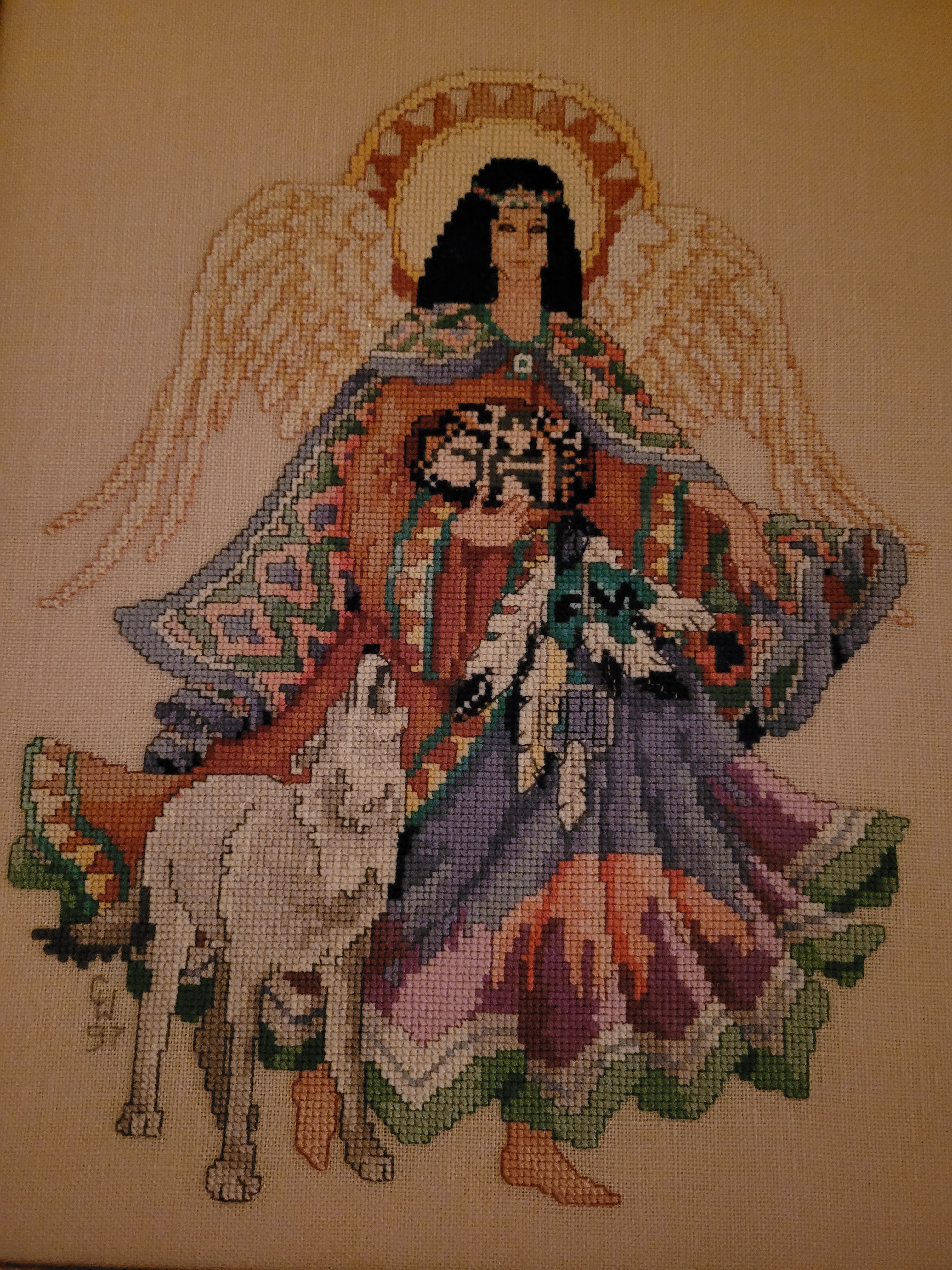
Last month I started a hand-making project Iโ€™d envisioned for over a year: to interpret a series of mandalas Iโ€™d drawn and painted by tracing their designs onto linen and embroidering with wool crewel yarn. That had been the original plan. But when it took many months for the yarn to arrive from England and to secure the right colour and weave of linen – all ordered online as this was in the thick of lockdowns and Iโ€™d seen how website color charts donโ€™t translate well – a chance walk down an aisle at Michaelโ€™s (the national chain craft store) where I saw a wall full of cotton embroidery thread in a rainbow of colours, resulted in its rethinking to ‘plan B.’

Then a comment to my mother, when we finally visited in September – she remarkably skilled in high counted cross stitch, our home graced by several of her creations – led to her gladly gifting me with her supply of needles, hoops, scissors, specially made wooden boxes, beads, and โ€˜signatureโ€™ well-organized collection of threads โ€“ hundreds of colours in a multitude of hues and metallics. For me who was enthralled with my childhood Christmas gift box of 64 Crayola crayons, I was in that same colour-smitten heaven. I paid an extra baggage fee to bring the entire collection safely home, spent an evening going through it all to understand Momโ€™s โ€˜system,โ€™ finally broke the seal on the new tracing light board Iโ€™d purchased a year ago in anticipation, and began.

Initially, I thought Iโ€™d follow closely the colours in the original watercolour, but I soon realized that working with needle, thread and yarn, despite being close in colour, is not the same as brush and paint. So, I began to improvise within the spaces, using a variety of shades and stitch patterns. I discovered that โ€œsplit stitchโ€ is pleasing in its coverage, texture, ability to move back and forth between thread and yarn, and in actually making each stitch. It simply feels good to make that stitch.

I also discovered that where I began – sitting quietly in our living room after dinner, everything spread around me – I missed my โ€˜pack,โ€™ and knew Annie missed me. She has her routine. Once we finish dinner and clean up the kitchen, itโ€™s ‘pack time.’ She settles on ‘her’ love seat in the family room and waits for us to join her. Sometimes when weโ€™re lingering over dinner, she can become quite impatient, pacing back and forth, showing her teeth in that non-aggressive, trying to talk to us way. Itโ€™s just not the same if Iโ€™m sitting in the living room, even when I cajole her into laying down on the carpet beside me. So Iโ€™ve shifted to where the light and companionship are better, often plugging in my earbuds to listen to a podcast as I stitch, while Sig watches a hockey game or an investing or horse training video, and Annie, utterly content on the sofa in between, soundly sleeps.

But the biggest discovery has been how soothing I find this act of handmaking. It goes slowly. Gradually I see the colours and textures resemble the painting that inspired the plan. Not an evening goes by when I donโ€™t silently grok and or remark how soothed I feel doing this work. In part I know it comes from the deep appreciation I feel using my motherโ€™s materials and supplies, that my hands are using what her hands had used for years to make beauty. And that given the amount of thread sheโ€™s given me, I will most likely have many more years than my mother life to bask in this gratitude.

“There is a juiciness to creativity, a succulence, or a sensuality which both produces and is soothed by creating something. I think that creativity is pleasing to women on a very deep level, whatever form it might take โ€“ whether itโ€™s the feel of clay in our hands, the colours that work on us as we knit, the meaning that we find in the words that we write, or the energizing feel of movement as we dance and the music moves through our bodies.”

Lucy Pearce in Sharon Blackie, If Women Rose Rooted, 2019
quoted in “When Women Create,” A Wabi Sabi Life

As I look over my life, my mother always did handwork, as did many women of her generation and those before her. I remember many of the clothes she made for my sister and me until I began sewing my own in my early teens. After living in an apartment for my first thirteen years, my parents built their home and Mom poured herself into its decorating, needlepointing the backgrounds of eight dining room chairs โ€“ a meditation in monotony, same stitch, same colour for many months. From there she mastered every style of needlework, again gifting me with cushions, purses, and such. She knit beautifully, always challenging herself in ways I didnโ€™t quite get nor fully appreciate. A brief foray into crewel work and then counted cross-stitch and cutaway, the finer and more intricate, the better. In the last few years, sheโ€™s found the strain on her eyes too much, regrettably as she has several half-finished projects and wishes to make each of her grandchildren and great grandchildren keepsakes. So sheโ€™s gone back to occasionally knitting, and now spends more time reading. Itโ€™s a pastime Iโ€™m happy she enjoys, as when younger she never did, believing herself to be a poor reader. So utterly untrue when I think about what sheโ€™s created with her hands – the patterns she had to read and interpret, the recipes she improvised, the books she kept for the business. A legacy of the hurtful, limiting stories weโ€™re told, or tell ourselves.

โ€œWhen you learn to make things with your hands, you begin to awaken an awareness of the beauty and value of things in your life. Handmaking teaches us about slowness: the antidote to brevity and efficiency. It shows us, through the patience of our own hands, what goes into a thing. When we put those long efforts into bringing beauty into the world, we are honouring that which made us by creating as we have been created. We are taught to respect the slow, attentive piecing together of the life we yearn for.โ€

Toko-pa Turner, Belonging, 2017
quoted in “A Homemade, Handmade Life,” A Wabi Sabi Life

And looking further back, her grandmother, my Gramma, was always sewing – spectacular fashions inspired by the turn of the century Edwardian era. Plumed and netted hats, velvet coats. No wonder I was so taken by Downton Abbey for its costume design, as I have old sepia tint photos of Gramma looking just like those women. Too, I have one hundred year old samples of her silk embroidery, and I wore for my wedding the white cotton lawn embroidered dress sheโ€™d made for her own – fine hand sewn tucked bodice, tiny mother of pearl buttons.

My paternal grandmother, Oma, too, was a very skillful seamstress, though in the pre and post world war periods of Germany, her talents were out of necessity directed to the functional, utilitarian, to get more wear from what was worn. Emigrating to North America in the 1950s, she became a pieceworker on the assembly line making glass cases for Bausch and Lomb. An accident on the sewing machine nearly severed her middle finger, left its nail permanently clawed over. Her dowagerโ€™s hump the price for countless hours bent over those grinding machines.

Before my motherโ€™s second birthday, her mother died. Eleanor, my grandmother, was adopted as a young child. Family dynamics and bureaucratic policy were such that we grew up knowing very little about her. Did she like to sew? Was she a hand maker? Did she embroider or like cooking? We donโ€™t know. We have very few pictures of her, but one as a young girl shocked us all in the resemblance I share with her.

Early this morning I woke having dreamt of her. A young boy hand-delivered a painting or photograph of a young girl child, now restored and framed. Stretching, I had to reach up high and retrieve the parcel from its precarious perch. I unwrapped its golden Klimt-like heavy wrapping paper to see a little girl at sitting at a table outside, surrounded by little glass pots of paint, flowering bushes beside her, blue sky above. I knew immediately it was Eleanor. I felt a whisper in my heart murmuring that this is how I am connected to my grandmother, in little paint pots of colour – the timeless iteration of the 64 box of crayons – in a yard warm with flowers and a blue sky.

โ€œโ€ฆI needed that bond to feel whole, competent and grounded, connected to my heart and soul, to my community, to my ancestors, and to the natural world around meโ€ฆโ€

Melanie Falick, Making a Life, 2019,
quoted in “Joie de Faire,” A Wabi Sabi Life

In the still dark this morning, I sensed this is how I am connected to the lineage of women – through the shimmering cotton threads, warm hued woolen yarns, fabrics woven on looms and sewn into garments and furnishings. That my ancestors whisper to me in dreams and in the stitches we make through time.

Much love and kindest regards, dear friends.

The End Times

THE END TIMES

We knew it would come crashing down,
but now we are in the clatter –
fire, drought, flood, smoke, heat,
the million and one ways
that beings cry out. We thought
there would be more time.
We pretended that we didn’t know.
We squandered so much
that we might have saved,
and for what? Trinkets. Glitter.
The pleasures of ignorance
and a basket full of Happy Meals.

It’s time to ask the dying
what they know. What will you give up
to cure what is killing you?
What do you pursue
when your days are numbered?
Gaze into the eyes
of a beloved old dog.
Bury your face in her neck
and engrave the scent on your memory.
Let your heart break open.
Learn to cherish what remains.

– Lynn Ungar –

Lynn Ungar first came to my attention last year with her “viral” poem, Pandemic. Straight to the point and heart, her words pierce with truthfulness. A week ago, our beloved Annie dog went under for a brief diagnostic procedure. Thankfully an “all OK” diagnosis, she returned home that day woozy and with a package each of probiotics and antacids, hopefully to curb the somedays’ frantic rush to eat grass. But with eleven and a half years under her belt, and a decade this month with us, I know the times we walk together are ever precious. But isn’t it so for each of us – how life changes on a dime? Once again, around the world, we see how precarious, precious, and fragile our circumstances.
Reading Radical Regeneration: Birthing the New Human in the Age of Extinction (2020) by Andrew Harvey and Carolyn Baker makes the unequivocal point that we are living in the end times. The posthumous One Drum (2019) by Richard Wagamese cites ancient prophesy of a time “when words would fly like lightning bolts across the sky, and ” when “the human family would move farther apart and that this separation, the break in energy, would cause great stress upon the Earth… floods, titanic storms, famine, earthquakes, the departure of animals, strange diseases, and turmoil among all peoples.” (22)

It is time to learn to cherish what remains.

Much love and kindest regards, dear friends.


This Beauty

“In difficult times you should always carry something beautiful in your mind.”

Blaise Pascal

August has arrived in a heat wave, though not the โ€œdomeโ€ that brought in July. Wave, dome – both feel pretty damn hot with a bit of wind blowing, deluding one into thinking โ€œahhh, itโ€™s cooler now.โ€ Cloudless skies continue, but the persistent blue of a month ago has given way to haze with smoke from the still burning forest fires that have disintegrated villages and have others on evacuation notice. Sun glowing red in the morning, redder at night, now later to rise and earlier to set.

Though less now, Iโ€™m still attuned to school year rhythms, where notions of work would begin to appear on the horizon, readying for start-up later in the month. It was a few years ago I wrote that August โ€“ always for us in the northern hemisphere, the last month of summer – feels to me like one long Sunday night. Today, Sunday, this first day in August – almost a decade since I left full-time employment to free-lance โ€“ I still feel that flutter in my belly. A cocktail of anxiety, ambivalence, anticipation, acceptance โ€“ the ingredients in this order, though amounts may vary.

Iโ€™ve alluded to and explicitly written over the past several weeks, that itโ€™s been a โ€œwobblyโ€ time, difficult even some days. Writ large: the world trying to move beyond a virus that simply will not let us go, mutating faster, and exponentially more contagious. Here and abroad, again a season of relentless burning and unprecedented flooding, evidence that while the world was in retreat for eighteen months, climate change was not. Fractured and collapsed infrastructures. An apocalyptic unveiling of grievous global injustice and racism. Right now to my way of thinking, the Tokyo Summer Olympic Games appear the perfect metaphor. Writ small: me trying to find footing in a โ€œre-openedโ€ community, and province deciding to toss out all covid public health protocols, where I continue to monitor if and who to hug, how close to sit, where and when to wear masks, when to travel to see my parents. Sleep disrupted by the heat and a habit of worrying about unknown โ€œwhat nextsโ€? Sensing another turn of the wheel and breaking of the “kitsugi” bowl to allow something – yet defined – room to emerge, then to be mended with gold. Sitting in such threshold space is often difficult for me when it activates old trauma reactions that vacillate between brittle anxiety and a listless, deadening loss of focus – both leaving me wrung out.

“The beauty that emerges from woundedness is a beauty infused with feeling.”

John O’Donohue, Beauty: The Invisible Embrace, 2004

And so I turn to gazing into the backyard sky and trees, onto the garden beds that are finally reviving. I walk Annie early before itโ€™s too hot, enjoying the silence of our slowly waking streets. I listen to the water falling in the fountain – and while a far cry from my beloved Niagara River โ€“ let it soothe. I light the kitchen candle when lossโ€™ grief comes calling. I take pen to page, not as often, and often reluctantly, to write anew.

imagine a whisper of a breath

“Beauty enchants us, renews us, and conquers death.

Piero Ferrucci, Beauty and the Soul, 2009

Wishing you all that is good and true and beautiful in your lives, dear friends.
Much love and kindest regards.

An Early Spring Medicine Walk

The day before Spring officially arrived, I took a walk with a dear friend. She and I have evolved a soft and fluid pattern of getting together as our respective culturesโ€™ holy days are either waxing or waning. In the interim, especially this past year, we occasionally text or fob an email back and forth or send each other a โ€œlove noteโ€ in the mail. Weโ€™ve held the intention to meet for a walk these past many months of needing to maintain a safe, social distance and so it was that a few weeks ago she sent a message offering a couple of afternoons. I suggested we pencil in both, weather permitting, knowing how much can change on a dime. With the long-range forecast looking good for Friday, she suggested we meet at Bunchberry Meadows, a nature conservancy west of the city.

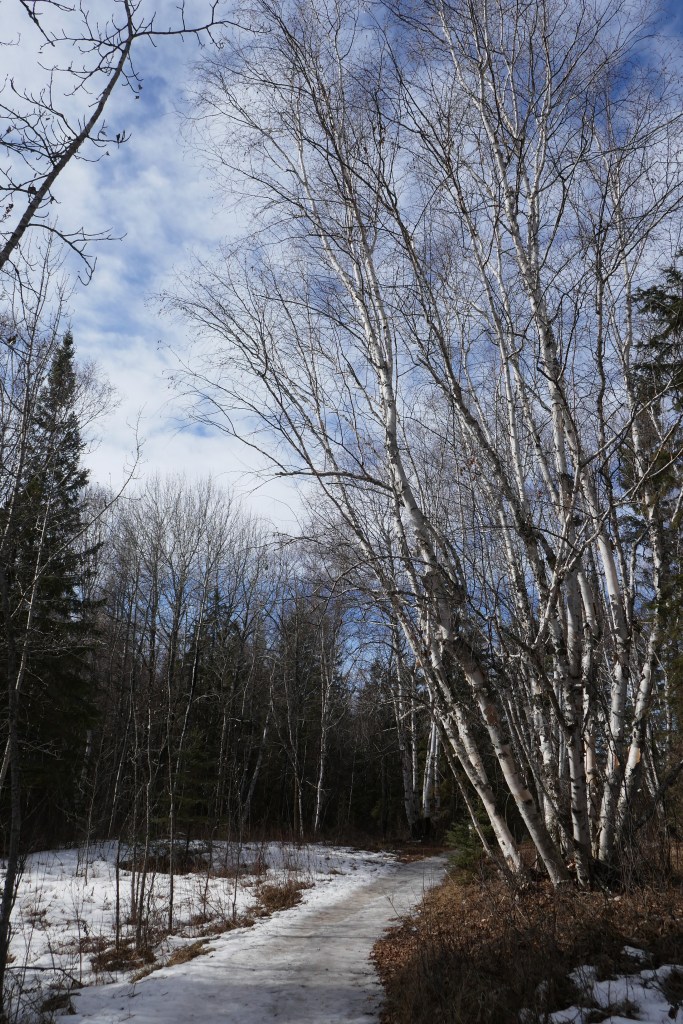
snow white paths and aspens

I vaguely recalled having heard of it somewhere, some time ago, so googled and printed off directions. Packed my Deuter daypack with requisite trail mix and water; rain jacket, gloves and toque; first aid kit and camera. Laced on my hiking boots. Grabbed my newly whittled willow walking stick โ€“ a gift from the woman who carves in our neighborhood woods. Fuelled up the car โ€“ still only a once-a-month ritual – and set out. Zigged once when I should have zagged, but still arrived minutes before my friend coming from a morning of meetings. Hellos said, virtual hugs exchanged on the breeze and we set off.

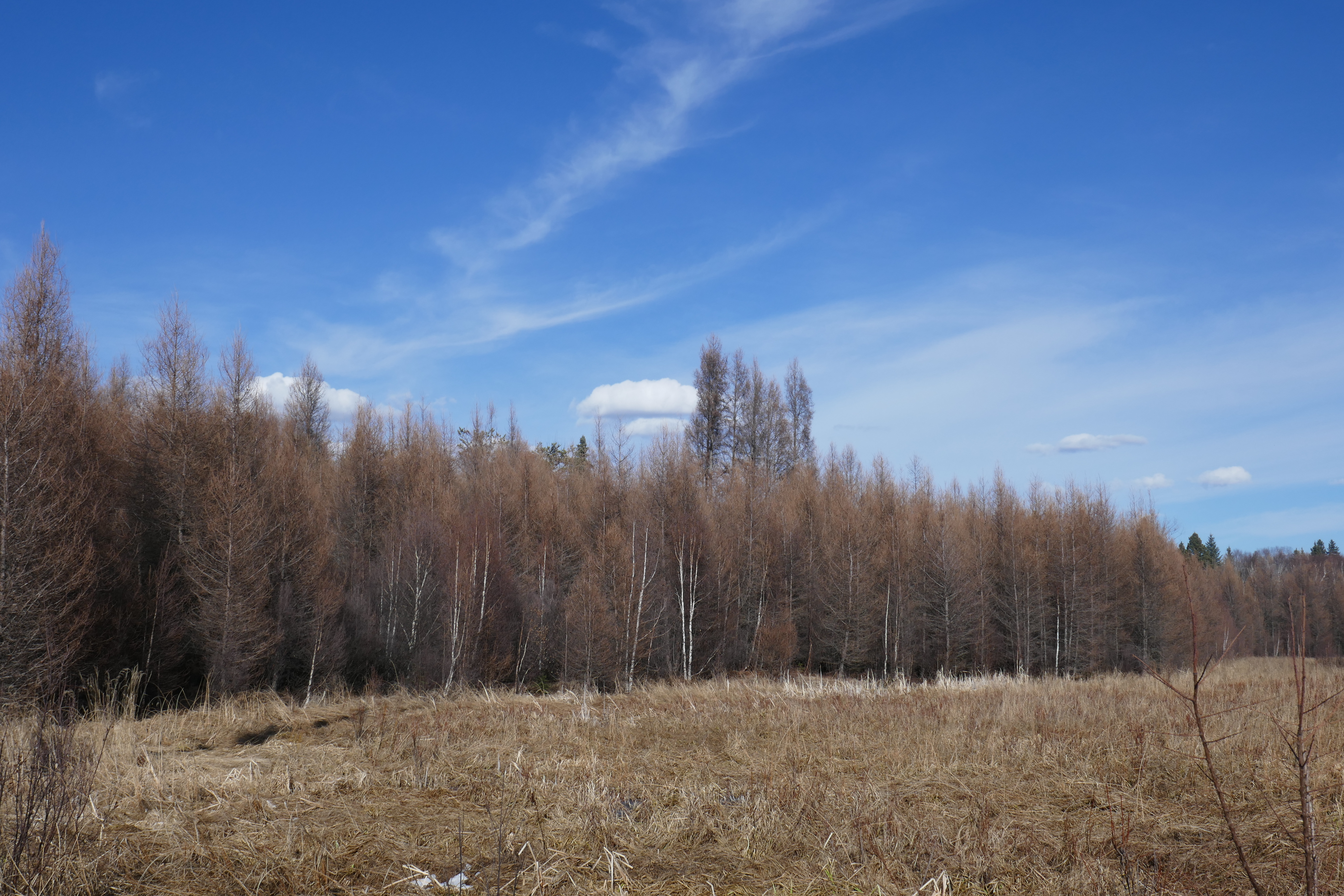
Being familiar with the trails as she comes out at the turn of every season, she pointed the way and said weโ€™d be traversing through several distinct areas of old growth tamarack, white spruce, jack pine, and willow. The past week of more than seasonal warm and sunny weather meant we walked through large snowless expanses of meadow โ€“ exposing last yearโ€™s dried golden grasses โ€“ and forest mottled with white patches of snow. Paths varied in their coverage: soft crystalline snow made for easy gripping; fallen leaf and dropped needles padding evoked summer mountain treks in scent and feel; and ice sheened with melt became the most treacherous, where boot spikes, had I stopped to take them out of my pack, would have been a wise addition.

Bunchberry Meadows

Coming to a long stripped log, perched as a bench and glossed to a smooth sheen by countless others who have taken rest on it, I suggested we sit to soak up the sun shining on our faces, while watching the hawk silently float above the meadow fringed with woods. There we soaked, too, in quiet conversation, punctuated by easy, companionable silences.

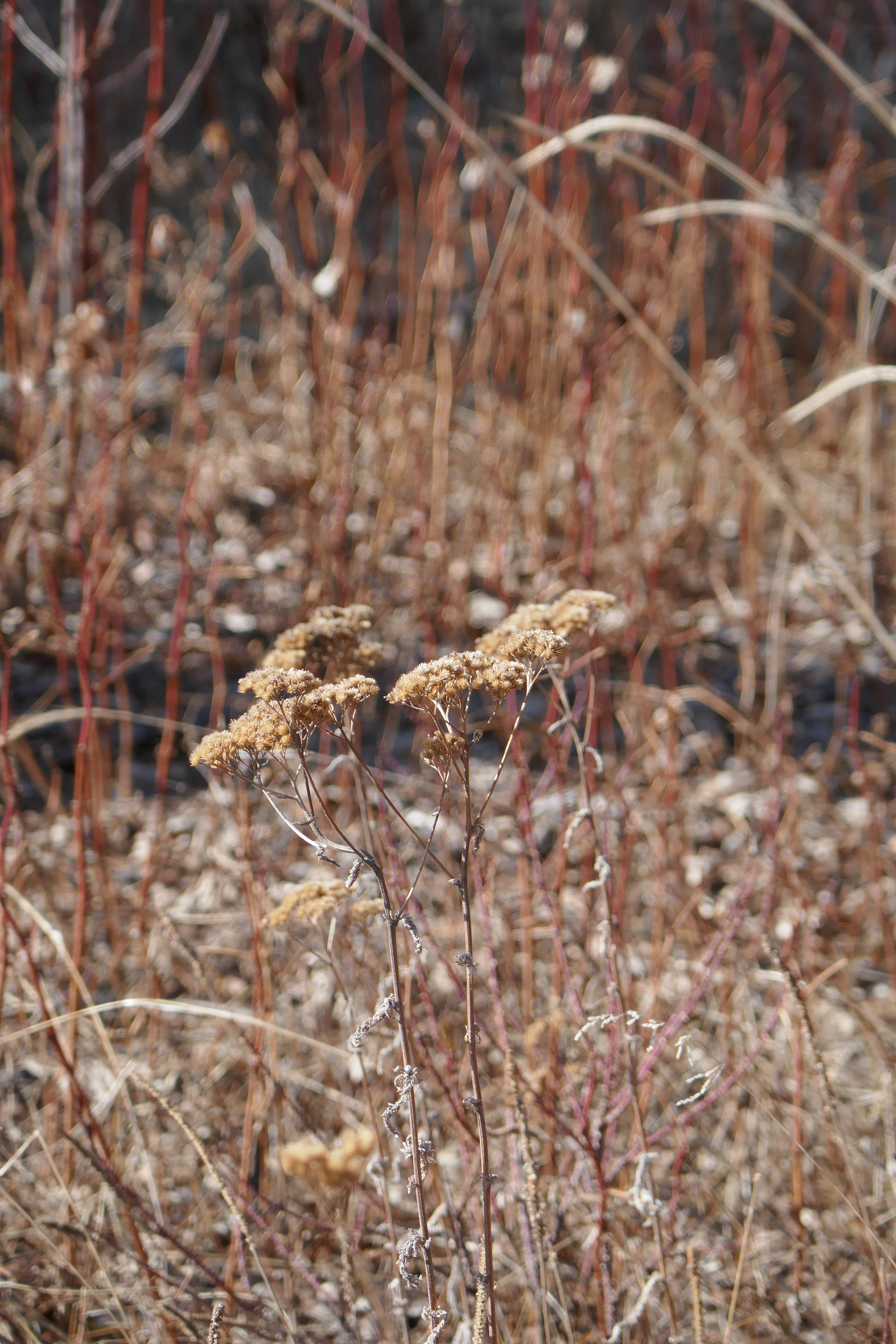
Encountering another woman on the trail, we clarified our location and route back to the parking lot, completed the circuit down a steep snow and ice covered trail, and through the shadowy filigree file of tamarack, sun lighting the end of the way into the berry meadow, now dotted with dried umber yarrow heads.

Up and through a couple more times, the sun now lower in the sky, but still exceptionally warm for three weeks into March day, and we arrived back at our cars to each make the trek home for dinner.

At the outset, I hadnโ€™t thought of this walk being or bringing medicine. It was simply to be a lovely outing with a lovely friend. But at its conclusion, during the freeway drive home where I needed to shift into another way of navigating trails, and several times since, especially now as Iโ€™m writing, in the early hours of a pre-dawn Sunday morning, its soothing effects linger.

Iโ€™ve missed walking in Natureโ€™s nature. Sure, Annie and I make our way in our suburban bits of natural landscape, but lately Iโ€™ve found myself growing irritated with the number of people on the paths of what are really, simply, barely hidden golf fairways and greens. The first Iโ€™m putting to words – this nuanced realization that the more we move out of winter into the inevitable golf season, whatever medicine Iโ€™d felt on those paths โ€“ a medicine that restored and rebalanced me beyond the basic benefits of being out in the fresh air and elements, moving – is now melting away like the snow, exposing its actual, man-made nature.

And as I think about it further in the last week or so, as a less than conscious response, Iโ€™ve found myself drawn back to walking on the path in the little wood lot where weโ€™ve occasionally encountered our friend the stick whittler. Just to be a bit closer on the landโ€ฆto get a bit closer to Natureโ€™s natureโ€ฆthe healing kind.

Much love and kindest regards, dear friends, as we step into spring, or autumn for my southern hemisphere readers.

my neighborhood woodlot in autumn

Wintering

โ€œDashed and disheartened โ€“ again,โ€ I emailed a friend. What with last weekโ€™s winds having blown in Arctic cold temperatures and flat light skies, reading up on my countryโ€™s vaccination rollout debacle and delays, virus variants that are proving to be highly contagious and perhaps more deadly than the original, and a speculated move to mandated mask wearing outside, this might be an understatement. Certainly enough to have been stalled again in writing here, having missed two of my usual Monday postings. Plumbing a bit deeper, what with my husband having celebrated his first “Covid” birthday two weeks ago, we realized with age, and life as weโ€™ve known it โ€œon hold,โ€ weโ€™re feeling quite wistful. Most apparent for me is missing traveling and all that it gives me, more fully appreciated now in its absence. Iโ€™m resigned to the probability that this will be another year, and most likely then some, of staying put. Too, the whisper of a question held this past year, “Will I โ€“ we โ€“ ever travel again as in the past?”

A few days ago, somewhat warmer with soft snowflakes fluttering down, Annie and I walked, she happy for her full-length coat, and NOT having to wear her fleece boots. I plugged into a recent On Being podcast, curious having read Kristaโ€™s weekend letter:

“Katherine May, in her book, Wintering โ€“ The Power of Rest and Retreat in Difficult Times (2020), meditatively explores โ€˜winteringโ€™ as a season of the natural world but also as a place our bodies and psyches need to go, a season that recurs again and again across a life. We cheat and dismiss this in life as weโ€™ve been living it, but it has presented itself insistently in a pandemic year we might reimagine as one long communal wintering.

We canโ€™t move forward without grieving all weโ€™ve lost in the past year. Closer to the ground, this means we have to let in the fact of sadness โ€” a precursor to pain and fear โ€” with some reverence. If happiness is a skill, Katherine May says, so is unhappiness. Winter embodies the strange complexity of reality. It is the bitterest season, we blithely say. And all the while it manages not to be the death of the life cycle, as Katherine May reminds, but its crucible.”

Krista Tippet, The Pause, January 23, 2021

Wintering.

That would be the odd place in which I found myself last spring and summer. Whereas Iโ€™d used the words โ€œfallowโ€ and โ€œlostโ€, as I listened to Katherine May, I recognized in her words a fuller, more accurate description of those several months lying cold and low, when all around me blushed and blossomed.

“โ€ฆwintering is a metaphor for those phases in our life when we feel frozen out or unable to make the next step, and that that can come at any time, in any season, in any weather; that it has nothing to do with the physical coldโ€ฆ”

Katherine May, On Being podcast, January 21, 2021

Not bound to season as we know it, but a necessary and recurrent place to drop into when we appreciate the cyclical nature of our lives. Thinking back, during an actual winter fifteen years ago, I dropped into depression. Not major, but enough that I and others noticed I was not myself. Little energy and enthusiasm, waning concentration, major exertions of effort to get through a day of work and home chores. Enough that once on the other side that spring, Iโ€™d mentioned it to my family doctor, and upon closer examination, recognized its cyclical nature. Perhaps a bit of seasonal affective disorder with some inherited family predisposition towards the winter โ€œblahs.โ€ Never since as severe, though I have a letter I wrote to myself then, upon the suggestion of my doctor, โ€œto be opened in the dark days, to remember.โ€ I’ve never needed to, though I know itโ€™s perched on my desk amidst a collection of mementos. And that brings reassurance enough.

“Plants and animals donโ€™t fight the winter; they donโ€™t pretend itโ€™s not happening and attempt to carry on living the same lives they lived in the summer. They prepare. They adapt. They perform extraordinary acts of metamorphosis to get them through. Wintering is a time of withdrawing from the world, maximizing scant resources, carrying out acts of brutal efficiency and vanishing from sight; but thatโ€™s where the transformation occurs. Winter is not the death of the life cycle, but its crucible.”

Katherine May, On Being podcast, January 21, 2021

I wonder if because we are mostly acculturated out of such natural rhythms and rituals, those embedded deep within our DNA and beneath our consciousness, we find ourselves in โ€œwinterโ€ out of season? That if we heeded Natureโ€™s signs and stirrings, weโ€™d ready ourselves, with each other, for winteringโ€™s alchemical invitation. I feel a growing love and appreciation for winter, the season, since being unfettered by workโ€™s imposed schedule, demands, and need for driving. And as many of us have felt during the pandemic, in lives slowed and diminished of obligation, its paradoxical gifts.

“Itโ€™s a time for reflection and recuperation, for slow replenishment, for putting your house in order. Doing these deeply unfashionable things โ€” slowing down, letting your spare time expand, getting enough sleep, resting โ€” is a radical act now, but itโ€™s essential.”

Katherine May, On Being podcast, January 21, 2021

Recently I came upon these words from Toko-pa Turner’s book, Belonging: Remembering Ourselves Home. They echo the hidden transformative gifts in this crucible of winter and wintering:

“Like the bowl that has yet to be filled, there is an emptiness that precedes creativity that is alive with potential. With ordinary eyes, itโ€™s easy to mistake this emptiness for stagnancy. We may think, โ€œI have nothing of substance to offer! I have no original ideas!โ€ But down at the invisible base of things, there is a holy dance taking place. Though we may want to run from the tension, the polarities are in constant motion, readying themselves into harmony. Far from dormant, this dance is the active receptivity that calls things into form. We are such a vessel. These times of nothingness are actually busy with living into a new capacity.

Originality comes when you stay close to that emptiness, making it a welcoming place, adorning it with your divine longing, learning the shape of it, and filling it with your questions. Every great artist I know is obsessed with a question, and their artworks are less attempts to answer that question than they are exaltations of asking. As Jean Cocteau says, ‘The poet doesnโ€™t invent. He listens.'”

I listened last summer as I wintered, lost and fallow. I remembered it as a familiar season of my life and followed its nudges to find my way through. Walking with Annie. Reading and writing. Photography and painting. Making love notes to friends. Cooking and circling up with women friends. And now in the fullness of its season, I sleep longer, nap more, give myself permission to pause the writing until I feel stirred. I let myself feel, once again, dashed and disheartened, trusting them to be worthy of these times. And I wonder.

“I recognized winter. I saw it coming a mile off, since you ask, and I looked it in the eye. I greeted it and let it in. I had some tricks up my sleeve, you see. Iโ€™ve learned them the hard way. When I started to feel the drag of winter, I began to treat myself like a favored child, with kindness and love. I assumed my needs were reasonable and that my feelings were signals of something important. I kept myself well fed, and I made sure I was getting enough sleep. I took myself for walks in the fresh air and spent time doing things that soothed me. I asked myself, what is this winter all about? I asked myself, what change is coming?”

Katherine May, Wintering โ€“ The Power of Rest and Retreat in Difficult Times (2020)

Much love and kindest regards, dear friends.