Look up. Look around. Listen. See and hear the echoes of your wounds and dreams all around you. Know that you are never as alone as you think. We may even be in the majority. Each point of connection with another transforms them from stranger into ally in the healing process.
If you read this and still feel abandoned, walk with head high knowing there are generations of ancestors inside of you. We will survive this era as we did the eras before: using the skills we have, inventing the ones we need.
On those days when the spine or soul become tired, imagine all of humanity whispering a twelve word prayer inside your ear: “we are not the children nor the descendants of a weak people.”
Mark Gonzales In Times of Terror, Wage Beauty 2014
Several years ago, I “met” Mark Gonzales via this remarkable collection of piercing, pithy poem essays. Last week, as war in Ukraine grabbed hold of our world by its throat, a friend reminded me that I had introduced her to his work. Any page would have been perfect today. I expect I’ll turn to Mark’s words for my Monday blog. In the meantime, if this sampling touches you, buy his book, In Times of Terror, Wage Beauty. There is no better time.
“It’s a piece of deep psychological acuity, carried in many religious traditions: that each of us is defined as much by who our enemies are and how we treat them as by whom and what we love.”
Krista Tippett, On Being, October 31, 2013
Fitting food for thought as we, the world, contemplate the current circumstances unfolding in Ukraine. A simplistic response to vilify the invaders and yet…
We see Russians courageously take to their streets and squares in protest. We read of notables resigning from posts refusing payment from their government. We know people who know people, Russians whose roots run deep and like us all, whose hearts bleed red.
Today I watched an English subtitled speech given on Friday by Ukraine’s president to Russia’s people. Clarifying misinformation, stating his position and boundaries on behalf of his country’s people, imploring Russians to remember themselves and their relationships with the people of Ukraine. Fiercely compassionate is what comes to mind.
Over the past few days, scrolling social media and participating in online seminars, I’ve been struck with the extent to which we are calling forth the balm found in poetry and prayer, in the arts, dance and song. Evoking the highest good in us, for us all. With poetic irony and prescience, this published in 2009 by Ilya Kaminsky, a poet born in Odessa, Ukraine, now living in the United States after being granted asylum with his family:
We Lived Happily during the War
And when they bombed other people’s houses, we
protested but not enough, we opposed them but not
enough. I was in my bed, around my bed America
was falling: invisible house by invisible house by invisible house—
I took a chair outside and watched the sun.
In the sixth month of a disastrous reign in the house of money
in the street of money in the city of money in the country of money, our great country of money, we (forgive us)
lived happily during the war.
Let us hold the centre, dear friends. Present with what is unfolding. Poised amidst conflict within and without. Persistent in remembering the best in who we are.
Let us take note of the ever-present beauty around us. Remain open to the mystery in the mundane. Tenacious in our tenderness. Committed in our care.
Living our lives as poem and prayer.
“Do you think it’s an accident that you were born at a time when the culture that gave you life is failing? I don’t think it is. I think you were born of necessity with your particular abilities, with your particular fears, with your particular heartaches and concerns… I think if we wait to be really compelled by something… something big, well… we’re going to wait an awful long time and I don’t know if the state of our world can tolerate our holding out until we feel utterly compelled by something. I think it’s more like this, that we have to proceed now as if we’re utterly needed given the circumstances. That takes almost something bordering on bravado, it could be mistaken for megalomania easily, though I don’t think it is. It had a certain amount of nerviness in it or boldness for sure, something that’s not highly thought of in the culture I was born into unless you’re a star or something… regular people aren’t supposed to have those qualities. I say they are of course. That’s what we’ve got to bring to the challenges at hand, not waiting to be convinced that we’re needed but proceeding as if we are. Your insignificance has been horribly overstated.”
If you don’t feel like starting a new project, don’t.
If you don’t feel the urge to make something new,
just rest in the beauty of the old, the familiar, the known.
If you don’t feel like talking, stay silent.
If you’re fed up with the news, turn it off.
If you want to postpone something until tomorrow, do it.
If you want to do nothing, let yourself do nothing today.
Feel the fullness of the emptiness, the vastness of the silence, the sheer life in your unproductive moments.
Time does not always need to be filled.
You are enough, simply in your being.
– Jeff Foster –
Reflecting on my current involvement in another online offering from The Abbey of the Arts – an 8 week exploration of the archetypes of Visionary, Healer, Sage and Warrior – this recent Facebook post spoke to me. Over the past two weeks, we’ve considered the Healer. I shared with the group The Nap Ministry, the creation of Tricia Hersey to uplift and give legitmacy to the radical act of napping and resting, as embodied resistance.
I’m thinking about how our now noticeably longer days engage our energies and invite more activity. I’m thinking about how easy it is to be seduced by that outward pull and upward rising, when the body-mind-spirit might still need the deep rest encouraged by winter. I’m thinking within the archetypal energy of Healer, that I need to remember “time does not always need to be filled” and that I am enough, simply in my being. And I’m thinking, so are you.
“It’s dark because you are trying too hard. Lightly child, lightly. Learn to do everything lightly. Yes, feel lightly even though you’re feeling deeply. Just lightly let things happen and lightly cope with them. I was so preposterously serious in those days… Lightly, lightly – it’s the best advice ever given me…So throw away your baggage and go forward. There are quicksands all about you, sucking at your feet, trying to suck you down into fear and self-pity and despair. That’s why you must walk so lightly. Lightly my darling…”
Aldous Huxley, Island, 1962
Reading this quote last week it landed, more than lightly. Funny thing is I thought Huxley was advising “slowly my darling.” Musing on that for several days, recalling nearly a decade back, when at a weeklong movement intensive – I there quite literally to “sweat my prayers” (Gabrielle Roth) – I met a woman recently retired though pursuing her independent coaching practice. She told me she never scheduled herself before 11 AM, preferring to enter each day slowly. I’m sure I countered with something like me being a morning person, liking to rise early, getting a good start on my workday.
Looking back, I was driven in that first year of “retirement,” striving to make a success of my independent coaching practice, not knowing how it would all work out after the decades’ long security of a pay cheque arriving twice monthly in my bank account. In those early months, I remember saying I needed to “make hay while the sun shone,” and secured contracts with people I enjoyed, doing work I loved. But I was exhausted. I remember falling asleep at a Friday night cooking class a couple of days before we flew to China for what ended up being an intense two-week tour. That whole trip I was cold, with photos showing me bundled in toque, scarf, and coat. I suffered through a couple of migraines, and within weeks of our return, developed Bells Palsy, a condition that left its indelible mark. A mark that to this day reminds me to go slow.
In my experience, while going slow is akin to walking lightly, it’s not the same. Trusting last week’s confusion, when I follow its thread, I see how going slow reveals the extent to which I am not “walking so lightly.” Lately, when I slow down, stop, sit still, or simply pause standing to notice the sky, step outside with Annie and breathe in the new day, sadness suddenly arrives. Nothing too pronounced, so it’s been easy to dismiss as I start moving or shift my attention. Despite its subtlety, it’s a sadness that’s been here for several weeks. I’ve alluded to it in one of my first posts of the new year, and last week’s when I wrote about remembering the light in the darkness.
I’m not one who writes to impart advice. In ten plus years of blogging, I can count on one hand the number of posts wherein I’ve listed, recommended, suggested what someone else can do to make their life better. Nor am I “reveal all” writer. Instead, usually prompted by someone else’s words, I disclose some of my own internal meanderings – messy as they might be. It’s through my way of writing – a process that can take several hours – I begin to catch a glimpse of a thread that shimmers, that when I tug, brings me, and perhaps someone else, a bit more clarity.
beauty in a hard place
I was a child taught to try hard and do well. Taking that lesson to heart, I tried too hard, grew too serious, and in ways, too hard. To “lightly let things happen, and lightly cope with them” was not what I saw, was never my lived experience. Fond of saying “it’s all true,” pithy wisdom from a long time ago therapist, helps me both to remember to hold the paradox of it all, and to lessen my need to try hard to understand, to fix, to make sense of it all. In the matter of my sadness – or perhaps the sadness that belongs to us all, and to the trees and the land and the sky and all the beings that have been holding our collective, unacknowledged, displaced grief of late, or since our beginnings – now to apply its wisdom to “feel lightly even though I’m feeling deeply.” Now to lighten my grip. No need to try hard despite the quicksands all about, especially as I try to fall asleep.
“Lightly my darling.”
Lightly, with much love and kindest regards, dear friends.
Have you not wounded yourself And battered those you love By sudden motions of evil, Black rage in the blood When the soul, premier danseur, Springs toward a murderous fall? The furies possess you.
2
Have you not surprised yourself Sometimes by sudden motions Or intimations of goodness, When the soul, premier danseur, Perfectly poised, Could shower blessings With a graceful turn of the head? The angels are there.
3
The angels, the furies Are never far away While we dance, we dance, Trying to keep a balance To be perfectly human (Not perfect, never perfect, Never an end to growth and peril), Able to bless and forgive Ourselves. This is what is asked of us.
4
It is light that matters, The light of understanding. Who has ever reached it Who has not met the furies again and again? Who has reached it without Those sudden acts of grace?
– May Sarton –
I’ve had this poem in my “draft” file since last November. I think the wise Parker J. Palmer included it back then in the monthly newsletter he co-authors with songwriter-musician Carrie Newcomer. Given my musings of late, shared in this week’s blog, coupled with current news, it feels like the right time to bring it into the light. To remind me of my own angels and furies. To help me see the light in darkness.
“One discovers the light in darkness, that is what darkness is for; but everything in our lives depends on how we bear the light. It is necessary, while in darkness, to know that there is a light somewhere, to know that in oneself, waiting to be found, there is a light.”
James Baldwin, Nothing Personal (1964) cited in The Marginalian, February 6, 2022
For much of January, my internal weather has fluctuated as rapidly as the external. Feeling flux and flummoxed, with waves of inexplicable sadness, and flashes of rage, these are times when deep in the belly, I don’t have words to write, hence a couple of missed Monday posts. Time this week in my virtual women’s circle, listening and giving voice to my inner meanderings, together with the words of others arriving in the last twenty four hours, have helped prime mine.
With last month’s passing of several luminaries – Archbishop Tutu, Thich Nhat Hahn, and even Betty White in her radiant, joy filled centurion way – I felt humanity had once again lost powerful visionaries who served to hold its centre. In response, I felt a deep wobbling, compounded here in my country by the ever-growing anger at our nearly two-year public health covid sanctions. Truck convoys, now being copied around the world, are barricading highways, border crossings, and downtown cores. As in many instances of late, here and elsewhere, what starts out as a demonstration of dissent becomes hijacked by far left and right agendas intent on spewing violence and hatred.
Paradoxically, within the relative quiet simplicity of my life – an ever-present gift of the pandemic – sometimes it’s challenging to block out the overwhelm from all of it. Not just anxious, frankly I’ve felt frightened with what’s continuing to unravel, exposing humanity’s underbelly. Perhaps more so because of the prolonged weariness with navigating the pandemic’s continued uncertainties, while revealing more of its impacts. Speaking virtually today to a dear friend a few streets away, I wondered how much at its root these are all the many manifestations of grief.
“The individual has to wake up to the fact that violence cannot end violence; that only understanding and compassion can neutralize violence, because with the practice of loving speech and compassionate listening we can begin to understand people and help people to remove the wrong perceptions in them, because these wrong perceptions are at the foundation of their anger, their fear, their violence, their hate.”
A hypothesis, not an excuse. A way to reframe, reconsider, and re-create space in my perceptions of myself and others. The means to a more tender response to myself and others.
FOR WARMTH by Thich Nhat Hanh
I hold my face between my hands. No, I am not crying. I hold my face between my hands to keep my loneliness warm — two hands protecting, two hands nourishing, two hands to prevent my soul from leaving me in anger.
Yesterday a chance scrolling through social media and I arrived at a lengthy post from Dr. Clarissa Pinkola Estés, author of Women Who Run with the Wolves. Reading, I remembered that like those luminaries who have since passed, “dr. e” continues to hold the centre. Excerpted from her post:
…feeling tired of the whirl and sway of the needful world, which has ever been with us, perhaps far away or up close, nonetheless, the remedio is often to withdraw from the energy of outrage and ‘latest horrible thing ‘they’ are doing now’ and instead rest with the peace Beings, which are Beauty, the natural world of plants and animals , trees and sky and clear water and air… and Love, unhindered Love.
…Walking with those who are just and who work for thus, are billions in our world. Billions…Rather, they work daily as good, in good, for good. I know so so many. They are right there before you also.
…That our children and our fur children are treasures is exactly right.
…We are born gifted and every day, can create even in small ways, from what we truly are. Indeed, one massive creative act is to be kind to oneself…
…Strive to be sure every word from you, every art from you, every step is steeped and considered deeply through the lenses of Love, Mercy and Vision…
Creating even in small ways: Working on my poetry collection. An extended call with Karen to finalize the twelve submissions for the spring issue of SAGE-ING. Walking Annie in the sunshine. Hearing a favourite poet recite her work while being in conversation with another. Catching up on podcasts while doing my needlework project. Connecting with friends. Sitting in circle.
Tender balms bringing me back to myself. Reminding me the light is always there, somewhere, waiting to be found.
“The longer I live, the more deeply I learn that love — whether we call it friendship or family or romance — is the work of mirroring and magnifying each other’s light. Gentle work. Steadfast work. Life-saving work in those moments when life and shame and sorrow occlude our own light from our view, but there is still a clear-eyed loving person to beam it back. In our best moments, we are that person for another.”
Maria Popova, The Marginalian, February 6, 2022
May your opportunities to mirror and magnify such light for others be many. Your opportunities to receive the same, tenfold.
You darkness from which I come, I love you more than all the fires that fence out the world, for the fire makes a circle for everyone so that no one sees you anymore. But darkness holds it all: the shape and the flame, the animal and myself, how it holds them, all powers, all sight — and it is possible: its great strength is breaking into my body. I have faith in the night.
Rainer Maria Rilke translated by David Whyte
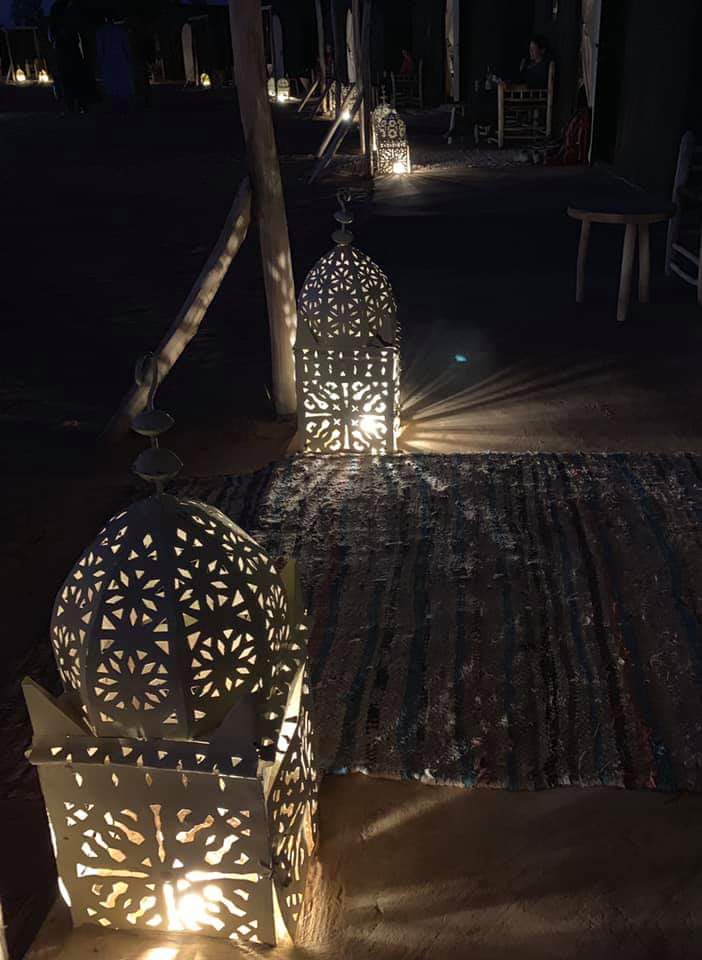
This gem came within an email this week where, in the Northern Hemisphere, various divinations by animals foretold of six more weeks of winter. Despite daylight hours growing, this pronouncement still means many more hours of darkness. I imagine that to “have faith in the night” that we will awaken come dawn, might have been one of those experiences that filled with awe our earliest ancestors. This photo, taken my first night on Morocco’s Sahara, could be the sun rising. Life’s circles and cycles, as too this week, Imbolc, the Celtic celebration of the first glimmering of spring, falling midway between Winter’s Solstice and Spring’s Equinox. Also, the feast day of Brigid, the patron saint of, among many things, poetry. Speaking of which, Whyte’s translation of this piece from Rilke evokes his own much loved poem, Sweet Darkness, read here by him.
First set the warp, the plain, stable threads that hold the pattern in place – the infrastructure of joy, the girders that hold up all we build of meaning, or justice, or peace. Use strong threads left by those who have gone before. Only then pick up the weft, the colored thread that you will use to weave accordingly to your plan. Choose carefully – this is what the world will see, each tiny act that builds the bright pattern of your life. Yes, the threads will tangle or knot or fray, and the flaws will show. Oh well. Tuck in the ends as best you can and start again. This is not the time to stop your weaving. So much is pulling at the great design.
– Lynn Ungar – Breathe, 2020
Call it synchronicity or coincidence, I quickly picked up one of two poetry chapbooks I had just received from Lynn Ungar and the page opened to this poem, the perfect companion to Monday’s blog post, Spinning the Sacred Feminine. I’d been inspired to feature a poem on weaving today, thinking back to one I had “composed” as the conversation harvest from an activity designed in collaboration with a textile artist-community developer eleven years ago for our professional community of practice. I don’t recall the specifics, but we provided strips of fabric for the group of facilitators to weave together as a way to consider our work grounded in conversation and story. This was the result:
WARP and WEFT An engaged community inspired by the virtues of beauty, hope and simplicity. Texture foretells of mystery and transformation. Beauty, the loom for creativity. Inspiration, the weft. We, the warp. Beginning.
“Women are spinners and weavers; we are the ones who spin the threads and weave them into meaning and pattern. Like silkworms, we create those threads out of our own substance, pulling the strong fine fibres, out of our own hearts and wombs.”
Sharon Blackie, If Women Rose Rooted, 2016
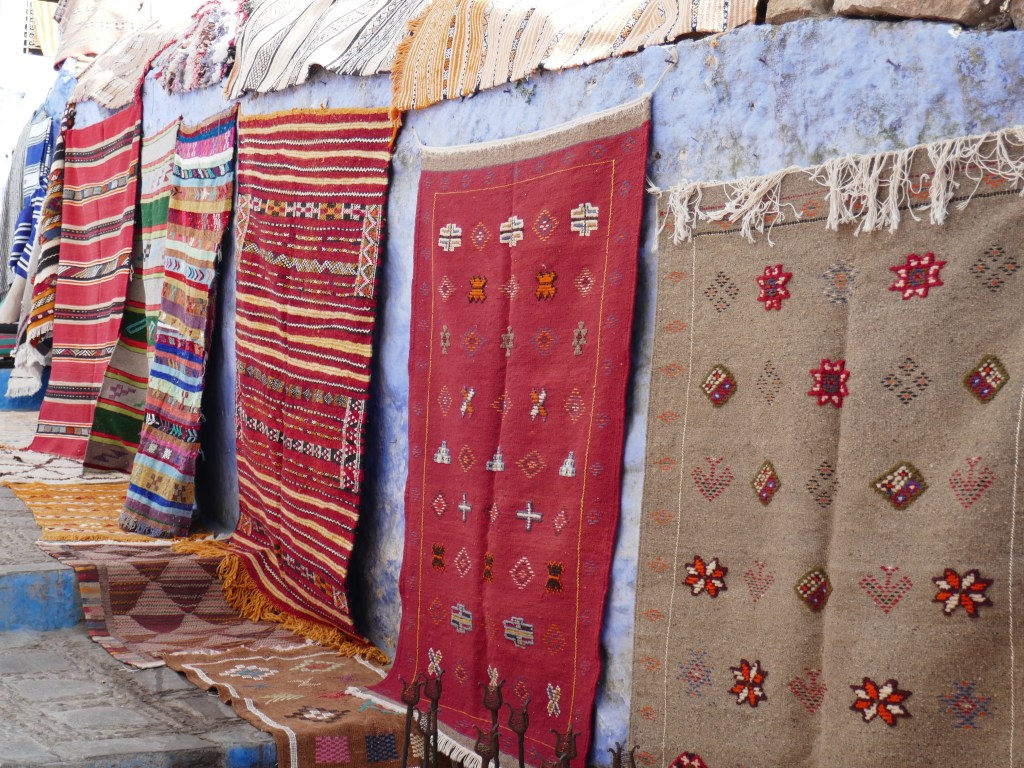
sisters weaving in Errachidia, Morocco, 2019
Gently teasing threads to weave together this week’s post, most vivid are my impressions from the deeply soulful virtual spaces in which I’ve been sitting this month. To name a few:
The monthly Poets Corner Sunday gathering featured Ellen Goldsmith and Lynne Ellis reading several of their poems for healing;
A brief exploration of the wisdom of Mary and the sacred feminine presented by a favourite teacher-writer, Christine Valters Paintner, over at the Wild Luminaries series from Seminary of the Wild.
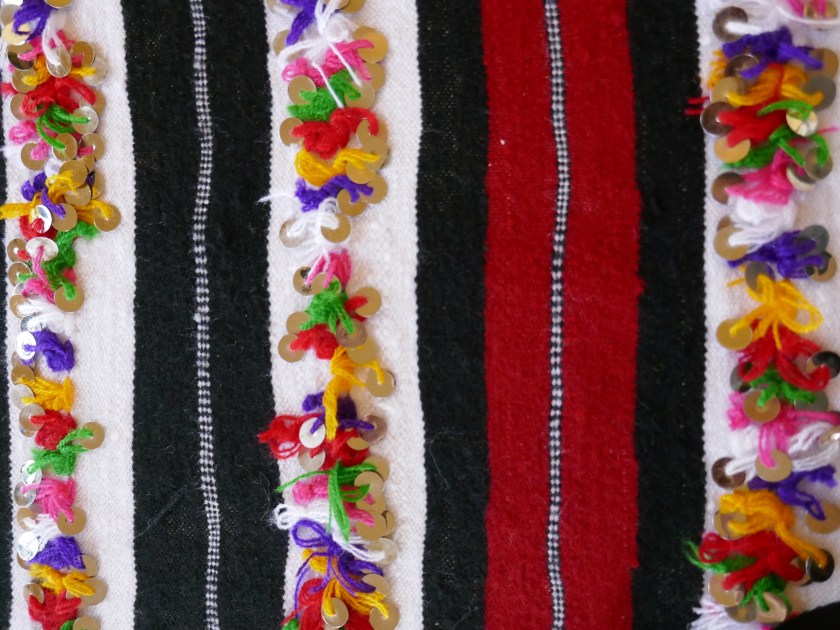
silk and wool threads and pattern for carpets in Kusadasi, Turkey, 2014
Spinning together these threads, the pattern emerging is my noticing how, in each gathering, women figured predominantly as sources of inspiration and wisdom – either in founding and-or hosting the groups and conversations, or in presenting, writing, teaching, sharing. Noticing how they, their process, and their offerings to the world, reflect and embody qualities of the sacred feminine as described by Christine Valters Paintner:
following intuition
attending to synchronicity
listening deeply to the natural world
surrendering striving
trusting the wisdom of underworld of shadow
honouring vulnerability as strength
embracing slowness and spaciousness
valuing being over doing
Struck by the conversation between Sue Monk Kidd and Terry Helwig – long-time friends and supports to each other’s writing – each described how shedding what no longer matters, simplicity, and literally driving in the slow lane to avoid the felt obligation of rush, make it easier to see, hear and embrace what matters now. How women make each other braver to follow their intuition, honour their vulnerability, do their inner shadow work.
“I think midlife is when the universe gently places her hands upon your shoulders, pulls you close, and whispers in your ear:
‘I’m not screwing around. It’s time. All of this pretending and performing – these coping mechanisms that you’ve developed to protect yourself from feeling inadequate and getting hurt – has to go.’
Time is growing short. There are unexplored adventures ahead of you. You can’t live the rest of your life worried about what other people think.”
Brene Brown
In her words written and spoken, Robin Wall Kimmerer poetically teaches students and her readers how to listen deeply to the natural world, to appreciate indigenous world views and the truth in “all my relations.” Echoed in our book salon conversation, rich in individual perspectives, impressions, and associations, I came away with deepened regard and much deeper regret for all that had been taken away and lost through the colonization and residential schooling of our First Peoples.
“It’s time to make some new threads; time to strengthen the frayed wild edges of our own being, and then weave ourselves back into the fabric of our culture. Once we knew the patterns for weaving the world; we can piece them together again.”
Sharon Blackie, If Women Rose Rooted, 2016
fabric woven in Errachidia, Morocco, 2019
On Saturday I woke to an email announcing that my ekphrastic poem written in response to a track from an electronic music album had been accepted for its anthology. For payment! With a contract coming! The feedback and edits from my writer-in-residence were terrific, just what I need to help this self-taught poet-in-process develop, and realize my innovative contribution to the leadership anthology: “poetic” process observation-recordings of our meetings, and synthesizing chapters into poetic “pauses” to introduce or close chapter sections.
Right about now, two years ago, we were getting ready to leave for a winter sojourn in southern Spain. A couple of weeks, mid to late February, travelling by bus and train through Andalusia – Sevilla, Aracena, Cordoba, Granada, Malaga and then back to Sevilla. And then upon our return home, the world would change. Today, nearly two years later, unprecedented impacts from the pandemic continue to roll out like an endless line of falling dominoes.
In response to a friend’s blog last week, I wrote “this seems to be the time and the place where the art, the poem, the story, the prayer, the silence, the conversation, the thank you, the kiss, the embrace may comfort, soothe, sustain and help us find our way.”
“Women can heal the Wasteland. We can remake the world. This is what women do. This is our work.”
Of course it’s to be expected: the dim light and early dark and the endless days of rain. And if the week of brutal cold wasn’t what you signed up for, well, it’s what you got, so might as well make the best of it. Other people got blizzards, and friends have flooded basements or days without power or lost everything to wind-whipped wildfire. Of course, there’s nothing less comforting than the notion that others have it worse. Misery doesn’t love company, it just spreads like an oil slick across the dull land, and we have moved on from terror to a cranky ennui. But one day last week, the clouds lifted, and there was the mountain, shining in all its snow-clad glory. My breath caught to remember that what I see is not the sum of what is there.
– Lynn Ungar –
So this is January, 2022. Today, a Facebook cartoon meme showed Lucy complaining to Charlie Brown of the new year, suggesting we had, in fact, been stuck with a used one. Last year, or even the one before that. Where I live, we’ve had weeks of “brutal cold” suddenly broken overnight by above freezing temperatures and rain, making for treacherous travelling, by car or foot. House fires with fatalities. Inflation rates the highest in 30 years. Unprecedented numbers of Covid caseswith friends suddenly succumbing.
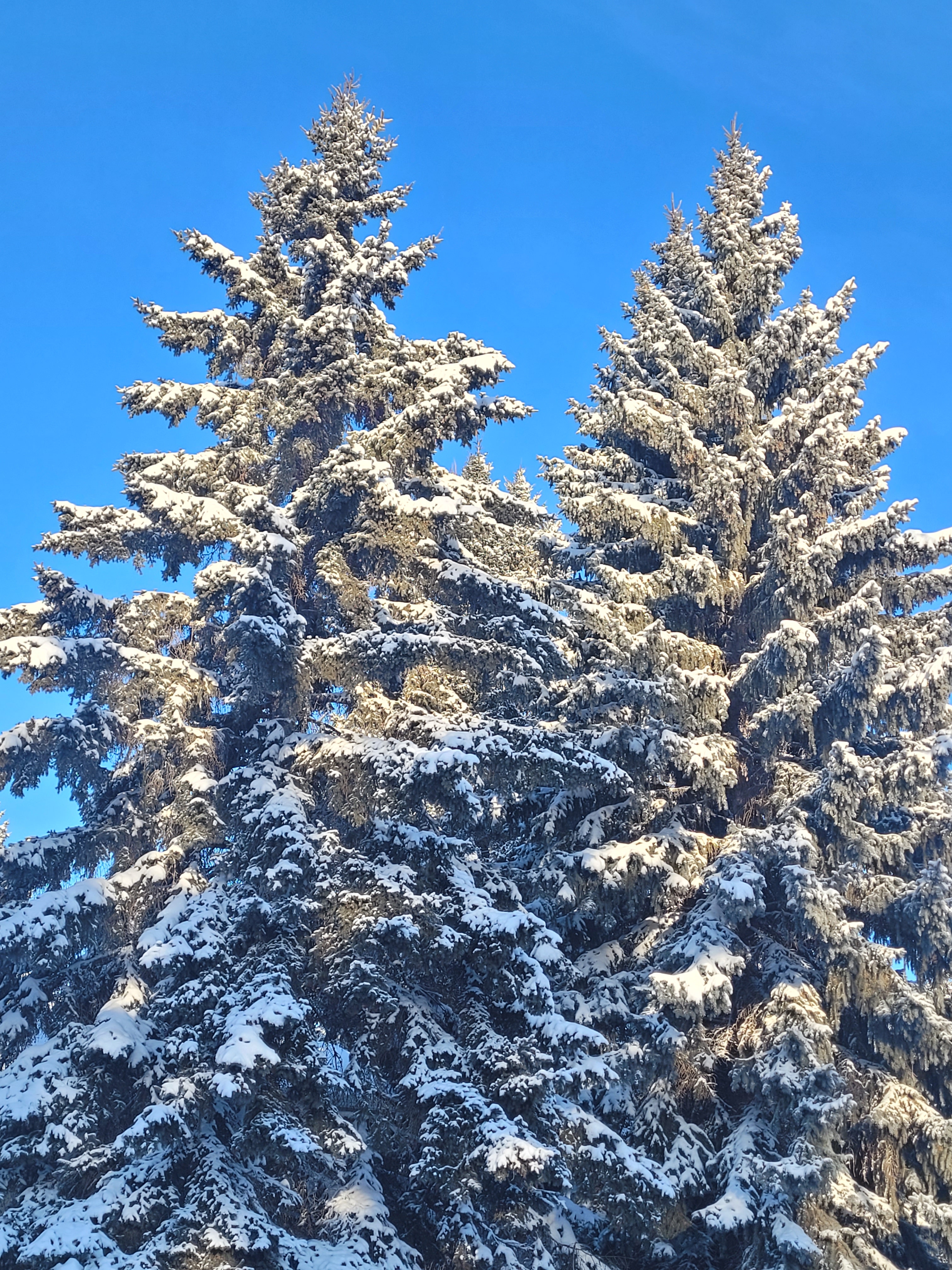
And yet the beauty of snow laden trees and brilliant blue skies. Wolf Moon an incandescent marvel illuminating the night. My parents’ 68th anniversary. The birthdays of my husband and niece. Poetry books in the today’s mail. Stories shared and books reviewed on Zoom. Tonight’s easeful meanderings in my women’s circle. An abundance of goodness and gratitude, more than named here. This is my January, 2022.














 A Wabi Sabi Life