For the past few weeks I’ve struggled to find any words that might matter both inside and out there. A few weeks back, the words of others helped me find my way through to some of mine. But right now I need to admit, as I did in reply to a friend’s ever thoughtful and beautiful blog post, that I am feeling emptied of words that might matter.
Quite paradoxical, that with the bigness, muchness, fullness of everything in the world right now, for this past quarter year living in this Covid-19 pandemic, now doubled-down with as insidious and deadly a pandemic, racism, I am empty.
I read, I watch, I listen to people whose voices I need to hear and need to learn from. And in response, I have lost mine.
Perhaps it’s a matter of laying fallow, much as I have felt myself to be these past weeks, when I suddenly realized that for the first time in my five decades’ long working life, I am now without and see no “what next.” Again, the paradox that with the full blush and burst of spring, and now summer’s arrival, at least by the calendar’s indication, I feel myself more to be in the late fall, early winter. One of life’s many liminal spaces and places.
Or perhaps it’s like this. An excerpt from John O’Donohue’s blessing for a father, sent in reply to a long lost friend, and to my own father for today, Father’s Day.
“There are many things We could have said, But words never wanted To name them; And perhaps a world That is quietly sensed Across the air In another’s heart Becomes the inner companion To one’s own unknown.”
John O’Donohue, To Bless The Space Between Us, 2008
Dance, when you’re broken open. Dance, if you’ve torn the bandage off. Dance in the middle of fighting. Dance in your blood. Dance, when you’re perfectly free.
– Rumi – translated by Coleman Barks in The Essential Rumi, 1995
_______
Sweet synchronicity – no sooner had I written this post when I heard a musical interpretation of these verses. Composer Anna Clyne created an orchestral arrangement featuring the cello, titled DANCE. Listen to the fourth movement, “in your blood,” with cellist Inbal Segev and the London Philharmonic Orchestra.
I heard it said last week that it’s never going back to the way it was. While said in the context of the current Black Lives Matter protests and uprisings in our cities, communities, and consciousness, I think it could also be said of the other deadly pandemic, COVID-19. For both, in our news and conversations, on social media platforms and our minds, words and images of updates and opinions, reactions and responses feel like waves breaking on the shoreline. Constant, rhythmic, one after the other. No sooner does one recede when another rolls in. Sometimes soothing me with optimism and hope. Sometimes pounding with a storm’s fury and rage.
“Your fidelity to love, that is all you need. No day will then match your strength.
What was once a fear or problem will see you coming, and step aside…or run.”
Daniel Ladinsky, A Year With Hafiz, 2011
At this moment, I’m on a live stream service from a church in my community. Centered on Pride Month, I watch the video story of how in 1999 it made the commitment to become an openly affirming congregation. Since the video’s production in 2006, I hear that while so much has changed, so much remains the same. Underscored is that protest is often the catalyst for change. That our ongoing attention, care and action is always needed. That the journey for justice never ends.
Marches have continued around the world this past week protesting racial injustice and police brutality. In my city, right now receiving the much-needed steady soaking from a weekend of rain, it is estimated that 15,000 people gathered during Friday evening’s sunshine and warm weather on the grounds of our provincial legislature. Wearing masks, carrying signs, “taking a knee”, all thankfully without the eruption of the violence other cities have recently seen, though social distancing protocols to stave off infection from the other pandemic, COVID-19, were hard to maintain.
Diego Romero, Digital Journalist for CTV News, “Fight for Equity: More than 10,000 people rally against racism at legislature”, June 5, 2020
Initially, I had planned to attend, but my best intentions gave way to accepting I was unable to put myself at risk due to chronic health factors, and a growing anxiety that signaled my need to pay attention. While I would miss the march, I would be in this fight for the long haul.
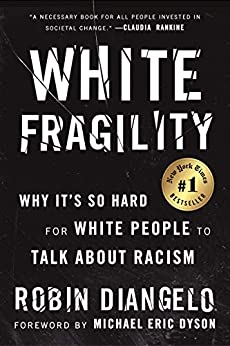
After concluding my participation in the eight week The Soul of a Pilgrim program this weekend, come Tuesday I’ll begin a twelve-week book study, reflection, and conversation of White Fragility by Robin DiAngelo, hosted by a small group of thoughtful, seasoned practitioners of The Circle Way. Together, we will create a safe and strong container to do our real, hard, and necessary work of identifying both within and without the systemic impacts of white supremacy and racism. It is a beginning of a long and real journey.
“It may be that when we no longer know what to do we have come to our real work, and that when we no longer know which way to go we have come to our real journey…”
Wendell Berry
Mindful of so much that has been happening in the world around me, this past week had me thinking back to a year ago when I experienced my first Peer Spirit Wilderness Quest. Hosted and guided by the founders of The Circle Way, Ann Linnea and Christina Baldwin, with their quest guide colleague, Deborah Greene-Jacobi , the stars and my schedule had finally aligned to make the trek to the eastern slopes of Washington’s Cascade Mountains. With “hindsight being 2020,” I’m grateful to have gone last year because this year’s quest had to be cancelled due to the pandemic. Months before my departure, I was thoughtfully and carefully prepared with packing lists, activities to discern my intention, clarifying conversations, and closer to the date, travel and weather details. Once arrived, I joined a beautifully multi-generational, cross-cultural cohort of eleven men and women, some who had travelled from as far as Australia and Germany. Once settled, we soon began in earnest, readying our tent sites and ourselves to fast solo on the Sacred Mountain for three days and nights.
Sitting and sleeping alone, with the sun and moon, the stars and the clouds, the wind, groves of aspen, spruce, pine and fir, birds and bugs as my companions, created a mighty connection and opened a portal through which I felt the wisdom and life giving and saving gifts of Nature. I did not return with answers to questions, nor even clarity as to first step directions to take. Instead, I was filled to overflowing with gratitude and reverence for all and everything that had brought me to this point in my life. I felt a deep appreciation that was beyond words, with no regrets. And I experienced an inner consolidation of hard l/earned presence.
The wilderness quest is very much akin to the pilgrim’s journey. Both are predicated on a final stage of “coming home” to oneself and one’s community, and to incorporation (in corpus – in body) of lessons learned, questions discerned, gifts received. (Again a synchronicity with this first year anniversary is that this last week’s eighth and final practice in The Soul of a Pilgrim is “coming home.”) This to then to awaken to the next call to begin again. Last year’s quest still reverberates and compelled me to follow the energy to The Soul of a Pilgrim. Now both call me into the work of dismantling my racism, taking guidance from this kind and compassionate wisdom:
“What continues to be the deepest wisdom for me is the call to release my effort, the summons to fall into the embrace of the One who offers an abundance of nourishment. I’m learning to trust in the unfinished nature of things. This calls me to give my heart to my work, as I always strive to do, and then wrap myself in the shawl of humility to honor my own limitations.”
Christine Valters Paintner, The Soul of a Pilgrim , 2015
My father could use a little mercy now The fruits of his labor Fall and rot slowly on the ground His work is almost over It won’t be long and he won’t be around I love my father, and he could use some mercy now
My brother could use a little mercy now He’s a stranger to freedom He’s shackled to his fears and doubts The pain that he lives in is Almost more than living will allow I love my brother, and he could use some mercy now
My Church and my Country could use a little mercy now As they sink into a poisoned pit That’s going to take forever to climb out They carry the weight of the faithful Who follow ‘em down I love my Church and Country and they could use some mercy now
Every living thing could use a little mercy now Only the hand of grace can end the race Towards another mushroom cloud People in power, well They’ll do anything to keep their crown I love life, and life itself could use some mercy now
Yea, we all could use a little mercy now I know we don’t deserve it But we need it anyhow We hang in the balance Dangle ‘tween hell and hallowed ground Every single one of us could use some mercy now Every single one of us could use some mercy now Every single one of us could use some mercy now
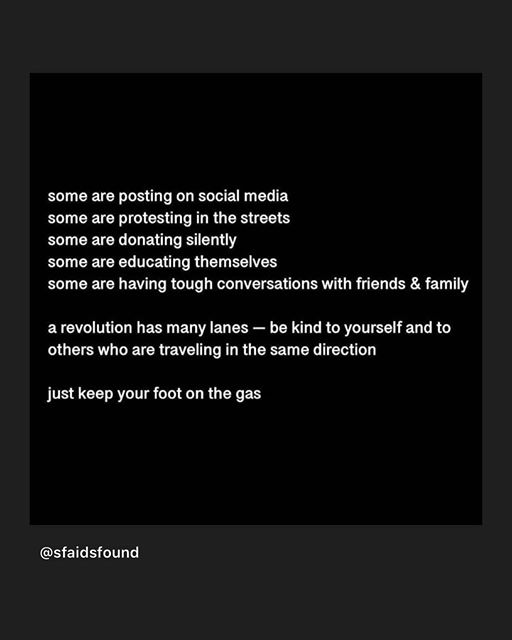
There is nothing I can write today that isn’t already being penned by those more astute, more qualified and more proximate to the rioting south of me in the United States, this time catalyzed by the murder of George Floyd, a black man, by a white police officer in Minneapolis. To say the collective outrage is palpable would be a gross understatement. As I write, headlines appear on my screen reporting increased aggression and violence from police towards protesters. And all the while, the nation’s “leader” resorting to his m.o. – ironically one he tried to shut down this week – tweets with the effect of throwing gasoline on fire. To say these already volatile scenarios in American cities are being intentionally and strategically inflamed by bands of out-of-state Neo Nazis and white supremacists, taking their lead from the one in charge, might be speculation bordering on truth.
So I borrow from the words of others to help me find my own.
And a perspective I heard yesterday in a zoom conversation.
“We need to connect the demand for justice – which is an outpouring of love – with tenderness.”
Omid Safi Islamic scholar and teacher of The Heart of Rumi, May 30, 2020
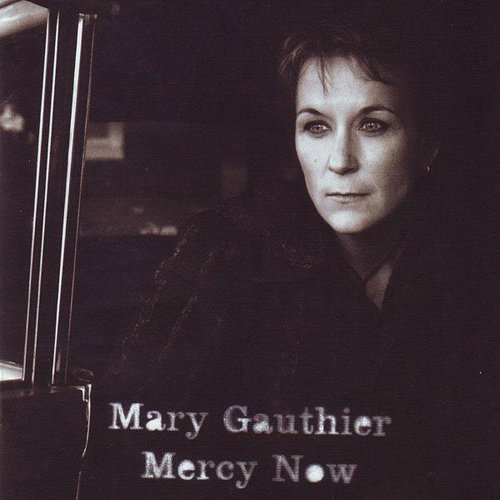
Over the years at summer folk festivals across my province, I’ve heard American songwriter Mary Gauthier sing one of her most memorable songs, Mercy Now. Released in 2005, its relevancy persists as a poignant anthem for these times. Reading the lyrics over at her website for an excerpt here, I realized, with a heavy heart, that every word is as pertinent today as then. Maybe because her gift is to write with a sparse honesty about our human condition.
“…My brother could use a little mercy now He’s a stranger to freedom He’s shackled to his fears and doubts The pain that he lives in is Almost more than living will allow I love my brother, and he could use some mercy now
…Yea, we all could use a little mercy now I know we don’t deserve it But we need it anyhow We hang in the balance Dangle ‘tween hell and hallowed ground Every single one of us could use some mercy now…”
Mary Gauthier, Mercy Now, 2005
I’ve completed the seventh week in The Soul of a Pilgrim with its practice of “embracing the unknown.” This, too, a reality of the human condition, despite our best efforts and delusions to think we know one moment beyond this one. An early morning practicing the art of contemplative photography, framed by this theme, bore these ephemeral gifts of tender mercy in image and word.
Please, can I have a God who within me beyond me enboldens, encourages, enthuses me and we
to be better to do better
for self and kin of every tribe and colour every love and gender
so that me and we may always love, live and breathe
free.
(inspired by “Please, Can I Have a God,” by Christine Valters Paintner, in The Soul of a Pilgrim, 2015)
Photo from Dr. Eileen Villa, Twitter, May 23, 2020, Toronto’s Trinity Bellwoods Park
In a Dark Time
Do not rush to make meaning. When you smile and say what purpose this all serves, you deny grief a room inside you, you turn from thousands who cross into the Great Night alone, from mourners aching to press one last time against the warm flesh of their beloved, from the wailing that echoes in the empty room.
When you proclaim who caused this, I say pause, rest in the dark silence first before you contort your words to fill the hollowed out cave, remember the soil will one day receive you back too. Sit where sense has vanished, control has slipped away, with futures unravelled, where every drink tastes bitter despite our thirst.
When you wish to give a name to that which haunts us, you refuse to sit with the woman who walks the hospital hallway, hears the beeping stop again and again, with the man perched on a bridge over the rushing river. Do not let your handful of light sting the eyes of those who have bathed in darkness.
Saw the wanderin’ eye, inside my heart Shouts and battle cries, from every part I can see those tears, every one is true When the door appears, I’ll go right through, oh I stand in liquid light, like everyone
I built my life with rhymes, to carry on And it gives me hope, to see you there The things I used to know, that one fine
One fine day
In a small dark room, where I will wait Face to face I find, I contemplate Even though a man is made of clay Everything can change that one fine —
One fine day
Then before my eyes, is standing still I beheld it there, a city on a hill I complete my tasks, one by one I remove my masks, when I am done
Then a peace of mind fell over me — In these troubled times, I still can see We can use the stars, to guide the way It is not that far, the one fine —
One fine day
– David Byrne and Brian Eno – 2018
David Byrne, founder of my favourite dance band, Talking Heads.
Last week’s spoken weariness persists. Now with another soupçon of sadness. I think of Rumi and his guest house, welcoming all these sensations and feelings as guides from beyond. I continue to practice the art of sitting in the void of uncertainty, in the tension of it all, of it all being true.
Too, I continue my participation in The Soul of a Pilgrim. It’s become a way to chronicle my reactions and response to the pandemic within the context of these eight practices. Last week, the fifth, the practice of being uncomfortable, particularly with being lost.
In the week’s online conversation, and in anticipation of how I’d create a scenario walking in my neighborhood where I’d feel lost, get lost, be lost, I posted this favourite poem, Lost, as a guide for me and others.
Stand still. The trees ahead and bushes beside you Are not lost. Wherever you are is called Here, And you must treat it as a powerful stranger, Must ask permission to know it and be known. The forest breathes. Listen. It answers, I have made this place around you. If you leave it, you may come back again, saying Here. No two trees are the same to Raven. No two branches are the same to Wren. If what a tree or a bush does is lost on you, You are surely lost. Stand still. The forest knows Where you are. You must let it find you.
David Wagoner, 1999
The evening I set out, was initially along the familiar route, with our Annie dog leading the way. With each step, I recalled those times I’ve been lost, or more significantly, worked to not get lost. With each step, I felt the discomfort of my body tightening, butterflies in my gut, my head straining to figure it out, find my way.
Travelling solo in Europe in my fifth decade. Late to the party, I never did the university gap year, backpack, Eurail pass thing. I finally made that long held dream come true, thanks to a deferred salary leave which allowed me to travel for three months. I remembered arriving in Venice at the beginning of Carnavale, disembarking from the train, stepping down onto the platform to catch a water ferry, and find my way to my apartment. Almost a decade ago, the borrowed cellphone didn’t work. Wifi was sketchy at best. But constant as a northern star, the kindness of strangers helped me arrive and make a quick email connection with my husband to let him know I’d arrived safely, the one and only during that leg of the trip.
I’d always considered myself poor with directions, but that trip, those three months, taught me otherwise. Perhaps I erred on the side of over-vigilance, but travelling alone, in low season winter and spring, when the days were short, I did what I needed to stay “found”, using my paper map, practicing walking routes to train stations to estimate time, asking for help, photographing landmarks to get me “home.” It was all about self-care, managing my anxiety, not getting too overwhelmed with the “bigness, muchness, fullness” of it all that was new, alluring, exciting, different. For me, travelling alone, getting lost would not add to the experience.
Those memories and visceral feelings walked with me and Annie as we approached the school playground. I was struck by the oddness, the “wrongness” of not seeing any children playing on the equipment, not seeing their parents watching them, on this sunny early evening. I felt lost in this pandemic scenario.
Even though Annie and I walked along different streets that evening, some, for all the years I’ve lived here, I’d never walked nor driven down before, the lost I felt was an interior one, grieving so much which is no longer, and wondering, will it ever be again.
This lost has weighed heavy these past days. Here in Canada, it’s our first long weekend of the summer. It’s been unseasonably cold across the country, with snow falling, oddly even, in more temperate locations. While it makes easier not getting together with friends for barbeques or going to the greenhouses for bedding plants, it’s not supposed to be this way. And yet it is.
Last night over dinner, I wept. Then a chance viewing one of our iconic folk-rock bands, Blue Rodeo, sing their anthem song, We Are Lost Together, with Canadians at home, I wept some more.
Of among hundreds in this global online community, one woman responded to my writing with this lovely insight:
“I appreciate your reflection on the inner experience of ‘lostness’ – how brave of you to do Europe like that, ‘late to the party’ as you called it. And the irony that for all its challenges and your self-belief about your poor sense of direction you were not once lost. And yet something of this time and its strangeness in the midst of your familiar surroundings can induce the sense of lostness and one that ‘weighs heavy’. I find myself identifying with you, thank you Katharine.”
I felt seen. The lost that had weighed heavy became lighter with connection.













 A Wabi Sabi Life