Tiny Choices and Small Moments

โ€œSo, what are you plans for the day?โ€ I asked Sig one morning last week, before he got too involved in monitoring our stocks.

โ€œI havenโ€™t decided,โ€ he casually responded.

Heading upstairs to get ready for the day, with a stop in the kitchen to warm up my coffee, I thought how wonderful, how privileged even, to have the freedom to decide your day. Later on, I mentioned this to Sig, and he agreed, both of us recognizing the gift, the abundance, the richness of his statement and our lived reality.
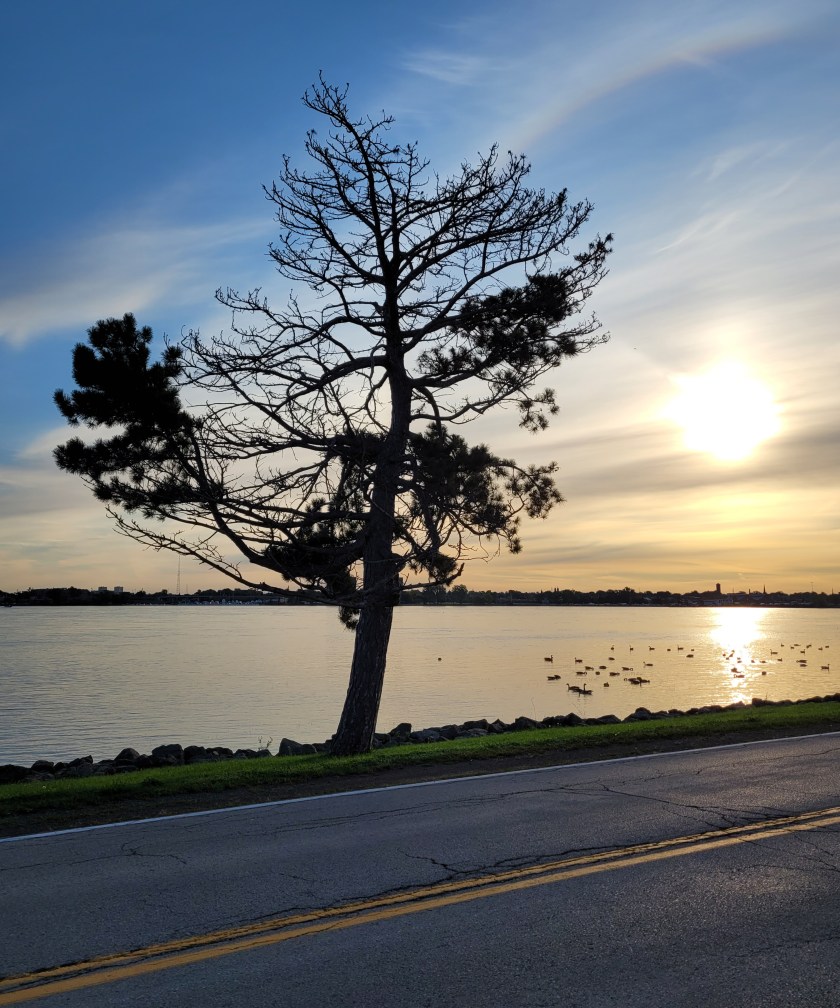
old pine on the riverbank at sunrise

Yesterday, reading a couple of blogs from my writerly friends, both meandered around this insight. Helen, in Ageless Possibilities, opened her reflection inspired by a quote from novelist, Louise Penny, in which she describes life as being made up of the tiny choices we each make every day. Helen writes,โ€œYears ago, I made a collage titled Someday, a visual dream of reading, gardening, lazing, yoga, friends, and family. I did not realize then that someday was quietly unfolding through my daily choices.โ€

Gretchen, author of the wise and bittersweet memoir, Mother Lode: Confessions of a Reluctant Caregiver (IMHO, required reading for anyone navigating the care of elderly parents) wrote with spicy humor and a dash of irreverence, โ€œOne does not have to carpe the crap out of every single day.โ€ Call it a gift to self as she described her recent 73rd birthday, shored up by others who echoed that itโ€™s always the small moments of a life – being present to and curious about – that matter.


Weโ€™ve had a ridiculously cold start to summer with inches of heavy, wet snow falling in the foothills and highway whiteouts on Solstice. Last weekend, thunderstorm warnings resulted in hailstorms that shattered flowers and shredded hostas and the fragile spinach, arugula and lettuce seedlings. The local greenhouse warned that recovery might be tenuous, particularly for large-leaved vegetables and fragile tomatoes. In the scheme of things, we needed moisture. Still do, as I recalled a skillful gardener-friend saying a few years ago, after a similar dry winter and spring, that if we dug down, at best weโ€™d see an inch or so of damp soil and then dry, sandy earth beneath. I make mention of this because Iโ€™d planned to spend time weeding and tending to those hail-struck pots and beds. But instead, I made the small, yet significant choice to visit a friend who I hadnโ€™t seen since we celebrated my birthday. My friend is living with lethal cancer, and depending on the day, would probably say on borrowed time, where and when those tiny choices, and small moments, matter enormously.


The final post I read yesterday was written by Anne Lamott in response to the USAโ€™s choice to bomb Iran yesterday. A choice with consequences too profound and potentially devastating to fathom.

“I have no answers but do know one last thing that is true: Figure it out is a bad slogan. We wonโ€™t be able to. Life is much wilder, complex, heartbreaking, weirder, richer, more insane, awful, beautiful and profound than we were prepared for as children, or that I am comfortable with. The paradox is that in the face of this, we discover that in the smallest moments of taking in beauty, in actively being people of goodness and mercy, we are saved.”

We are saved.

May it be so.

Much love and kindest regards, dear friends.

Come

PRAYER

Every day I want to speak with you. And every day something more important
calls for my attention โ€“ the drugstore, the beauty products, the luggage

I need to buy for the trip.
Even now I can hardly sit here

among the falling piles of paper and clothing, the garbage trucks outside
already screeching and banging.

The mystics say you are as close as my own breath.
Why do I flee from you?

My days and nights pour through me like complaints
and become a story I forgot to tell.

Help me. Even as I write these words I am planning
to rise from the chair as soon as I finish this sentence.

~ Marie Howe, poet extraordinaire and winner of the 2025 Pulitzer Prize for Poetry ~


For days I’ve felt compelled to write about Gaza.

About the thousands of children in Gaza maimed and killed by Israeli attacks.

About mothers and fathers in Gaza having to make the no-choice choice: stand in line for a meager ration of food to feed your family, and risk being killed while you do so.

About the genocide of Gaza.

To acknowledge with at least the same amount of moral outrage I’ve been feeling and writing about the current American president and his administration. An outrage drenched in horror and grief for Gaza and its people.

Last Sunday, the night I typically reserve to write Monday’s blog, I sat here and not a word emerged. Hoping to “prime the pump,” I looked over a first draft poem I’d written two years ago about searching for a middle way of compassionate understanding for my Jewish friends in bitter anguish for the October 2023 Hamas attacks and hostage-taking, and my Sufi friends reeling from those egregious acts. The poem is incomplete, my editor having suggested that neither it nor I were ready for its completion. There was no blog on Monday.

Completion? Is it even possible?

“The mystics say you are as close as my own breath.
Why do I flee from you?”

Today is the beginning of Eid ul-Adha, the festival of sacrifice, one of the most important festivals in the Muslim calendar.

Today I acknowledge my silent complicity in the face of sacrifice exacted from both the Jewish and Muslim peoples. Maybe there is no middle way. Maybe only the statement that what the Israeli administration is doing to the people of Gaza – to my way of thinking, an identification with the aggressor – is utterly wrong and as evil as I have said the current American president and his administration are. And, too, the actions of Hamas.

“Help me. Even as I write these words I am planning
to rise from the chair as soon as I finish this sentence.”

And in the words attributed to the Sufi poet, Rumi:

โ€œCome, come, whoever you are. Wanderer, worshiper, lover of leaving. It doesn’t matter. Ours is not a caravan of despair. Come, even if you have broken your vows a thousand times. Come, yet again, come , come.โ€

Much love and kindest regards, dear friends. May we do better.

Trusting the Threads

grounded in Nature’s altar

I wondered if last Friday’s photo and poem feature were simply too much for readers, as few opened the post, either here or on social media. Perhaps if I’d titled it, “I Am NOT Happy,” and posted another photo, instead of using the title of Ilya Kaminsky’s poem, “We Lived Happily during the War,” with my photo of an actual Ukrainian door burned in the invasion, it might have evoked more curiosity and less reluctance. Please know this is not a critique, simply an observation AND acknowledgment of so much fatigue, despair, rage and fear, AND the wise self-care choices we each need to make, including what to click and read, and what to pass on. Though I must take a moment to acknowledge, with deep and abiding gratitude, another’s post that cracked open and gave me permission to name what I’d named in mine.

Karen Maezen Miller, an ordained Soto Zen priest, wrote last week, I Am Not Free,” in which she unabashedly and vulnerably shared the impacts of and her feelings about the current goings on in the USA. I won’t go into detail, but to read a Zen priest – one whose writings have always hit the mark for me, and to whom I have occasionally, naively attributed a well-practiced, placid, equanimity – use the words “terrified,” “furious,” and “hate,” was one of the most reassuring pieces I’d read in weeks. One from which I did feel free.

Last week I attended a session hosted by my library’s new writer-in-residence. “Music and the Practice of Poetry,” it ended up being a wonderfully playful experience in understanding the importance of rhythm to writing and reading aloud poetry. As recommended, I brought something to write on, in this case my black journal of bits and pieces of writing transcribed over the years from my journals, letters, emails, social media posts. A collection of “seeds” that when I reviewed, saw how several had sprouted and blossomed into poems and essays. Like this piece, written in 2014, its essence rooted in last Monday’s post, “Rest.”

“I hear a murmuring of rest, OK, yes and then
the air smelling sweet and cool.
There are berries to pick and laundry to hang.
Groceries to buy and friends to call.
This could be enough. For right now is enough.
Ease back into life here at home.
Give thanks and send blessings
to all those suffering.”

Or this one, that I wrote and posted on Facebook exactly six years ago today. Its simple truth and prescience like Kaminsky’s poem.

And how I’ll end this post:

“There are the times when a poem becomes a prayer,
an image the beautiful antidote to the day’s atrocities.”

Much love and kindest regards, dear friends.

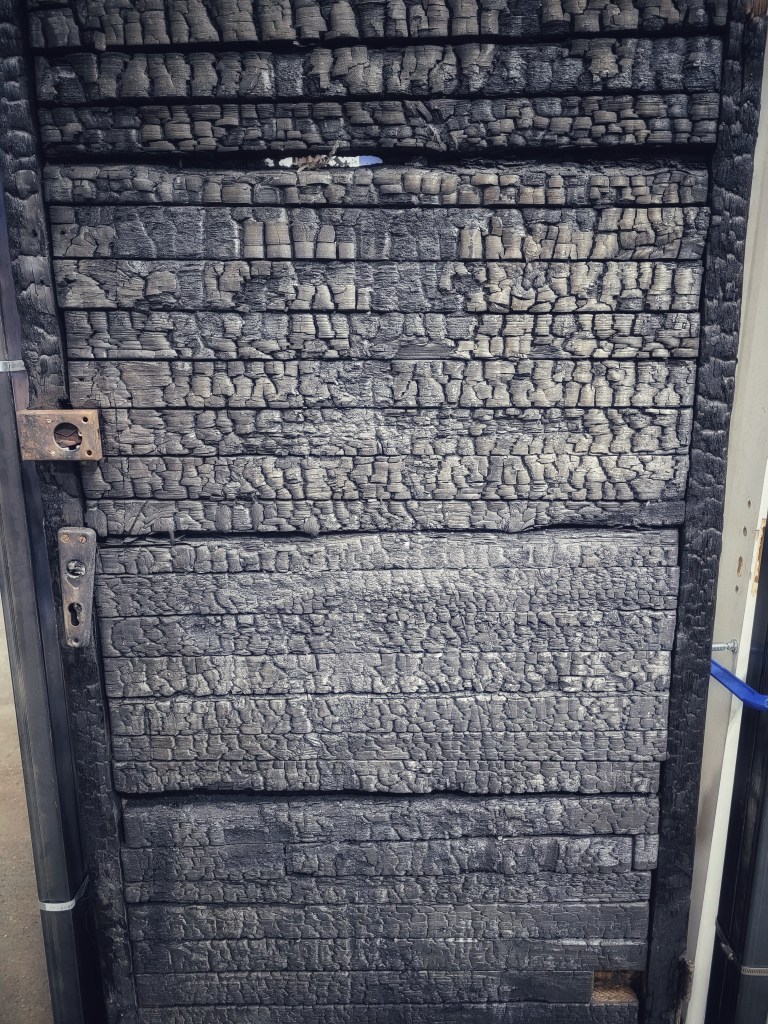
“We Lived Happily during the War”

We Lived Happily during the War

And when they bombed other peopleโ€™s houses, we

protested
but not enough, we opposed them but not

enough. I was
in my bed, around my bed America

was falling: invisible house by invisible house by invisible house โ€”

I took a chair outside and watched the sun.

In the sixth month
of a disastrous reign in the house of money

in the street of money in the city of money in the country of money,
our great country of money, we (forgive us)

lived happily during the war.

~ Ilya Kaminsky, Deaf Republic. 2019 ~

I first heard Kaminsky’s poem in June 2021, read by Padraig O’Tuama in his Poetry Unbound podcast. Written in 2009, its powerful prescience grabbed me then, before hell was unleashed in Ukraine when Russia invaded in February 2022. And it hasn’t let go. Its grip now tighter as the American Republican administration, thinking it is the “great country of money,” backed by men in their “houses of money,” threatens my country, its people, and our livelihoods. Already killing the land, people and livelihoods of Ukraine, Gaza, and beyond.

I am not happy. In all honesty, I feel the rage that comes with such betrayal; fear; sadness; and, in moments, an unsettling hatred towards these men intent on destroying our world. Their acts are evil, committed without empathy and in full consciousness of the consequences of irreparable suffering and death.

Below is my post, written shortly after Russia’s invasion of Ukraine, in which I first included Kaminsky’s poem and the wise words from Canadian elder, Stephan Jenkinson, suggesting “it is no accident that we were born at a time when the culture that gave us life is now failing.

No one lives happily during war. It is madness to think otherwise, despite the lies and bravado to the contrary. Thankfully, our world is too connected, and blessedly our hearts, to ignore the assaults and violence being perpetrated. Admittedly, it does not make for easy living.

Much love and kindest regards, dear friends. May you keep well. You are needed. We need each other.

My Thanks and Tribute

I’ve long known that eldest daughters and big sisters might need big sisters in their lives. Being both, I am beyond blessed to have three – Ann, Christina and Sarah. Teachers, mentors, wise women, and friends, each in her way, over the years, has supported and encouraged me to live boldly, courageously, unequivocally committed to my knowing, my voice, and my writing.

Nine years ago, at this time of year, when darkness and cold begin to envelop us in the Northern Hemisphere, I attended my first writing retreat under Christina’s kind and wise tutelage. As the author of several books, including two on journaing (one the first to be given an ISBN by the Library of Congress); two on the practice of circle conversations (one co-authored with Ann); my favourite spiritual volume for mindful living; one on the power and practice of telling and writing our stories; and now, a novel, I was is very good hands sitting in circle among women, many much more experienced in writing.

A leap of faith…my response to the voice through the door calling me…turning toward what I deeply love…saving myself. (Rumi) An answered prayer, as during one of the Pacific Northwest’s infamous storms, waking with a bellyful of doubt before dawn, I received word I’d won a story writing contest, and later during the week, writing for thirty-six hours in silence, a series of prose-poems, tentatively titled “Love Letters to Timeless Poets,” emerged.

That time with Christina, and her subsequent inspiration and emboldening, together with that of Ann and Sarah, continue to nurture me as writer and poet. And so it is that I use this space now to thank Christina, and Ann and Sarah, and to describe Christina’s most recent literary accomplishment.

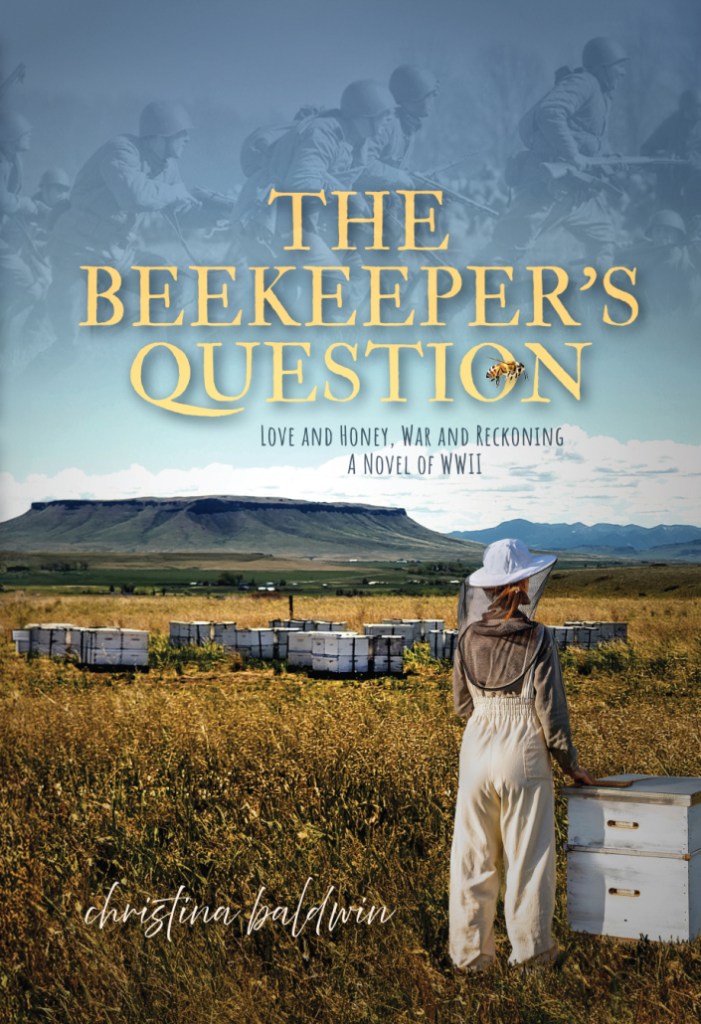
The Beekeeper’s Question, Christina’s decade long labor of love, and response to the voice through the door calling, is a work of historical fiction resonant with today’s struggles. Described as –

“Young lovers, old friends, a mountain valley and a North African battlefield: two Montana families face loss, prejudice, violence, and redemption in the uncertainty of 1940s America.”

Christina Baldwin

– it was perfect reading when I returned home from my long-distance walk. One of those “couldn’t put down,” beautifully written books that broached the hard stuff in the lives of its characters and unflinchingly illuminated the settler history of intentional devastation to the indigenous peoples. I was deeply moved by the subtle weaving in of animism and the mysteries and wisdom of the deep feminine. I felt as did one of Christina’s reviewers:

“So richly written that the characters feel like friends and itโ€™s bittersweet when the story ends.”

Molly Guptill Manning, Author 
When Books Went to War, NYT Bestseller

As darkness and cold begin to envelop you, and looking ahead to the season of gift-giving, The Beekeeper’s Question might be one for your list, and for yourself.

Much love and kindest regards, dear friends.

To Never Forget

standing on the shore of Whidbey Island

To love. To be loved.

To never forget your own insignificance.

To never get used to the unspeakable violence and the vulgar disparity of life around you.

To seek joy in the saddest places.

To pursue beauty to its lair.

To never simplify what is complicated or complicate what is simple.

To respect strength, never power.

Above all, to watch. To try and understand. To never look away. And never, never to forget.

~Arundhati Roy from The Cost of Living ~

I’ve taken the liberty to reformat Arundhati Roy’s words, originally written in paragraph, to emphasize the power of her statement. Every line, a simple, clear instruction for living in these times. A potent, unequivocal pointing to how to be, and what action to take, or not. An echoing of the many words, paragraphs, and poems that have been newly crafted or resurrected this past week to console and inspire.

This past Monday, in both Canada and the US, was a day officially designated to remember, to never forget the sacrifices made by millions of men and women who gave (and continue to give) life and limb, heart and mind, in the fight for human rights and freedom, and a democratic way of living. A profound juxtaposition that this day occurred so soon after election results that many fear will, with clear and unequivocal intention, undo and make, at the very least, moot these sacrifices.

A couple of years ago, in another Friday photo and peom feature, I posted William Stafford’s A Ritual to Read to Each Other (1998), wherein he reminds us:

For it is important that awake people be awake,
or a breaking line may discourage them back to sleep;
the signals we give โ€” yes or no, or maybe โ€”
should be clear: the darkness around us is deep.

In this week’s writing circle, a monthly zoom space where five of us (give or take, depending on life’s other plans) support each other in living a writerly life, despite life’s other plans, I was invited to read my poem, In the Days That Follow, posted here last week. We spoke of the need to take time to fully feel our griefs; to rekindle small communities of support; to intentionally look for evidence of our being enough; to hold onto our individual visions of hope.

Each a way to help us be awake amidst the deep darkness.
Each a commitment to never forget.

Much love and kindest regards, dear friends.
How is Your Haal (Heart)?

โ€œIn many Muslim cultures, when you want to ask them how theyโ€™re doing, you ask: in Arabic, Kayf haal-ik? or, in Persian, Haal-e shomaa chetoreh? How is your haal?

What is this haal that you inquire about? It is the transient state of oneโ€™s heart. In reality, we ask, ‘How is your heart doing at this very moment, at this breath?’ When I ask, ‘How are you?’ that is really what I want to know.

I am not asking how many items are on your to-do list, nor asking how many items are in your inbox. I want to know how your heart is doing, at this very moment. Tell me. Tell me your heart is joyous, tell me your heart is aching, tell me your heart is sad, tell me your heart craves a human touch. Examine your own heart, explore your soul, and then tell me something about your heart and your soul.

Tell me you remember you are still a human being, not just a human doing. Tell me youโ€™re more than just a machine, checking off items from your to-do list. Have that conversation, that glance, that touch. Be a healing conversation, one filled with grace and presence.

Put your hand on my arm, look me in the eye, and connect with me for one second. Tell me something about your heart and awaken my heart. Help me remember that I, too, am a full and complete human being, a human being who also craves a human touch.โ€

โ€” Omid Safi, from The Disease of Being Busy

heartful distractions on my writing desk

My friend Sally, who I met last year walking the Via di Francesco, shared this post from our mutual friend, Omid Safi. I first “met” Omid when he was one of a cadre of regular bloggers/columnists posting in an early iteration of On Being. It was in the aftermath of 9-11 when tensions, animosities, and cultural misunderstandings were high, particularly in the US. What always touched me was how Omid, who is a professor of Asian and Middle Eastern Studies at Duke University, always wrote with an open-hearted clarity, generously giving space for multiple perspectives and opinions, all the while sharing his culture by way of story. In my experience of Omid, his writing and online presence are an embodiment of his love and reverence for his teacher, Rumi, founder of the Sufi order of whirling dervishes.

On a day when I read that over 40,000 lives have been lost to the conflict in Gaza, with thousands more unaccounted for, Omid’s message of heartful connection and healing conversation lands deep within my heart and soul.

Ours has been a virtual friendship. One day I hope to meet Omid in person, perhaps on one of his Illuminated Tours to Turkey or Morocco. One day I hope to put my hand on his arm, look him in the eye, tell him something about the state of my heart, and listen to him tell me about his. And together remember we are each and all human beings, craving human touch, connection, and peace.

Much love and kindest regards, dear friends.

Unison Benediction

UNISON BENEDICTION

Return to the most human,
nothing less will nourish the torn spirit,
the bewildered heart,
the angry mind:
and from the ultimate duress,
pierced with the breath of anguish,
speak of love.

Return, return to the deep sources,
nothing less will teach the stiff hands a new way to serve,
to carve into our lives the forms of tenderness
and still that ancient necessary pain preserve.

Return to the most human,
nothing less will teach the angry spirit,
the bewildered heart;
the torn mind,
to accept the whole of its duress,
and pierced with anguishโ€ฆ
at last, act for love.

May Sarton, Collected Poems 1930-1993


I think recent events south of the border prompted the posting of this poem on social media this week. It’s a time fraught…again…continuously… with uncertainty and anxiety. The polarizing fight for power, opinions weighing heavier than truth…torn spirits, angry minds. Tonight, in this house, tempers flared at dinner as days of heat warnings and insomnia-induced fatigue made patience a precious thing.

Driving to the start of this morning’s training walk, I heard a brief interview with one of the members of DahkaBrakha, a Ukrainian band who combines “traditional folk and punk, drawing inspiration from their Ukrainian homeland with a global sensibility. Melodies from the ancient past collide with future sounds…their style ‘ethno-chaos.'” Marko said the point of their music is to declare to the world that, despite what their invading neighbor says, Ukrainian culture and language exist…and to remind people everywhere in the democratic world, that their problem is not only their problem, but also a big problem for all democratic countries. The truth of his words stung. And as I set out, I was struck with how news cycles now make almost obsolete, or at least only mid-section coverage of Ukraine’s plight, and how much duress, at every scale, many of us hold.

“Return to the most human,” Sarton’s benevolent instruction.

“The dark thought, the shame, the malice/meet them at the door laughing, /
and invite them in,” admonishes Rumi.

“Act for love,” always a way through.

Much love and kindest regards, dear friends.

Standing Back

STANDING BACK

If this is the best you can do, citizens of the world,
I resolve to become summer shadow,
turtle adrift in a pool.
Today a frog waited in a patch of jasmine
for drizzles of wet before dawn.
The proud way he rose when water
touched his skin –
his simple joy at another morning –
compare this to bombing,
shooting, wrecking,
in more countries than we can count
and ask yourself – human or frog?

– Naomi Shihab Nye, Voices in the Air, 2018 –

Talk about prescience.
This poem was published in 2018, though most likely written months, if not years earlier. Given the poet’s Palestinian father, Naomi Shihab Nye has always had her eye on, and heart attuned to the chronic strife in her father’s homeland.

I wrote at the bottom of the poem’s page, after yesterday’s reading and in response to growing tensions and extended involvements, “Are we poised for WW3? And too, Ukraine and Russia since February 2022…” My question as reasonable as the poet’s, but I pray, not prescient.


I’ve been away for a several days, hence the pause. Writing, but not in this space. It’s nice to be back until I set off again in a few weeks. Much love and kindest regards, dear friends.

Cross the Sea

CROSS THE SEA

A girl in Gaza
speaks into a table microphone:
Do you believe in infinity?
If so, what does it look like to you?

Not like a wall
Not like a soldier with a gun
Not like a ruined house
bombed out of being
Not like concrete wreckage
of a school’s good hope
a clinic’s best dream

In fact not like anything
imposed upon you and your family
thus far
in your precious thirteen years.

My infinity would be
the never-ending light
you deserve
every road opening up in front of you.

Soberly she nods her head.

In our time voices cross the sea
easily
but sense is still difficult to come by.

Next girl’s question:
Were you ever shy?

– Naomi Shihab Nye, Voices in the Air, 2018

I’m sitting at a worktable in my public library typing this post for tomorrow’s drop. We’ve been without WIFI in our home office for nearly a week (hence why no Monday post). WOW! How dependent are we on this technology? It’s tax time. My husband does all our investing online. Bills to be paid by the month end. Waiting to print time sensitive return labels. Looming project deadlines. I’ve managed with my phone but wonder how much I’m over the data limit and how much the costs will be. My neck aches from being hunched over…texting and tapping what I can to stay in touch, be responsive. So, in this moment, I’m reminded how much I enjoy and appreciate my library, surrounded by stacks, students plugged in working at other tables, surrounded by full-length windows.

It’s quintessential springtime in Alberta. After several days of sun, warm weather, and melted snow – after getting off really easy with winter – the temperature dropped below freezing and snow fell for most of the day. I took a leisurely start to my day with a coffee date being canceled. Sipping my Americano, in the flat white light of the living room, quiet with snow gently falling outside, I began reading this volume of poetry, waiting on my shelf for just this moment. Needing some shoring up given another week of rejections and trepidation about the manuscript I’m revising, I was not disappointed, as even its epigraph began to set me straight:

“Stay humble, blend, belong to all directions.
Fly low, love a shadow. And sing, sing freely,
never let anything get in the way of your singing,
not darkness, not winter,
not the cries of flashier birds, not the silence
that finds you steadfast
pen ready…”

Naomi Shihab Nye

Then this, the first sentence of her introduction:

“Poet Galway Kinnell said, ‘To me, poetry is someone standing
up, so to speak, and saying, with as little concealment as possible,
what it is for him or her to be on earth at this moment.'”

And this, to open the first section, “Messages,”:

Broken pencil
Broken pen
Maybe today
I’ll write my best poem

Well maybe not a poem but a post. And maybe not my best, but enough. Enough to be thankful for Palestinian-American poet and educator, Naomi Shihab Nye who first came to my attention when I read her well known “Gate a4” and signature, “Kindness.” Enough to let her cultural perspective and experiences teach me, as she was taught when teaching a poetry workshop in an international high school in Japan, the word Yutori – “life space” – the place and space “in which to stand back to contemplate what we are living and experiencing. More spaciousness in being, more room in which to listen.” (Voices in the Air, xiii) And enough to remember a girl in Gaza, or Ukraine, or Israel, Afghanistan, Haiti, Ethopia, Yemen, Russia…asking profound questions, being deeply heard, and wishing her the infinity of the never-ending light she so deserves.

Much love and kindest regards, dear friends.