Ring a Bell … Take a Pause … Find Some Patience

Ring a Bell … Take a Pause … Find Some Patience – Touching in with musings about my summer.

July 11 was the last time I posted. Then, a poem from Rosemerry Wahtola Trummer with the perfect photo of a perfect red zinnia to complement her words. “Beyond Patience,” which was how I’d been feeling. Now today, up at 4:00 am – intentionally as I’m on a Timeshifter jetlag program – I wanted to touch in with you.

Summers are short here on ᐊᒥᐢᑿᒌᐚᐢᑲᐦᐃᑲᐣ (Amiskwacîwâskahikan), Treaty 6 territory, and my rhythm is to be out in it as much as I can before the cold comes and I cocoon. This year has been marked by early rain, big winds, and again smoke, though not as much as last year. September brought wasp-free warmth inviting meals al fresco and early morning coffee sipped on the deck before dawn, wrapped in a down quilt, watching Venus shimmer, the sun rise, and the crows fly from the east, readying for their migration south. It’s become my meditation.

As I’d been having trouble finding words to write, I metaphorically rang a bell and took a pause. Played some pickleball, though it’s lost some allure. Returned, after several years away, to the Canmore Folk Festival, though soaking showers and the ongoing threat of storms added a tiring element of vigilance. Planted herbs and greens and made good summer salads. Read a few good books. Sat for a weekend in silence. Polished a couple of poems from April’s half-marathon, one of which was accepted in the upcoming “Kairos” issue of Yellow Arrow Journal. Read some of my poetry at the weekly summer Sounds From the Valley concert. Bought an e-bike in June, and during the past five Fridays riding with a friend have finally relived the promise of its joy and exhilaration. Walked the river valley, though not as many kilometers as in past two summers, but climbed hundreds of its stairs, all in preparation for tomorrow’s departure for Bhutan and this year’s long-distance walk.

And I revised, and revised, and revised my poetry collection for its upcoming publication. From the introduction:

“Composed of sixty-two poems complemented by my photos, Skyborne Insight, Homemade Love is the metaphor for my realizations, often brought into focus—quite literally—while sitting by the window on a plane, staring out into the sky. Something about that view’s unobstructed vastness where, paradoxically, I feel closer . . . to my vulnerabilities . . . to my shortcomings and misgivings . . . to my questions seeking answers . . . to God, which might be the best word for all of it. Those “aha” moments, distilled from noticing and naming the grief and the beauty in life’s imperfections, the sacred in the mundane moments at home, and those extraordinary ones when travelling abroad.”

This summer I’ve come to know in my bones both the boon and necessity of living life slower, and paradoxically feeling its fullness. Time feels thick. Not that it’s moving fast, but that I can hardly track what I did last week, let alone that it was only yesterday when we saw that play, or ate dinner at that restaurant, when it feels much longer ago.

“The artist actively works to experience life slowly, and then to re-experience the same things anew …

… If we removed time from the equation of a work’s development, what we’re left with is patience. Not just for the development of the work, but for the development of the artist as a whole.”

Rick Rubin, The Creative Act: A Way of Being

I’m about to ring the bell again, and take another pause, this time walking in a land that prizes happiness and is deeply steeped in a slow and mindful patience. As is my way, I go curious and feel anxious with the unknown of it all, this being my first time flying solo to Asia. I hope for the words and photos to note experiences which I trust will be profound. In the interim, may you be well and happy. And thank you, as ever, for reading.

Much love and kindest regards, dear friends.

Perspectives with Panache, 2025

Beyond Patience

a red and many petalled zinnia

Beyond Patience

If I knew another word for patience,
would it open me to the act?
Perhaps something that invokes the patience
in the zinnias after first central flower has died
and before the next buds are formed.
Something that speaks to the patience of winter
while the field is greening more deeply every day.
To be patient is to believe there is a moment
beyond now that will be better than now.  
So perhaps instead of patience, the word
I’m longing for is presence. The capacity
to be only here. Only now. Here in the garden
where the zinnia row is thick with leaves.
Here in the meadow where it’s warm and
the tall grass tickles my bare thighs. Now
in the week before my sweet girl arrives.
Ah, there it is, back to the anticipation.
Try again. Presence, as in now, in this moment
when swallows swoop and skate and swirl.
Now, when my breath opens in my chest,
opens like a zinnia, many petalled and red.

~ Rosemerry Wahtola Trommer ~


And here I am, again.
Inspired by this gift and its thoughtful discerning between patience and presence.
With the perfect photo as complement.
Simple. Elegant. Present with what is here now.
Only now.

Much love and kindest regards, dear friends.

A Night With No Dawn

The Big Self Watches the Small Self

Look at her, checking her watch again,
worried there’s not enough time. Not
enough minutes or hours to do all the urgent
or beautiful things she longs to do—
a list that unspools out of each second—
all those things she is certain must be done.
She how she squirms, how she bites her lip,
as if her unease will make time open up
like a peony. Oh sweetheart who I have lived
with for years, who I have sometimes mistaken
for myself, I see you. It is so easy right now
to be easy with you, a relief, really, not to judge you
for your worry, but to love you for how deeply
you care, how much you want to be in service.
There is a time outside of time in which
you exist, this timelessness from which
I am watching you–imagine a lake
with no shore. A night with no dawn.
A self with no sense of where she might end.

~ Rosemerry Wahtola Trommer ~

Every morning, I’m greeted by three poems in my inbox. The most recent regular arrival is from Rosemerry Wahtola Trommer, self-named WordWoman. I love the simplicity of her writing. Accessible. Lyrical. Evocative. Most every one of her poems, I slip into my “keeper” file to pass forward, like I did last week in my writers’ circle. Like I am here, this morning, with you.

I’m touched by this poem’s tenderness. Referring to her little self as “sweetheart,” something I say regularly to myself. Encouraging her/me to slow down, pause, breathe. Noticing the worry. Reassuring her/me that there’s enough time to do what needs to get done.

I love this poem for seeing how we care and for naming that it’s because we care so much and so deeply, we worry.

I’m soothed by the reminder that my big self is always watching my small self from that timeless place, between the knowing and the not knowing, where infinite possibilities reside.

Much love and kindest regards, dear friends.

The Crack

“Cracks do not just let light in, they let world in. When we say cracks come with their own weather, we name their atmospheres of grief and astonishment, their humidity of longing, their winds that do not blow in straight lines. We name the business of becoming undone in ways that make new touch possible. We speak to the climates of feeling that resist tidy names, where sobbing might be a form of measurement, where disorientation is a form of orientation. The crack does not invite repair; it invites reverence. Not sealing, but sensing. Not a plan, but a pulse. “

~ Bayo Akomolafe, Facebook, June 19, 2025

Late posting today, I spent a several minutes scrolling while waiting for my coffee to brew. I came upon Bayo’s post wherein this quote. I had become familiar with this contemporary sage several years ago via his Facebook posts. Last summer walking, I listened to him on several Spotify podcasts. My impression is that his way of thinking defies description. Ever poetic, eccentric (not oriented centrally, but unconventionally), radical (relating to, proceeding from the root), and eclectic (deriving ideas from a broad and deep well) come to mind. Admittedly, while I don’t always understand him, he does provoke and perturb which gets me to thinking more. And isn’t that a good thing?

Since Leonard Cohen wrote and sang his famous phrase about the crack being how the light gets in, I think we’ve taken a kind of reassuring refuge in the possibilities evoked. For me writing about a wabi sabi life, it aligns with noticing and naming the inherent beauty in imperfection.

“The crack does not invite repair; it invites reverence.”

Maybe, no need to fill with gold.

Maybe, the sitting with, sobbing in wonderment. Bittersweet multiplied by life.

Maybe, as Bayo suggests in a later post,

“Be careful with wanting to remove the thorn in your flesh. It may just be that the thorn sits still to teach us that we are wilder than recovery, nobler than the taxonomy of compliance that manufactures wellbeing-so-called. It may just be that the thorn wants to teach our human flesh that we are also plants.”

The alchemy in the crack, created by the thorn, containing its own medicine.

Much love and kindest regards, dear friends.

Joy and Sadness

…At the same moment, I experienced exactly the opposite emotion. The tears were at the same time tears of an immense sadness—a sadness at what we’re doing to the earth, sadness about the people whom I had hurt in my life, and sadness too at my own mixed motives and selfishness. I hadn’t known that two such contrary feelings (joy and sadness) could coexist. I was truly experiencing the nondual mind of contemplation.

Richard Rohr, Daily Meditation, Tears of Joy and Sadness, 2025

A “better late than never” post, I knew when I’d read Rohr’s meditation yesterday that it would be good grist for my writing mill, but I’ve been struggling to find the words.

Yesterday, when I’d read another email with the invitation to share a favourite dog poem, I suddenly realized it had been two years to the day (not date) when we’d said our final “good-byes” to Annie. Reading and recalling, at the same time I was hearing Walker the Joy Boy, bounding up the stairs to watch squirrels with a second floor advantage. His version of screen time, says Sig, as he can spend hours glued to those floor to ceiling windows.

Bittersweet.

There’s the world close up, across the border, and oceans away…the new e-bike I bought last week…the need to find the perfect buyer for its predecessor, my Danish cruiser…the hail that for two nights shattered blossoms and shredded leaves giving a poor prognosis for some harvests…the rain that finally fell for hours and hours soaking the parched earth…a lingering sadness from my birthday…the delight with my new decade new haircut.

Bittersweet. The co-existence of two contrary feelings.

Still at a loss for this blog, I turned to editing some poems. Trying to track down a reference to one, I opened Breathe, a collection from Lynn Ungar. I know it’s not Friday when I typically post a poem, a photo, and a reflection, but this is it. With better words that I can muster at the moment to acknowledge life’s bitter and its sweet, and unabashed joy that comes from living with dogs – Beckey, Sassy, Torch, Peggy, Lady, Annie, and Walker.

JOY

I don’t need to tell you this world
is hard, and getting harder.
We thought it would be better than this-
more sensible, more neatly worked out,
more righteous, according to our impeccable
analysis of what righteousness should look like.
And yet, here we are. No good pretending
it isn’t both a slog and a crisis,
which is to say, wearing on every last nerve.
And still, when you least expect it,
you find yourself ambushed by Joy, who,
tail whipping and ears slicked back to her head,
launches herself into your lap,
leaving you breathless
and covered in kisses.

Much love and kindest regards, dear friends.
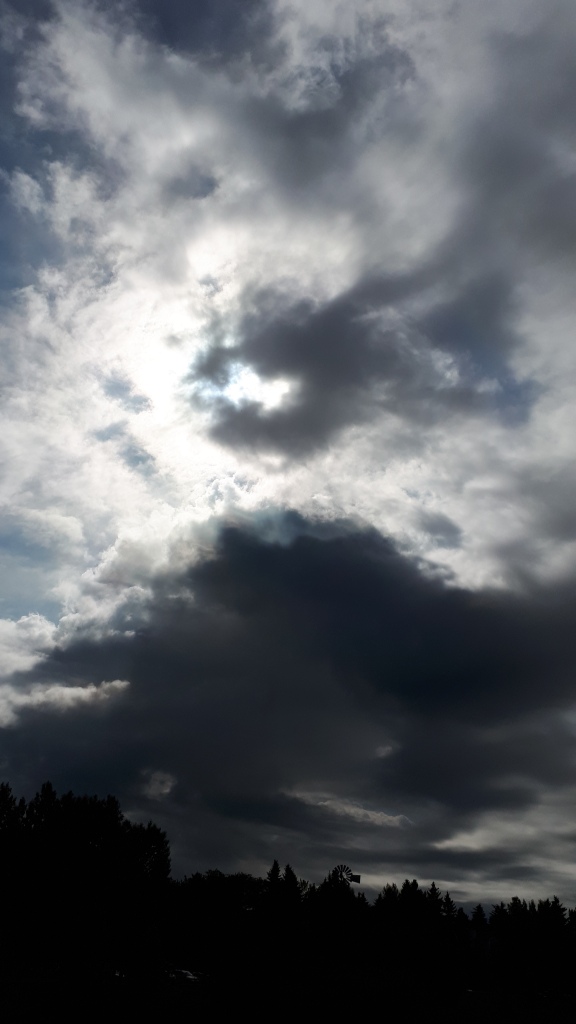
Saying Thank You

a birthday memory repurposed, with thanks

THANKS

Listen
with the night falling we are saying thank you
we are stopping on the bridges to bow from the railings
we are running out of the glass rooms
with our mouths full of food to look at the sky
and say thank you
we are standing by the water thanking it
standing by the windows looking out
in our directions

back from a series of hospitals back from a mugging
after funerals we are saying thank you
after the news of the dead
whether or not we knew them we are saying thank you

over telephones we are saying thank you
in doorways and in the backs of cars and in elevators
remembering wars and the police at the door
and the beatings on stairs we are saying thank you
in the banks we are saying thank you
in the faces of the officials and the rich
and of all who will never change
we go on saying thank you thank you

with the animals dying around us
our lost feelings we are saying thank you
with the forests falling faster than the minutes
of our lives we are saying thank you
with the words going out like cells of a brain
with the cities growing over us
we are saying thank you faster and faster
with nobody listening we are saying thank you
we are saying thank you and waving
dark though it is

~ W. S. Merwin, 1988 ~

On Monday night, I listened to the 24th Poet Laureate of the United States, Ada Limón, recite this poem at an encore presentation of the annual Poetry and the Creative Mind fundraising celebration for National Poetry month. She, as did many of the guest readers, selected poems that had particular relevance for these times. Limón closed her reading with one of her own popular poems, A New National Anthem (the link here a YouTube of an earlier recitation.)

Evident the power of poetry to timelessly bear witness with profound prescience to current events and realities. Merwin’s poem was copyrighted in 1988. Limón’s thiry years later in 2018. Both were read at the event’s original broadcast on April 24, 2025, weeks before the Los Angeles protests and the illegal and incendiary reactions from the American president and the Republican administration.

Moved by both poems and Limón’s passionate reading, I was perturbed by the counter-intuitiveness of “saying thank you” with growing urgency in the face of the growing darkness. And yet is this not holding one’s heart open in hell? The gratitude for Life, all of it? The messiness and mystery and madness? The grace and grit and grief?

Much love and kindest regards, dear friends. And to you who will be assembling in peaceful protest tomorrow, to say NO to any and all king-making, and who are marching from Cairo to Gaza, thank you.

Breathe and Create

in a state of continual welcoming

A few weeks ago, I wrote about my participation in a poetry writing half marathon. As preamble to this week’s post, below is the prompt given for the 23rd hour, and the “list” poem I cobbled together from the book on my desk at dawn that Sunday morning, after 10 hours of writing 10 previous poems.

Hour 23 — Write a poem about harvesting something, it could be anything from clams to apples.

A List for Harvesting Creativity

  1. Know that you and everyone is creative.
  2. Tune into your ideas, impulses, dreams and hunches.
  3. Make it up. Experimentation leads to innovation.
  4. Expect surprises.
  5. Mistakes are part of the process.
  6. Rules can serve. Rules can hinder. Learn the difference.
  7. Self doubt is part of the process.
  8. So is rejection.
  9. Keep your habits fresh.
  10. What you don’t know is as, if not more, important than what you know.
  11. Saying “no” is foundational to saying “yes”.
  12. Play.

With thanks to Rick Rubin’s The Creative Act: A Way of Being (2023)

Now that I’m back to walking, often solo, in preparation for another long distance trek (destination and details to come), I’ve returned to listening to podcasts and audio books to help pass the time. I found Rick Rubin’s The Creative Act on Spotify and as I’m reading it for a monthly book study, hearing the author read his pithy chapters, the transition from one into the next marked by the ringing of a bell, has been as delightfully edifying as the book study conversations.

The list above captures a mere fraction of his self acknowledged “noticings” about what and how to open possibilities for a creative way of being. This past week, I was struck by his chapters on listening, and patience.

“Listening is suspending belief.”

Rick Rubin, The Creative Act

Given that we listen not only with our ears, but with our whole bodies, our filters of acculturation, beliefs, perceptions, and biases affect what we hear. Learning to listen with an awareness of these influences opens possibilities and grants us freedom from unconscious and accepted limitations. While I know this, to hear another say it, meaningfully hit home.

“There are no shortcuts.”

Rick Rubin, The Creative Act

So opens the chapter on patience. But it could be the mantra for entire book. I stopped walking and replayed Rubin saying:

“When it comes to the creative process, patience is accepting that the majority of the work we do is out of our control. We can’t force greatness to happen. All we can do is invite in it and await it actively. Not anxiously, as this might scare it off. Simply in a state of continual welcoming.”

To do otherwise, by letting our cultural predisposition towards efficiency govern instead of responding to life in sync with its revealed rhythms and not our imposed agendas, is an argument with reality. Another deep resonance.

On my writing desk, beside Rubin’s book is Suleika Jaouad’s The Book of Alchemy. A gift from my sister, with a focus on journaling, its subtitle, A Creative Practice for an Inspired Life, suggests its hugging up against Rubin is not a coincidence.

my visceral reminder

Much love and kindest regards, dear friends.
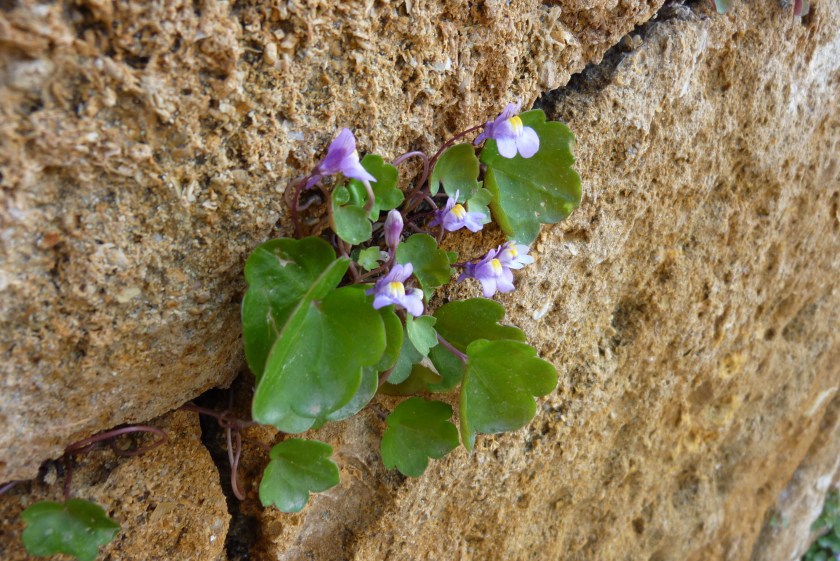
Come

PRAYER

Every day I want to speak with you. And every day something more important
calls for my attention – the drugstore, the beauty products, the luggage

I need to buy for the trip.
Even now I can hardly sit here

among the falling piles of paper and clothing, the garbage trucks outside
already screeching and banging.

The mystics say you are as close as my own breath.
Why do I flee from you?

My days and nights pour through me like complaints
and become a story I forgot to tell.

Help me. Even as I write these words I am planning
to rise from the chair as soon as I finish this sentence.

~ Marie Howe, poet extraordinaire and winner of the 2025 Pulitzer Prize for Poetry ~


For days I’ve felt compelled to write about Gaza.

About the thousands of children in Gaza maimed and killed by Israeli attacks.

About mothers and fathers in Gaza having to make the no-choice choice: stand in line for a meager ration of food to feed your family, and risk being killed while you do so.

About the genocide of Gaza.

To acknowledge with at least the same amount of moral outrage I’ve been feeling and writing about the current American president and his administration. An outrage drenched in horror and grief for Gaza and its people.

Last Sunday, the night I typically reserve to write Monday’s blog, I sat here and not a word emerged. Hoping to “prime the pump,” I looked over a first draft poem I’d written two years ago about searching for a middle way of compassionate understanding for my Jewish friends in bitter anguish for the October 2023 Hamas attacks and hostage-taking, and my Sufi friends reeling from those egregious acts. The poem is incomplete, my editor having suggested that neither it nor I were ready for its completion. There was no blog on Monday.

Completion? Is it even possible?

“The mystics say you are as close as my own breath.
Why do I flee from you?”

Today is the beginning of Eid ul-Adha, the festival of sacrifice, one of the most important festivals in the Muslim calendar.

Today I acknowledge my silent complicity in the face of sacrifice exacted from both the Jewish and Muslim peoples. Maybe there is no middle way. Maybe only the statement that what the Israeli administration is doing to the people of Gaza – to my way of thinking, an identification with the aggressor – is utterly wrong and as evil as I have said the current American president and his administration are. And, too, the actions of Hamas.

“Help me. Even as I write these words I am planning
to rise from the chair as soon as I finish this sentence.”

And in the words attributed to the Sufi poet, Rumi:

“Come, come, whoever you are. Wanderer, worshiper, lover of leaving. It doesn’t matter. Ours is not a caravan of despair. Come, even if you have broken your vows a thousand times. Come, yet again, come , come.”

Much love and kindest regards, dear friends. May we do better.

To Travel Is To Feel

a tribute to Lisbon’s favorite literary son, Fernando Pessoa

The best way to travel, after all, is to feel,
To feel everything in every way,
To feel everything excessively,
Because all things are, in truth, excessive
And all reality is an excess, a violence,
An extraordinarily vivid hallucination.

~ Fernando Pessoa ~


This photo, taken three years ago while strolling in Lisbon the evening I arrived to acclimatize before walking the Portuguese Coastal Camino, is a modern homage to Portugal’s man of letters, Fernando Pessaro. His understanding of travel mirrors my own experiences, often reflected in my own poetry and photography.

This spring, SYNKRONICITI, the literary online quarterly founded by Katherine Grace McDaniel, again made a home for my creative expressions. In the current issue Identity, my poem “Ammonite Answers” and companion photo of the Moroccan mesa which inspired it, are but dozens of submissions beautifully curated by Katherine. As a poet who writes about the beauty in life’s imperfection and photographs its shimmer, often in response to my travels, I appreciate having my work accepted from among the many writers, poets, and visual artists from around the world who submit.

But what makes these acceptances all the more special is the time Katherine takes to uplift each contributor’s work by posting her often intuitive, always thoughtful impressions on her website’s blog and social media. In the case of my poem, she writes:

“Carl Jung recognized travel as a powerful tool for self discovery and individuation. Our interaction with unfamiliar parts of the outside world helps us hone who we are and often opens our eyes to things we didn’t know about ourselves, as well as confirming things we suspected.”

Hers is feedback as gift, both acknowledging, and inviting me into a deeper reflection on my writing and how it resonates with another. Thank you, Katherine.

Here’s the link to Katherine’s labor of love, that includes mine and that of many other global creatives.

Much love and kindest regards, dear friends.

Bragging Rights

Early Sunday morning I completed my first half marathon.

For twelve hours, from 7:00 pm Saturday night to 7:00 am Sunday morning, I joined hundreds of poets from around the world in writing a poem an hour for twelve or twenty-four. Hosted by Caitlin and Jacob Jans from Toronto, I opted for twelve. Having the choice of joining the first or the last half, I elected the latter, knowing my preference for writing in the dark stillness as the day begins or ends. And given a recent bout of mid insomnia, waking like clockwork around 3:00 am (and what I learned during the marathon is called the “hour of the wolf”), I figured I’d be OK for the duration. And I was.

Once registered and having completed the online orientation, I took a peek at posts sharing preparation tips and writing strategies. I kept it simple by jotting down a few inspiring phrases that I’d heard or read last week, trusting they’d provide enough light structure for creating. I made snacks from leftovers, abstained from wine at dinner instead drinking an “americano,” and brewed several mugs of black tea over the course.

Funny thing is, I almost missed the start. By four hours!

Hard to believe, given I’d just been in Ontario and regularly call my parents, that I would have mixed up time zones. Instead of grokking that the official start time of 9:00 am EDT would be 7:00 am my time, I somehow thought it was 11:00 am. Ambivalence was definitely at play, though intention won the day, as arriving to my studio after supper Saturday, puttering around and getting organized, I thought I’d check in on the proceedings shortly after 7. There I saw the prompt posted for Hour 13, and recalled that was to be my start for the half marathon.

Thankfully, during my puttering, I’d given thought to writing a “found” poem from the book titles sitting on my desk in front of me. And that became my first poem, giving me a time to catch my breath and race upstairs to share my near calamity with Sig.

My strategy proved effective as I weaved a line I’d written down with Caitlin’s hourly verbal and/or visual prompts. I experimented with form, writing haiku, haibun, list, abecedarian, ekphrastic, and free verse. I realized my objective of creating some fresh pieces and successfully wrote a poem an hour, posting, and reading a few other entries.

With eyes “scorched” from twelve hours online, and a mushy brain that continued to compose even as I fell into bed at 7 am, I concluded that what I’d done once I’d not do again. But with rest and time outside planting my herbs and salad greens, and a more thoughtful review of my writing, I’ll reconsider.

While most of us conceded our efforts are at best “sh…tty first drafts” (thanks, Anne Lamott), several of mine are rough pearls in need of a polish to shine.

And I get to join four hundred global poets claiming bragging rights.

Thank Goodness for A Found Poem — when I confused time zones!
the carrying of apples on a windowsill,
when bright dead things become the creative act,
and the book of alchemy transcends the hurting kind

What kind of daughter messes up the time zone and writes
her first half marathon poem from book titles
sitting on her desk in front of her?

Rattle—d, but a smart one.


(Book titles in italics from the following authors in order of use: Ada Limón, Shawna Lemay, Ada Limón, Rick Rubin, Suleiaka Jaouad, Ada Limón, Rayanne Haines, Timothy Green (ed))

Much love and kindest regards, dear friends.