Every day I see or hear something that more or less
kills me with delight, that leaves me like a needle
in the haystack of light. It was what I was born for – to look, to listen,
to lose myself inside this soft world – to instruct myself over and over
in joy, and acclamation. Nor am I talking about the exceptional,
the fearful, the dreadful, the very extravagant – but of the ordinary, the common, the very drab,
the daily presentations. Oh, good scholar, I say to myself, how can you help
but grow wise with such teachings as these – the untrimmable light
of the world, the ocean’s shine, the prayers that are made out of grass?
– Mary Oliver –
“How are you?” ask friends who I’ve not seen, nor spoken to for a while. “Terrified,” my response.
Not afraid, but terrified…for my country…the illegal apprehensions, deportations, and denied entry…the constant blatant disregard for law…evil in the guise of leadership.
Not a very mindful response, or is it? Certainly more intense and less palatable than “afraid.” But in the moment, truthful, uncensored. And then it passes. The weight of it lessens for its utterance. But I know, too, that I need those moments of seeing and hearing that kill me with delight.
Thankfully, Walker obliges. Every day. The shine in his eyes, tongue hanging in joyful anticipation as I dress to play with him outside. Chasing him with one of the store of sticks he’s taken from the woodpile in the back. Our backyard scattered with them. Or inside, tugging on the damp-with-drool dishrag nearly shredded, or his blue racquetball, or red kong – each tight in his mouth, until he lets go in false surrender just to keep the game between us going.
Thankful, too, that yesterday’s sunshine and warmth allowed me to sit outside on a cafe’s patio to eat lunch after my 8+km river valley walk. All of it a balm. Nature and good food as co-regulators.
And that exquisite hand-made card sent by a friend who is excelling at paper quilling, her latest fascination. In yesterday’s mail, the envelope with my name and address, written by a hand I didn’t recognize. The note inside, bearing the same beautiful script, thanking me for my words, the tapestry I weave with them, the meaning they bring to her.
Coming through a “wintering” season, again with many more rejections of my writing than acceptances, with words laying fallow, deep underground, her gift like a prayer made out of new, spring-green grass.
Much love and kindest regards, dear friends. And to you, Cate, thank you.
It’s Sunday morning. I’ve signed into a weekly Zoom hour hosted by a local writer, hoping for some inspiration for Monday’s post. At this point, I’ve spent many minutes affixing photos to notecards, and writing messages of care and connection with friends. To one, suffering the depths of grief since her husband’s passing during Covid, I included John O’Donohue’s blessing for one grieving. To the other – in response to her thoughtfully written, beautiful New Year’s letter – an acknowledgement of her word choice to describe her current lived condition, “subdued.” Such resonance.
one love letter’s photo
Despite carefully curating my social media time, I cannot escape the onslaught of memes and messages, both harrowing and hopeful. In response to my husband asking how I slept last night, I shared my deep-in-my-belly fear about my country’s safety. The world has recent history of the devastating consequences of a leader’s stated intention to annex a country. So when I hear another threaten mine, my body responds.
“darling, you feel heavy because you are too full of the truth. open your mouth more. let the truth exist somewhere other than inside your body.”
Della Hicks-Wilson, Small Cures
After last week’s post, several of you commented and emailed with kind and affirming responses. I wrote a version of the following to several of you:
“So each word, each photograph, each post matters. Each kind word, each warm embrace matters. It’s what we have which I have to believe can turn the tide, perhaps first within the unseen, liminal spaces.”
So these minutes devoted to card-making and note-writing matter. Love letters amplifying beauty matter. A manifestation of the creative spirit matters. Letting the truth exist somewhere other than inside my body matters. This act of hope-filled dissent matters.
As do you, dear friends. Much love and kindest regards.
I don’t want to live a small life. Open your eyes, open your hands. I have just come from the berry fields, the sun
kissing me with its golden mouth all the way (open your hands) and the wind-winged clouds following along thinking perhaps I might
feed them, but no I carry these heart-shapes only to you. Look how many small but so sweet and maybe the last gift
I will bring to anyone in this world of hope and risk, so do Look at me. Open your life, open your hands.
– Mary Oliver
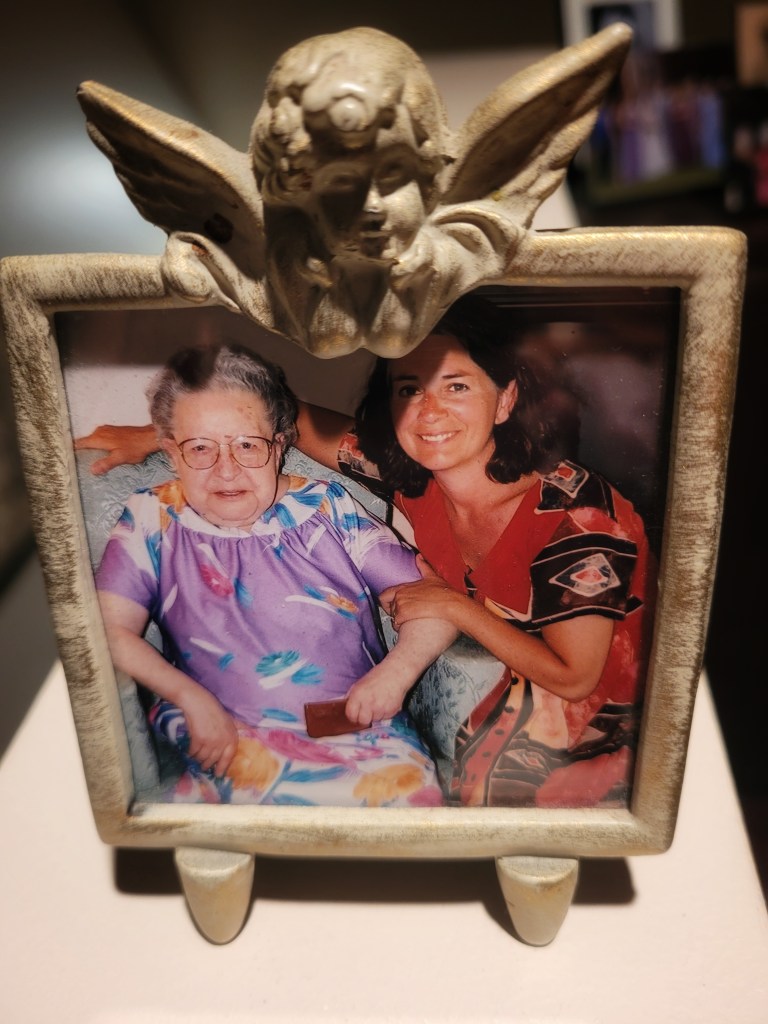
No, it’s not Friday, the day I typically post a poem, a companion photo, and some musings. But because I’ve been thinking a lot about my ancestors, particularly my Oma, this “saved” poem came to mind. As I wrote in last Friday’s photo and poem feature, we had a bumper crop of raspberries from canes we never planted but that found their way under our fence and which, over the years, have waxed and waned in number and in the amount of berries offered. It’s when I’m out picking those berries that my thoughts have turned to Oma as she loved to pick berries, especially the black and red currants from which she’d make the year’s jam and filling for her Christmas Linzer torte, my favourite tradition.
I had moved west by the time I learned in berry season that she, with my sister and her daughter, would go to the numerous “you pick” farms filling buckets and baskets with juicy goodness. From her, my niece learned and elevated the craft to become a gourmet jam and jelly maker, creating concoctions sweet and savory, fragrant and smoking hot. I have several of those jars in my cupboard, as I do one final frozen Linzer torte sent from my Oma in her final famous care package. Given Oma passed in March 2002 and for a few years before lived in a seniors’ residence in a small one room suite without a kitchen, that cherished cake must be three decades old. But like wedding fruitcakes, with a generous splash of brandy and a prayer of thanksgiving and love for my Oma, I know it can be resurrected. In the meantime, I have learned to make a good enough version and do so every Christmas as a tribute to her tradition. Truthfully, I’m in no hurry to eat that last one of hers as it’s a treasured keepsake of her handmade love.
Picking raspberries this summer in the quiet of my backyard, I’d talk to Oma, as I often do when I’m in my kitchen cooking, using one of the many utensils and dish towels she’d packed for me in those care packages, measuring sugar or flour from the avocado green cannister set she gifted me when I moved into my first flat during grad school. She helped me clean and paint that flat. We drove the two hours together in her new hatchback, the car she’d bought herself after learning to drive in her sixties. We slept on the flat’s hardwood floor after she’d worked circles around me, and before falling asleep, surprised me with the grief she felt at the news of Elvis’s death.
My Oma – despite many unspoken hardships as a single mother in WWII Germany; emigrating to Canada on her own after my father had sponsored her; then marrying a German widower and moving several hours away from us to start a new life in a new country alone; working on the assembly line of Bausch & Lomb stitching glass cases for piecemeal wages – did not live a small life. Fiercely independent and always up for a new flavor experience, determined, courageous and curious, in so many ways she inspires me. I attribute my intrepid, solo-traveling nature to having been “seeded” by her.
But then you wouldn’t Understand poems or songs. You’d never know Beauty comes from loss.
It’s deep inside every person: A tear tinier Than a pearl or thorn.
It’s one of the places Where the beloved is born.
~ Gregory Orr, Concerning The Book That Is the Body Of The Beloved
One from my “saved poem” filefrom a poet who writes from knowing deep loss and nearly unbearable grief.
A poem that touches on the essence of my writing and my wabi sabi life. That beauty is found in life’s imperfections and comes from its losses. That with time, in a life sometimes broken, but mostly well-lived and much loved, such beauty becomes polished, like the grain of sand that becomes the pearl, rubbed inside the oyster’s shell.It’s like that for all of us – deep inside every person – if we choose to look at life this way
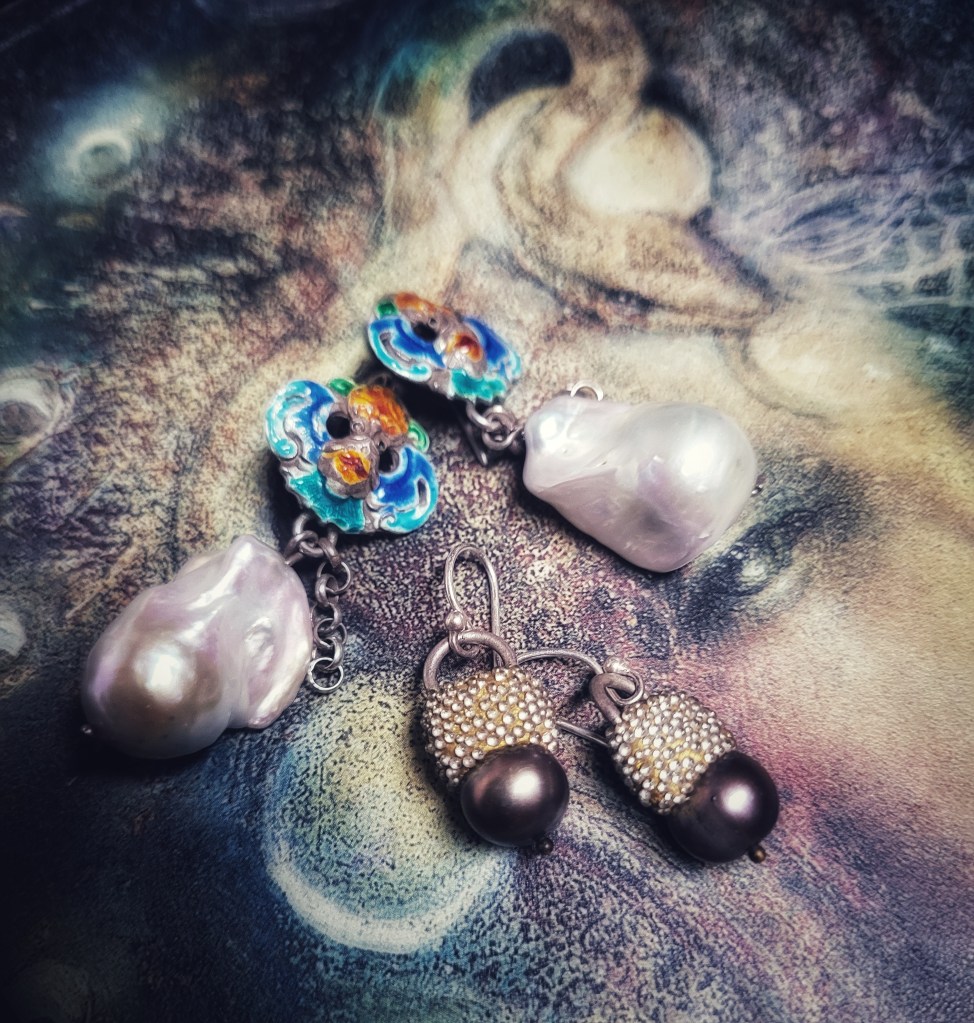
For the past many years my earrings of choice have been silver-grey freshwater pearls, embellished with tiny sterling silver beads, a signature design from Canadian jeweler, Effie Baker. They’re an interesting juxtaposition to the simple diamond studs that I always wear, my birthstone, and a Christmas gift many years ago from my husband. Last summer, after a long wait and good fortune, I gifted myself with a pair of baroque pearl earrings hung from antique Chinese silver and enamel made by another Canadian designer Soma Mo, first seen during covid and for many months sold out. In recent months, I’ve taken to wearing hers every day.
There’s something about pearls that speak to me of the feminine…originating from the watery realm of feelings and intuition…their voluptuous shape and subtle luster…how they become warm with wearing. These pearls remind me of the love in which these two women artists create…a love then gifted to me when I was attracted and responded by allowing myself to purchase them.
The beauty found in, and from loss, that when rubbed up against, as in life, becomes transformed. The beloved born in that.
What a poem and pearl earrings can evoke. Much love and kindest regards, dear friends.
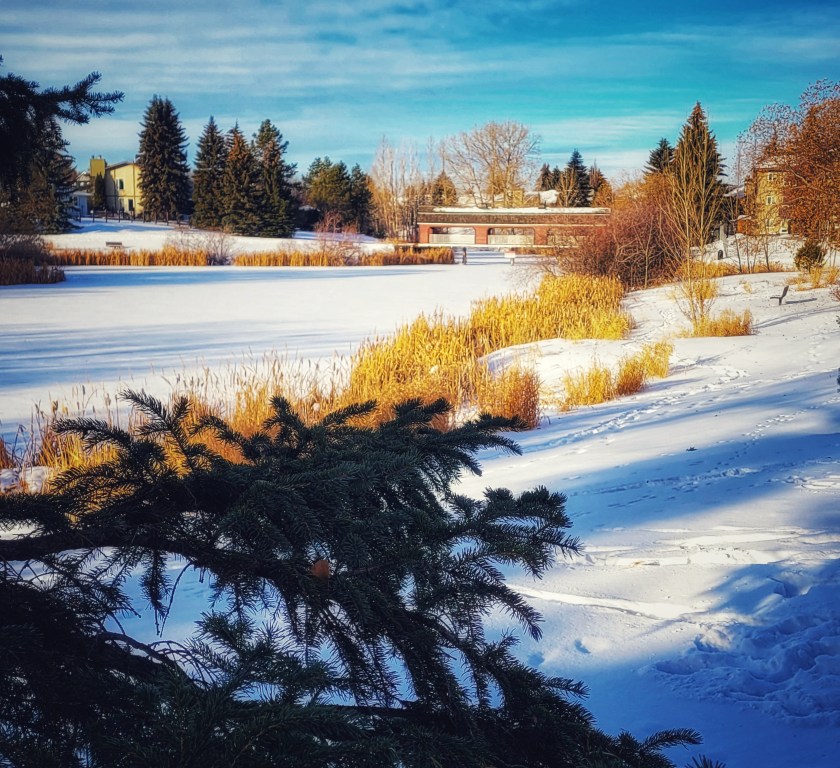
I’ve no idea where this post will start, nor finish. It’s another one of those “sit down and write” sessions where my heart is full, my mind inchoate. We’ve just returned from dinner at our local Bodega, where a Spanish influenced charcuterie and cheese board and perfectly aired Tempranillo did their magic in transporting me back to Spain last May, until we paid our bill and bundled up. Then met with a blast of -20 C winter westerly wind, I was snapped back to my senses, my thinking slushy.
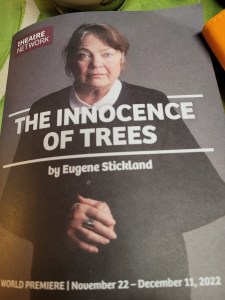
It’s been a rich and cultured kind of day, beginning this morning with a short Zoom consult with local poet and poetry champion, Alice Major. I’m participating in her small group workshop to learn how to align and sequence a poetry collection, grounding intuition with the components of a replicable understanding. Then a Zoom hour with my favourite contemporary Irish poet, Pádraig Ó Tuama, hosted by the Rowe Centre. This a “teaser” for his upcoming five session program, “Practicing the Inner Life with Poetry,” I always learn from this master of recitation and interpretation. A brief pause to warm and sweep off my car before driving into Edmonton to catch the final performance of a local theatre company’s world premier, “The Innocence of Trees,” based on the little known life of Saskatchewan born artist, Agnes Martin. A deeply moving production featuring well established local actors, I was again struck by the superb quality of artistic endeavors in my city.
Impressions swirling, what coalesced and landed with gravitas is the question:
“How does ‘making’ – whether that be writing, painting, or any form of creative expression – return me to myself? And is knowing and committing to its gift enough to persist, without the expectation of anything beyond?”
In this afternoon’s theatre, at one point “Agnes” decides to burn her painting because it evokes no feeling from her, nor her younger self. Yet she gives credit to its making for saving her from stepping off the edge into insanity. I was reminded of other wounded artists. Van Gogh, who despite significant odds, profound self doubts, and looming insanity created because he had to, knowing no success, only derision, until posthumously.
Glancing up right now, sitting on my table in front of me is the dried stem from an orchid a dear friend gifted me in the summer of 2021. Then, several delicate white blossoms hung from its two limbs. I religiously followed her instructions to “feed” it three ice cubes every Saturday. Eventually those blossoms dried and fell off and two more stems burst through with over a dozen buds. Those blossoms began to appear just as I was departing for my Camino and lasted, remarkably – brilliant white with life – for six months. As I’d never before had an orchid, I wasn’t sure how to tend to it. But every week, I watched and realized the orchid was showing me how. From one limb, another emerged, now with several small buds. From the base, a new limb is growing, too with flower buds. It became apparent that the second flowering stem was drying, dying, once its flowers dropped. Pruned off and now completely dry, it has become like the hollow reed of which Rumi wrote in the opening of his famous epic poem, the Mathnawi.
“A craftsman pulled a reed from the reedbed, cut holes in it, and called it a human being. Since then, it’s been wailing a tender agony of parting, never mentioning the skill that gave it life as a flute.”
Rumi, translated by Coleman Barks and John Moyne, The Essential Rumi, 2004
Let’s add into this disparate mix some shimmerings from my ongoing study of “Rewilding Mythology,” now in my sixth week:
Training in liminality – the space in between – via the pre Christian, goddess-centred initiatory rituals of “collective effervescence,” where nature was revered, gender was fluid, and community cohesion was enhanced via altered states of consciousness. Fast forward to contemporary rave culture.
Ancient traditions of nomadic bards, poets, and song carriers who believed they, as hollow reeds, spoke for the spirit world and that their songs and words existed in another realm, not the past, but the kairos time of now.
A return to keeping Sabbath, to disturb and disrupt the capitalistic paradigm of ongoing production and growth, predicated on a non-efforting imagining that my work is done.
The development of “ecological empathy” and language that is more effective at embodying the interconnected relationships between us, and the “more than human” beings.
Slowness, stillness and silence as intentional, powerful actions to sensing into what is being asked of us.
To borrow a “rewilding” term, without knowing it, here I’ve been:
“Composting.” My day, my week, my impressions. Threads of connection and webs of relationships. Apparent and those liminal, nonspecifically sensed into. Shimmerings and glimmerings of how to be returned to myself by the simple acts of making. How to be the hollow reed, saved by slowness, stillness and silence. Rested and empty and ready for what and who is asking. With an ecological empathy for myself andthe more than human beings.
Thanks for companioning me, dear friends. Much love and kindest regards.
First set the warp, the plain, stable threads that hold the pattern in place – the infrastructure of joy, the girders that hold up all we build of meaning, or justice, or peace. Use strong threads left by those who have gone before. Only then pick up the weft, the colored thread that you will use to weave accordingly to your plan. Choose carefully – this is what the world will see, each tiny act that builds the bright pattern of your life. Yes, the threads will tangle or knot or fray, and the flaws will show. Oh well. Tuck in the ends as best you can and start again. This is not the time to stop your weaving. So much is pulling at the great design.
– Lynn Ungar – Breathe, 2020
Call it synchronicity or coincidence, I quickly picked up one of two poetry chapbooks I had just received from Lynn Ungar and the page opened to this poem, the perfect companion to Monday’s blog post, Spinning the Sacred Feminine. I’d been inspired to feature a poem on weaving today, thinking back to one I had “composed” as the conversation harvest from an activity designed in collaboration with a textile artist-community developer eleven years ago for our professional community of practice. I don’t recall the specifics, but we provided strips of fabric for the group of facilitators to weave together as a way to consider our work grounded in conversation and story. This was the result:
WARP and WEFT An engaged community inspired by the virtues of beauty, hope and simplicity. Texture foretells of mystery and transformation. Beauty, the loom for creativity. Inspiration, the weft. We, the warp. Beginning.
Last month I started a hand-making project I’d envisioned for over a year: to interpret a series of mandalas I’d drawn and painted by tracing their designs onto linen and embroidering with wool crewel yarn. That had been the original plan. But when it took many months for the yarn to arrive from England and to secure the right colour and weave of linen – all ordered online as this was in the thick of lockdowns and I’d seen how website color charts don’t translate well – a chance walk down an aisle at Michael’s (the national chain craft store) where I saw a wall full of cotton embroidery thread in a rainbow of colours, resulted in its rethinking to ‘plan B.’
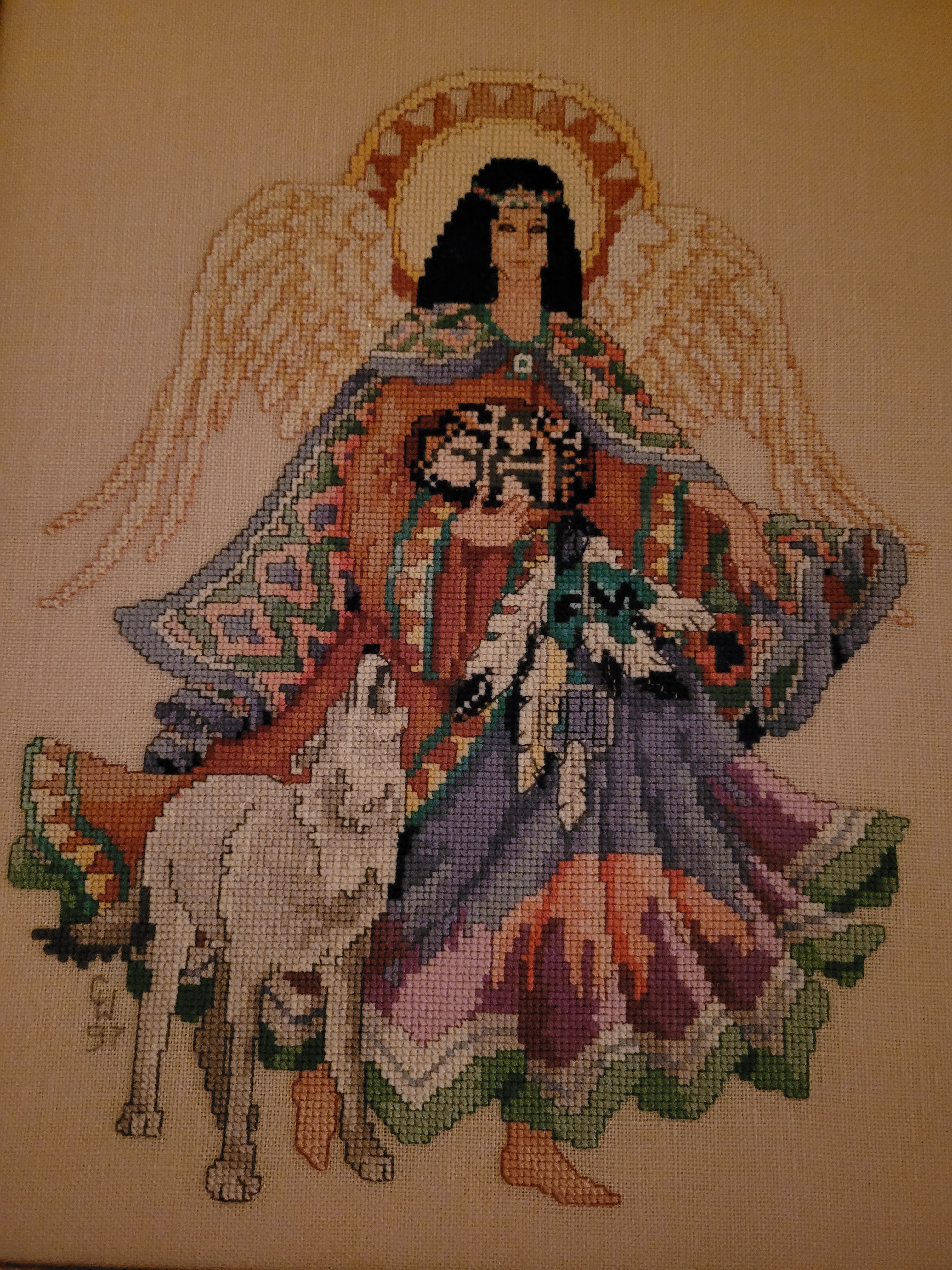
Then a comment to my mother, when we finally visited in September – she remarkably skilled in high counted cross stitch, our home graced by several of her creations – led to her gladly gifting me with her supply of needles, hoops, scissors, specially made wooden boxes, beads, and ‘signature’ well-organized collection of threads – hundreds of colours in a multitude of hues and metallics. For me who was enthralled with my childhood Christmas gift box of 64 Crayola crayons, I was in that same colour-smitten heaven. I paid an extra baggage fee to bring the entire collection safely home, spent an evening going through it all to understand Mom’s ‘system,’ finally broke the seal on the new tracing light board I’d purchased a year ago in anticipation, and began.
Initially, I thought I’d follow closely the colours in the original watercolour, but I soon realized that working with needle, thread and yarn, despite being close in colour, is not the same as brush and paint. So, I began to improvise within the spaces, using a variety of shades and stitch patterns. I discovered that “split stitch” is pleasing in its coverage, texture, ability to move back and forth between thread and yarn, and in actually making each stitch. It simply feels good to make that stitch.
I also discovered that where I began – sitting quietly in our living room after dinner, everything spread around me – I missed my ‘pack,’ and knew Annie missed me. She has her routine. Once we finish dinner and clean up the kitchen, it’s ‘pack time.’ She settles on ‘her’ love seat in the family room and waits for us to join her. Sometimes when we’re lingering over dinner, she can become quite impatient, pacing back and forth, showing her teeth in that non-aggressive, trying to talk to us way. It’s just not the same if I’m sitting in the living room, even when I cajole her into laying down on the carpet beside me. So I’ve shifted to where the light and companionship are better, often plugging in my earbuds to listen to a podcast as I stitch, while Sig watches a hockey game or an investing or horse training video, and Annie, utterly content on the sofa in between, soundly sleeps.
But the biggest discovery has been how soothing I find this act of handmaking. It goes slowly. Gradually I see the colours and textures resemble the painting that inspired the plan. Not an evening goes by when I don’t silently grok and or remark how soothed I feel doing this work. In part I know it comes from the deep appreciation I feel using my mother’s materials and supplies, that my hands are using what her hands had used for years to make beauty. And that given the amount of thread she’s given me, I will most likely have many more years than my mother life to bask in this gratitude.
“There is a juiciness to creativity, a succulence, or a sensuality which both produces and is soothed by creating something. I think that creativity is pleasing to women on a very deep level, whatever form it might take – whether it’s the feel of clay in our hands, the colours that work on us as we knit, the meaning that we find in the words that we write, or the energizing feel of movement as we dance and the music moves through our bodies.”
As I look over my life, my mother always did handwork, as did many women of her generation and those before her. I remember many of the clothes she made for my sister and me until I began sewing my own in my early teens. After living in an apartment for my first thirteen years, my parents built their home and Mom poured herself into its decorating, needlepointing the backgrounds of eight dining room chairs – a meditation in monotony, same stitch, same colour for many months. From there she mastered every style of needlework, again gifting me with cushions, purses, and such. She knit beautifully, always challenging herself in ways I didn’t quite get nor fully appreciate. A brief foray into crewel work and then counted cross-stitch and cutaway, the finer and more intricate, the better. In the last few years, she’s found the strain on her eyes too much, regrettably as she has several half-finished projects and wishes to make each of her grandchildren and great grandchildren keepsakes. So she’s gone back to occasionally knitting, and now spends more time reading. It’s a pastime I’m happy she enjoys, as when younger she never did, believing herself to be a poor reader. So utterly untrue when I think about what she’s created with her hands – the patterns she had to read and interpret, the recipes she improvised, the books she kept for the business. A legacy of the hurtful, limiting stories we’re told, or tell ourselves.
“When you learn to make things with your hands, you begin to awaken an awareness ofthe beauty and value of things in your life.Handmaking teaches us about slowness:the antidote to brevity and efficiency.It shows us, through the patience of our own hands,what goes into a thing.When we put those long efforts into bringing beauty into the world,we are honouring that which made us by creatingas we have been created.We are taught to respect the slow, attentive piecing togetherof the life we yearn for.”
And looking further back, her grandmother, my Gramma, was always sewing – spectacular fashions inspired by the turn of the century Edwardian era. Plumed and netted hats, velvet coats. No wonder I was so taken by Downton Abbey for its costume design, as I have old sepia tint photos of Gramma looking just like those women. Too, I have one hundred year old samples of her silk embroidery, and I wore for my wedding the white cotton lawn embroidered dress she’d made for her own – fine hand sewn tucked bodice, tiny mother of pearl buttons.
My paternal grandmother, Oma, too, was a very skillful seamstress, though in the pre and post world war periods of Germany, her talents were out of necessity directed to the functional, utilitarian, to get more wear from what was worn. Emigrating to North America in the 1950s, she became a pieceworker on the assembly line making glass cases for Bausch and Lomb. An accident on the sewing machine nearly severed her middle finger, left its nail permanently clawed over. Her dowager’s hump the price for countless hours bent over those grinding machines.
Before my mother’s second birthday, her mother died. Eleanor, my grandmother, was adopted as a young child. Family dynamics and bureaucratic policy were such that we grew up knowing very little about her. Did she like to sew? Was she a hand maker? Did she embroider or like cooking? We don’t know. We have very few pictures of her, but one as a young girl shocked us all in the resemblance I share with her.
Early this morning I woke having dreamt of her. A young boy hand-delivered a painting or photograph of a young girl child, now restored and framed. Stretching, I had to reach up high and retrieve the parcel from its precarious perch. I unwrapped its golden Klimt-like heavy wrapping paper to see a little girl at sitting at a table outside, surrounded by little glass pots of paint, flowering bushes beside her, blue sky above. I knew immediately it was Eleanor. I felt a whisper in my heart murmuring that this is how I am connected to my grandmother, in little paint pots of colour – the timeless iteration of the 64 box of crayons – in a yard warm with flowers and a blue sky.
“…I needed that bond to feel whole, competent and grounded, connected to my heart and soul, to my community, to my ancestors, and to the natural world around me…”
In the still dark this morning, I sensed this is how I am connected to the lineage of women – through the shimmering cotton threads, warm hued woolen yarns, fabrics woven on looms and sewn into garments and furnishings. That my ancestors whisper to me in dreams and in the stitches we make through time.
How do you know what’s essential? Could you have predicted this particular version of paring down? Perhaps your work is essential, but maybe not. The face you wear to the outside world, the picture in the mirror, has probably slipped. Even the fundamentals of human touch might not be required to assure us that we are not alone. Who could have imagine that we would somehow come down to making bread even without yeast? To the fact that with nothing more than food and water and air and time, even the least of us will find a way to rise?
– Lynn Ungar – April 28, 2020
One year ago this week, the World Health Organization declared COVID-19 a global pandemic. Determining what and who was essential continues to be of consideration in decision making. Global vaccination rollouts promise a light at the end of this very long, dark, and lonely tunnel. While this past year, much has changed and too, much has remained the same. Hoarding toilet paper is giving way in some countries to hoarding vaccinations. Home bakers are making their sourdough creations their livelihoods. Virtual meetings, family gatherings and celebrations have become “de rigeur” and may change the landscape of onsite work. Here at home, I continue to feel the absence of essential connections.
“Must be brain freeze,” I just tapped out to a friend, as I’m late again for this week’s post.
It. Is. Cold. An Arctic vortex has descended upon the prairies. Years ago, I recall my city’s well-loved and highly respected meteorologist calling it “the dreaded of all meteorological phenomena: the Siberian High.” Sunshine and signature Alberta blue skies, but with wind blowing steady, take those already frigid temperatures well below zero – centigrade or Fahrenheit – and drop them at least another ten, dangerous degrees. Since the weekend, weather apps have shown red banners and yellow exclamation points and maps show red across the entire province.
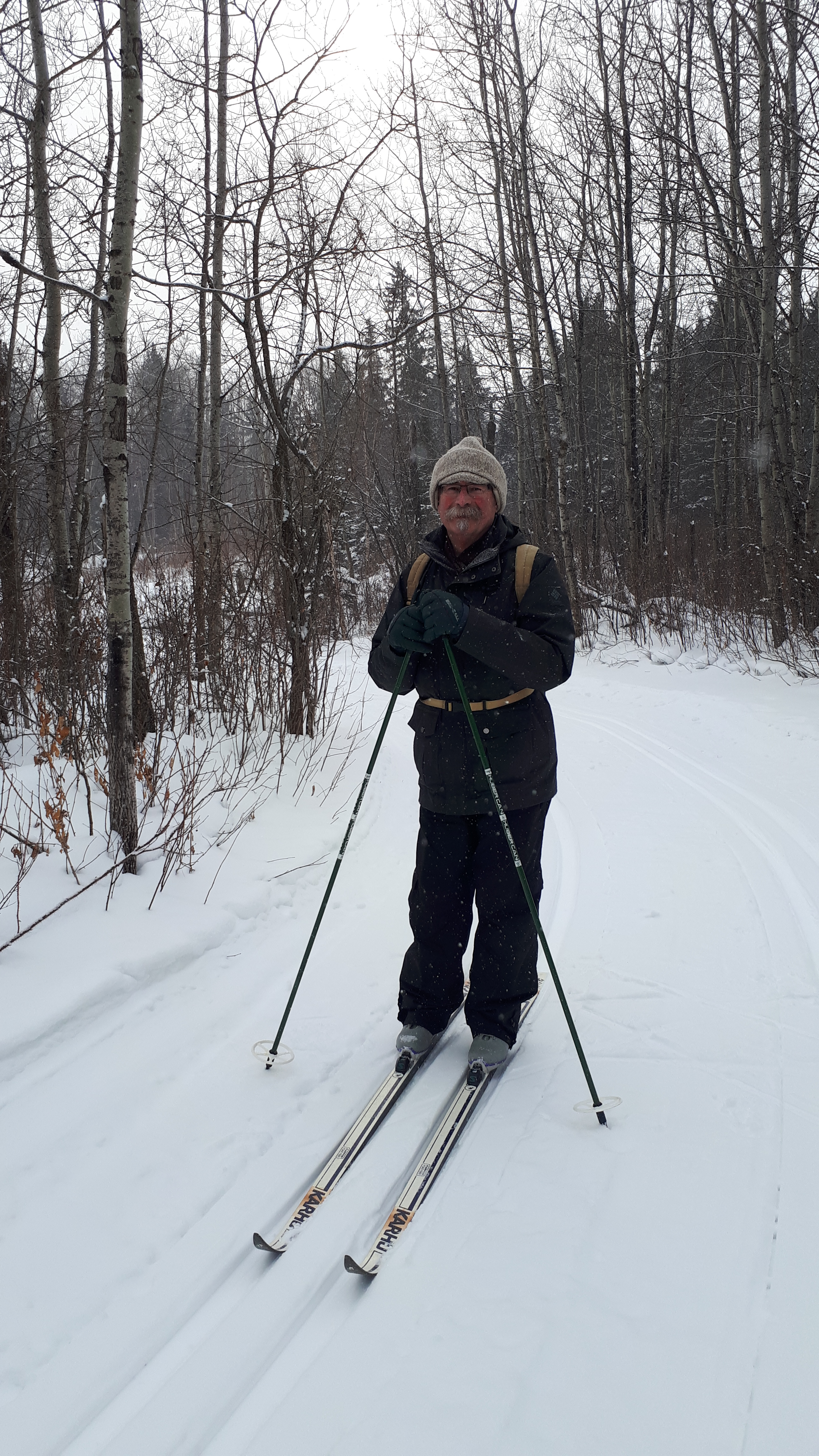
But last Thursday, in advance of its arrival, we waxed up the skies and went out to our local provincial park, Blackfoot-Waskahegan, for some easy-going cross-country skiing. As it had been several years since I’d been on the trails, we took a practice run the week before in the new-this-year tracks set on the golf course. Quiet except for the scratch of the skies on snow, my breathing, the squawking and chirping magpies and chickadees, it was heaven sent, though for now, on pause.
Sunday, dressed warmly in a fleece lined wool toque, down parka, gortex snow pants, shearling boots and new “extreme cold” Hesta mitts, I met many folks on the paths, similarly bundled, each enjoying our daily walks in the sunshine. An hour later, the mitts standing up to their reputation, my hands were sweating. The wind blew in that evening, and now even Annie, ever ready to brave the elements – except rain – is less than enthusiastic to be outside. She’s conceded to wearing her boots again with her stylish coat, and we manage a walk around the block. But she didn’t hesitate or pull the other way when I turned down the street headed home. Yesterday after sending her indoors, I took on clearing the sidewalk and driveway of hard packed snow. Got nearly 10,000 steps with it all. That sunshine is a powerful draw. But right this moment, in a day just beginning to clear, she’s napping on her cushion by the space heater as I write.
A year ago today, we were making our way to Sevilla for a winter sojourn in Andalusia. Right about now we were napping in a cozy sleep pod at Amsterdam’s Schiphol Airport. Later in the afternoon, we’d catch our flight to Sevilla, check into our hotel, and enjoy our first of many “al fresco” Spanish tapas. Smoky olives, sweet red vermut on ice, grilled octopus.
Ahhhh memory. “The power to gather roses in Winter.”
During the next few weeks, to mark the occasion I’ll mix an Americano cocktail (first enjoyed during my first visit to Andalusia in 2017) with a slice of orange (not Sevillian, too bitter), chew on Spanish olives, and “gather roses” as I wander across the pages of my journal and photo book from last year’s last trip before the pandemic.
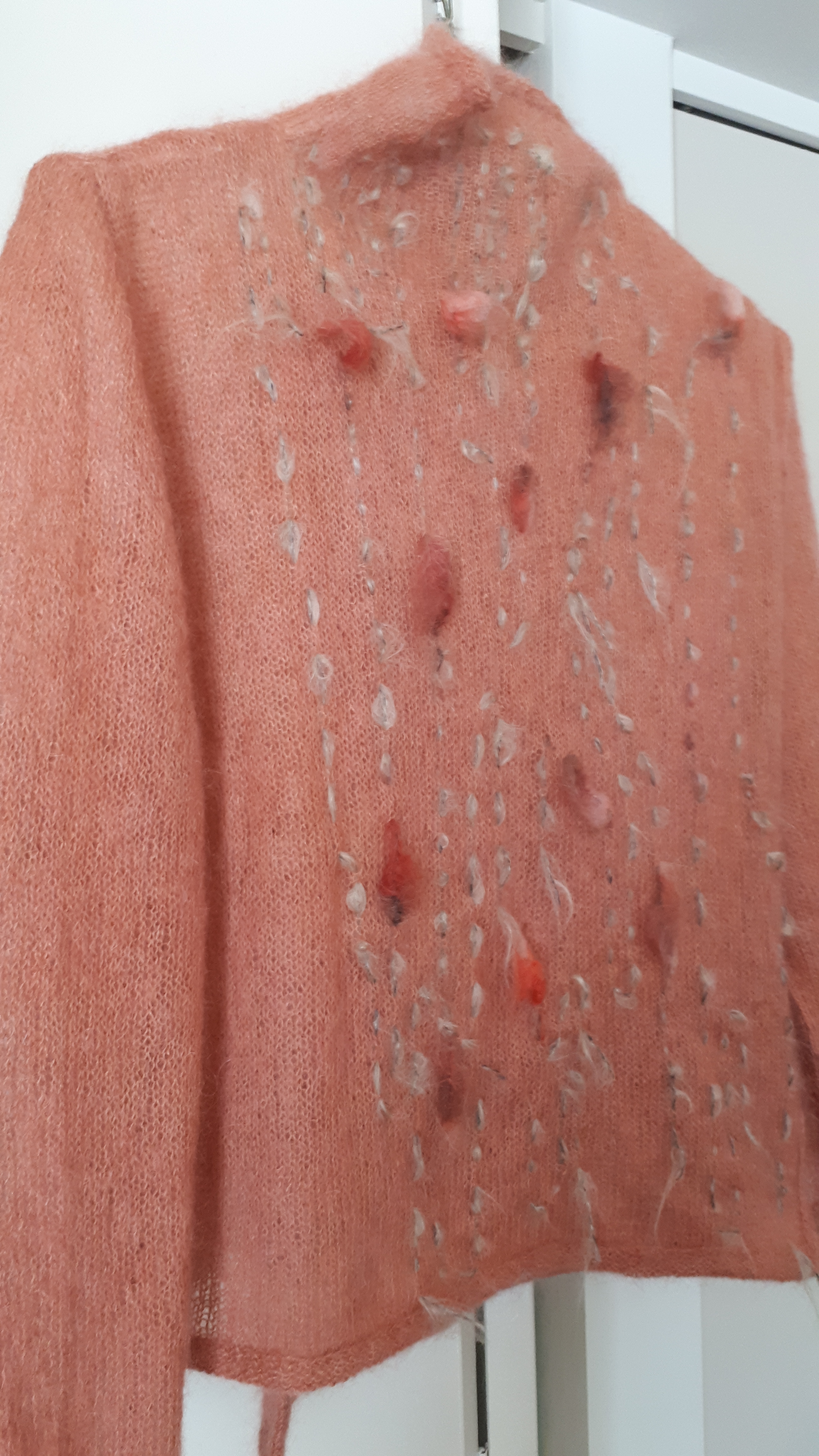
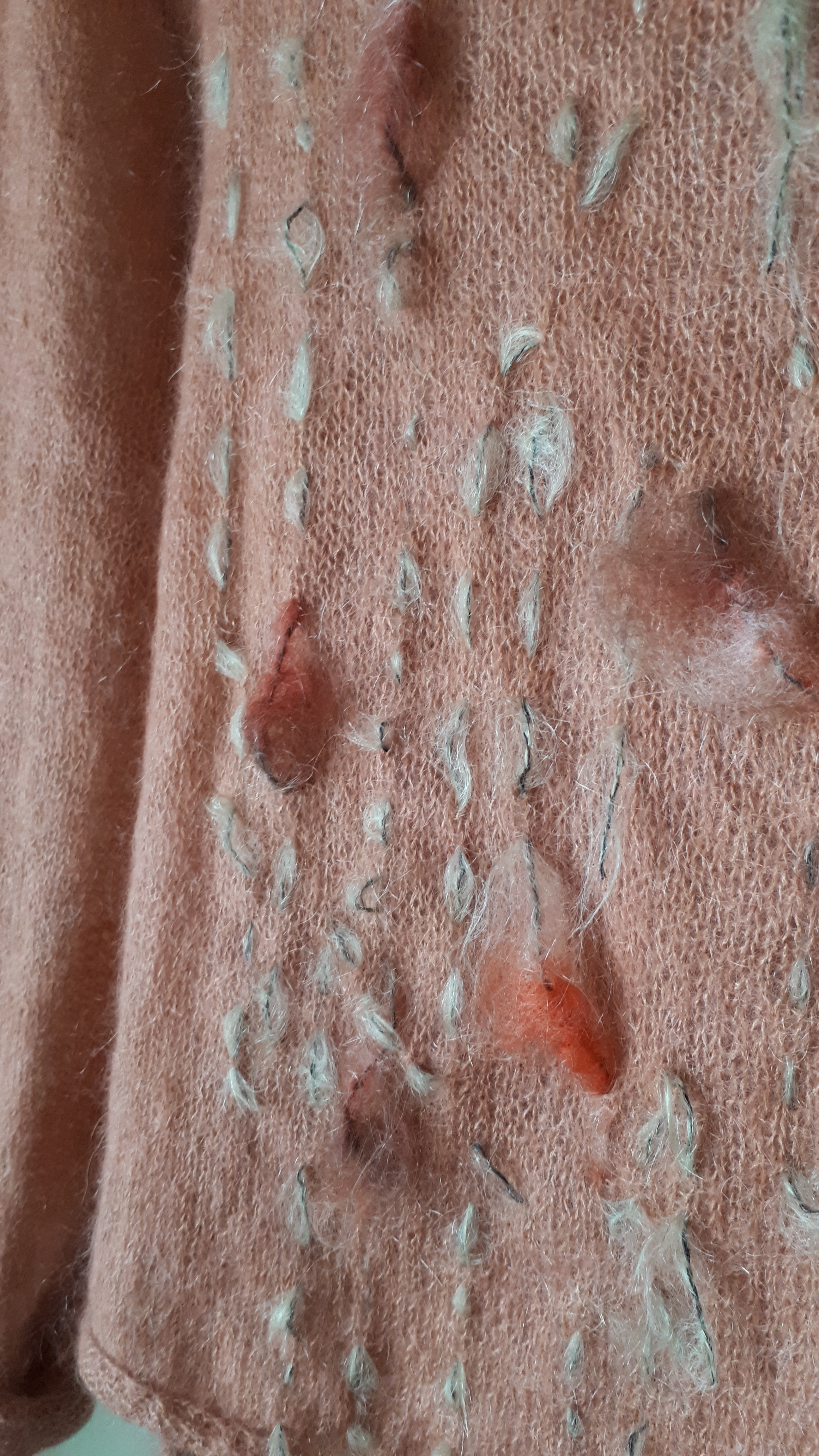
And now, after finishing this post, I’ll check to see if a walk is doable. And then, inspired by returning to reading Melanie Falick’s beautiful story of hand makers and DIYers, Making a Life, I’ll continue embellishing the sweater I knitted a few years back. Worked from a pattern I’d rejigged, with very fine lacy yarn – a silk mohair blend – it’s rife with mis-takes and mis-stitches, too big, and too disappointing after numerous tear-outs and restarts. After taking it out from hiding a few months ago, glancing at it every now and then, holding lightly what and how to proceed, last night I took needle and thread and using a running straight stitch, took in the sides and arms in an exposed French seam. I roll hemmed the entire sweater, again using a straight stitch, letting it show. Then, with a skein of similarly spun yarn from a sweater my mother made for me years ago, I’m running it though those uneven ladders to bring in texture and colour. A true “wabi sabi” creation, using what’s imperfect with what’s on hand, to make beautiful.
Like the little water colour I did while attending a conference last Saturday on Medieval Pilgrimages. Bored with the academic posturing and paper reading, and needing distraction to sort and discern what was of value for me, I adhered to the principles of intuitive painting – no premeditation, design, or meaning – and simply worked with colour and stroke. And then, almost as an afterthought, used a fine black pen to outline the shapes that emerged. Delightful, colourful, nonsensical.
“Ways to trust one’s own wisdom to bless the imperfections to see and make apparent the inherent beauty to smell crimson roses even in Winter when her blizzards blow and blind.”
“Look how calmly the trees abandon their autumn leaves, scattering jewels on the ground, soon to become mulch. These serene beings are apt teachers for us. Just see how they send their life-essence down into their roots as the days shorten and darken.”
Pir Zia Inayat Khan, The Zephyr Newsletter, December 2020
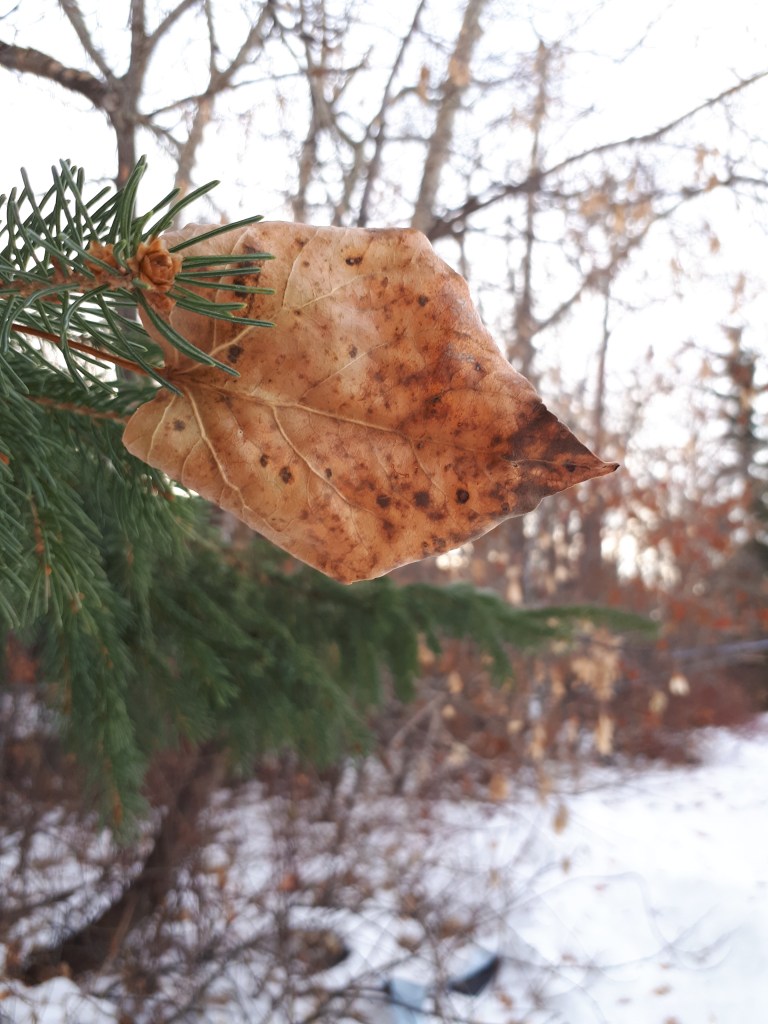
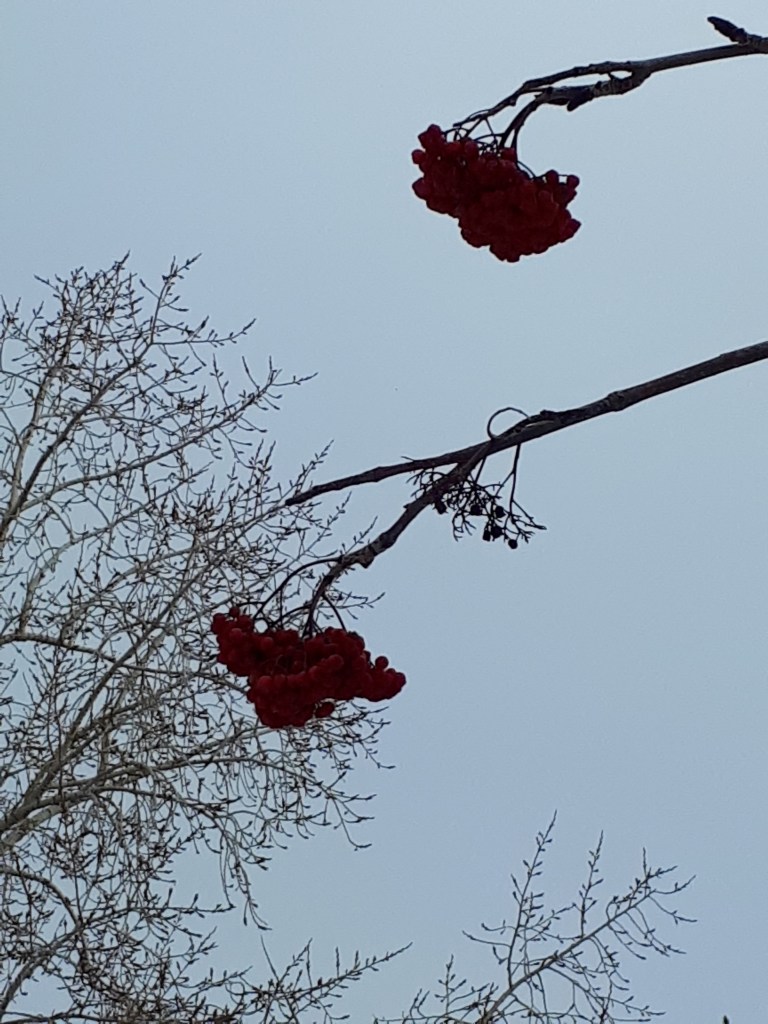
Last Monday, when I walked with Annie to centre myself and find my words, when I listened to the poem that released the floodgate of tears and cleared the way for the inchoate to become articulate, I found myself attracted to Nature’s images that evoked a “hanging on.” Despite all that gives way to a northern winter – daylight and warmth, green grass and foliage, garden fresh vegetables, robin song – still there is much that persists.
And I thought, how fitting a metaphor for this year’s Advent. Now in the third week, the one characterized by the rose-pink candle of joy, I wondered how do we hold the tension, no, how do we live and be in the tension of hanging on expectantly, when so much has let go? How do we negotiate our familiar and counted upon traditions of joy and celebration, in the face of myriad losses and uncertainties, persistent isolation and loneliness? How do we wait in joy for the promise inherent in this season, given so many shattering impacts of 2020? Not an intended pun, but truly a pandemic paradox, of pandemic proportion.
While I don’t have answers to my own questions, let alone any “sage” advice, I am reminded of Rilke’s wisdom to not strive for answers…to live the questions for now…though admittedly, not quite able to love them. But perhaps there are some hints from others, whose words have shimmered as they’ve crossed my screen this week, in remarkable resonance and synchronicity.
“I’m feeling a bone deep exhaustion now, yet I’m also feeling a resistance to the softness and rest that this season urges. There is too much to do to rest. And to be soft in the face of all that has happened in 2020 — that is a world of hurt I’m not sure I can bear. My experience of this season’s impulse to look back and take stock has a new intensity too. There is a great deal I long to recover about pre-pandemic life. But I don’t want to go back to a “normal” that would lose all that this year taught and gave us to live into.”
Krista Tippett, The Pause, December 15, 2020
In the past few days, I walked and listened to another of my favorite podcasts, Brené Brown’s Unlocking Us. In the most recent episode, she looked back over all she had learned from reading and prepping for two seasons worth of interviews, to more fully understand her very first episode on “FFT’s” (friggin’ first times) dropped in the early days of Covid-19. Her recent neuroscience “expert,” David Eagleman, confirmed Brené’s emergent hypothesis that our brains – and we – are exhausted with mapping so many new responses to this year’s unprecedented number of FFTs. The antidote to so much changing so fast is our attention, our acknowledgement, and rest, plenty of rest that restores us, and our brains. The image that comes to mind after today’s snow showers: clearing the walks and roads of snow that keeps falling. No sooner do you get it clear, then you need to do it again, and again, and again.
In this same episode, Brené shared a quote that succinctly sums up life as we know it now:
“‘History is the study of surprises.’ This line captures the world in which we live, we’re living history, surprise after surprise after surprise. And just when we think, we’ve had all the big surprises for a while, along comes another one. If the first two decades of the 21st century have taught us anything, it’s that uncertainty is chronic; instability is permanent; disruption is common; and we can neither predict nor govern events. There will be no ‘new normal’; there will only be a continuous series of ‘not normal’ episodes, defying prediction and unforeseen by most of us until they happen.”
Jim Collins, Beyond Entrepreneurship 2.0, 2020
Hmmm…grim news of foreboding, or the sudden, fresh wakening from somnambulant dis-illusion? Another paradox and invitation to find a middle way, perhaps?
I’ve lost track of the number of times this past year I’ve heard myself say aloud or think the wise words from a past, wise teacher: the trick to living paradox is knowing “it’s all true.” That both sides of the coin are the same coin. That 180 degrees is a straight line connecting what appear to be opposites. That the yin always contains a bit of yang and vice versa. And that there is a field between right doing and wrong doing where I will meet you.
“There is a time for stillness and empty-handedness, a time for holding vigil in the darkness. Winter keeps a secret that is vital to our soul’s knowledge of itself. Before long, the days will lengthen again. But now is the time to be rooted in the silent, patient earth as the planet heaves through the ebon emptiness of space.”
Pir Zia Inayat Khan, The Zephyr Newsletter, December 2020
Yes. This is so very true. And so too, for so many of us right now, is the isolation and loneliness that fills us with sorrow, worry, grief. That keeps us sleepless when we need rest for our bodies and brains and hearts, and to recover our resilience.
Last week, once again in my favorite Italian grocery store, as I maneuvered my cart into the checkout line, I looked up to see our dear friends. The last I saw them was a year ago, sitting at our cozy round table, enjoying a kitchen supper. Nothing fancy. Just simple Tuscan cooking, fine wine, and edifying conversation. It was a delicious evening, one we anticipated repeating sooner than later, upon our return from Andalusia last February. Sure, now we talk on the phone, exchange “love notes” in the mail or via text, but to lay eyes on each other, bundled and masked, brought tears to our eyes. There we stood, huddled among the pasta and olive oil – probably closer than two meters – impelled to express our love, our gratitude, the miraculous of our chance meeting, the angels that must have conspired for us then and there.
“…we need to accompany each other right now and beyond this season, in what none of us is called to bear and do alone. To honor the many losses we scarcely know what to do with. To dwell with reverence before our exhaustion and our resilience. To cultivate the expectant waiting that is the spirit of Advent. To ponder how we want to live once the virus releases us back to each other. “
Krista Tippett, The Pause, December 15, 2020
Since I last wrote, Covid-19 vaccinations are now being administered around the world. Here in Canada, the first to be inoculated was an elderly woman from Quebec. Here in Alberta, our health care workers are to be first in line. Touted as the light at the end of a long dark tunnel, it’s not lost on me that this hoped for miracle comes during our darkest hours, both literally and figuratively. Personally, I sit in another paradox: knowing it will be many months before I have access to this anticipated release from the virus’ silent, deadly grip and can let go of extraordinary vigilance and precaution, countered by the desire to hang on to the many subtle gifts of this time – a slowing down to savour simplicity and deepening stillness, noticing inner shifts and outer expressions, renewed appreciation and gratitude, a growing and steady contentment. Just as my love of winter’s darkness has grown over time, and I wince knowing that come next week, we’ll once again be on the upswing to more daylight, I hear a whisper of caution to not squander what has been so hard won, an invitation to make anew.
“We will not go back to normal, normal never was. Our pre-Corona existence was not normal, other than we normalized greed, inequity, exhaustion, depletion, extraction, disconnection, confusion, rage, hoarding, hate, and lack. We should not long to return, my friends, we are being given the opportunity to stitch a new garment, one that fits all of humanity and nature.”
Sonya Renee Taylor
Now, I literally wait for the linen and yarn and needles to arrive to start stitching.























 A Wabi Sabi Life