It’s 7:00 am Sunday morning. I’m an early riser. Lately, too early as I’ve been plagued with a bout of early morning insomnia, waking around 3. Sometimes I toss a bit, listen to the slow and steady breath of Sig sleeping beside me and try to synch my breath with hopes of falling back to sleep. When my mind overrides that intention, I quietly rise, slip into my robe and slippers and head downstairs to read, or write, or take my place on my cushion, or stare out the window, wondering.
In a couple of hours, I’ll be attending an onsite, in-person writing workshop. Hosted by the Writers’ Guild of Alberta, it’s described as “an all-day retreat designed to nourish your creative process. Writing exercises, inspiring prompts, and focused discussion will get your juices flowing and keep you motivated for days and weeks afterwards.” Goodness, I hope so, for like an Alberta spring, no sooner do my juices start to melt and flow, when they freeze solid and need to be chipped and chopped to get flowing again.
Last week in my monthly online writers’ circle, we each spoke of being in a fallow season, making reference to Katherine May’s memoir Wintering; gave space for our reactions to democracy’s demise in the face of growing fascism; and anticipated Spring’s arrival the next day. A closing offering of a poem which I’ll share here to close today’s short, and “OK enough” post.
This Spring
How can I love this spring when it’s pulling me through my life faster than any time before it? When five separate dooms are promised this decade and here I am, just trying to watch a bumblebee cling to its first purple flower. I cannot save this world. But look how it’s trying, once again, to save me.
Every day I see or hear something that more or less
kills me with delight, that leaves me like a needle
in the haystack of light. It was what I was born for – to look, to listen,
to lose myself inside this soft world – to instruct myself over and over
in joy, and acclamation. Nor am I talking about the exceptional,
the fearful, the dreadful, the very extravagant – but of the ordinary, the common, the very drab,
the daily presentations. Oh, good scholar, I say to myself, how can you help
but grow wise with such teachings as these – the untrimmable light
of the world, the ocean’s shine, the prayers that are made out of grass?
– Mary Oliver –
“How are you?” ask friends who I’ve not seen, nor spoken to for a while. “Terrified,” my response.
Not afraid, but terrified…for my country…the illegal apprehensions, deportations, and denied entry…the constant blatant disregard for law…evil in the guise of leadership.
Not a very mindful response, or is it? Certainly more intense and less palatable than “afraid.” But in the moment, truthful, uncensored. And then it passes. The weight of it lessens for its utterance. But I know, too, that I need those moments of seeing and hearing that kill me with delight.
Thankfully, Walker obliges. Every day. The shine in his eyes, tongue hanging in joyful anticipation as I dress to play with him outside. Chasing him with one of the store of sticks he’s taken from the woodpile in the back. Our backyard scattered with them. Or inside, tugging on the damp-with-drool dishrag nearly shredded, or his blue racquetball, or red kong – each tight in his mouth, until he lets go in false surrender just to keep the game between us going.
Thankful, too, that yesterday’s sunshine and warmth allowed me to sit outside on a cafe’s patio to eat lunch after my 8+km river valley walk. All of it a balm. Nature and good food as co-regulators.
And that exquisite hand-made card sent by a friend who is excelling at paper quilling, her latest fascination. In yesterday’s mail, the envelope with my name and address, written by a hand I didn’t recognize. The note inside, bearing the same beautiful script, thanking me for my words, the tapestry I weave with them, the meaning they bring to her.
Coming through a “wintering” season, again with many more rejections of my writing than acceptances, with words laying fallow, deep underground, her gift like a prayer made out of new, spring-green grass.
Much love and kindest regards, dear friends. And to you, Cate, thank you.
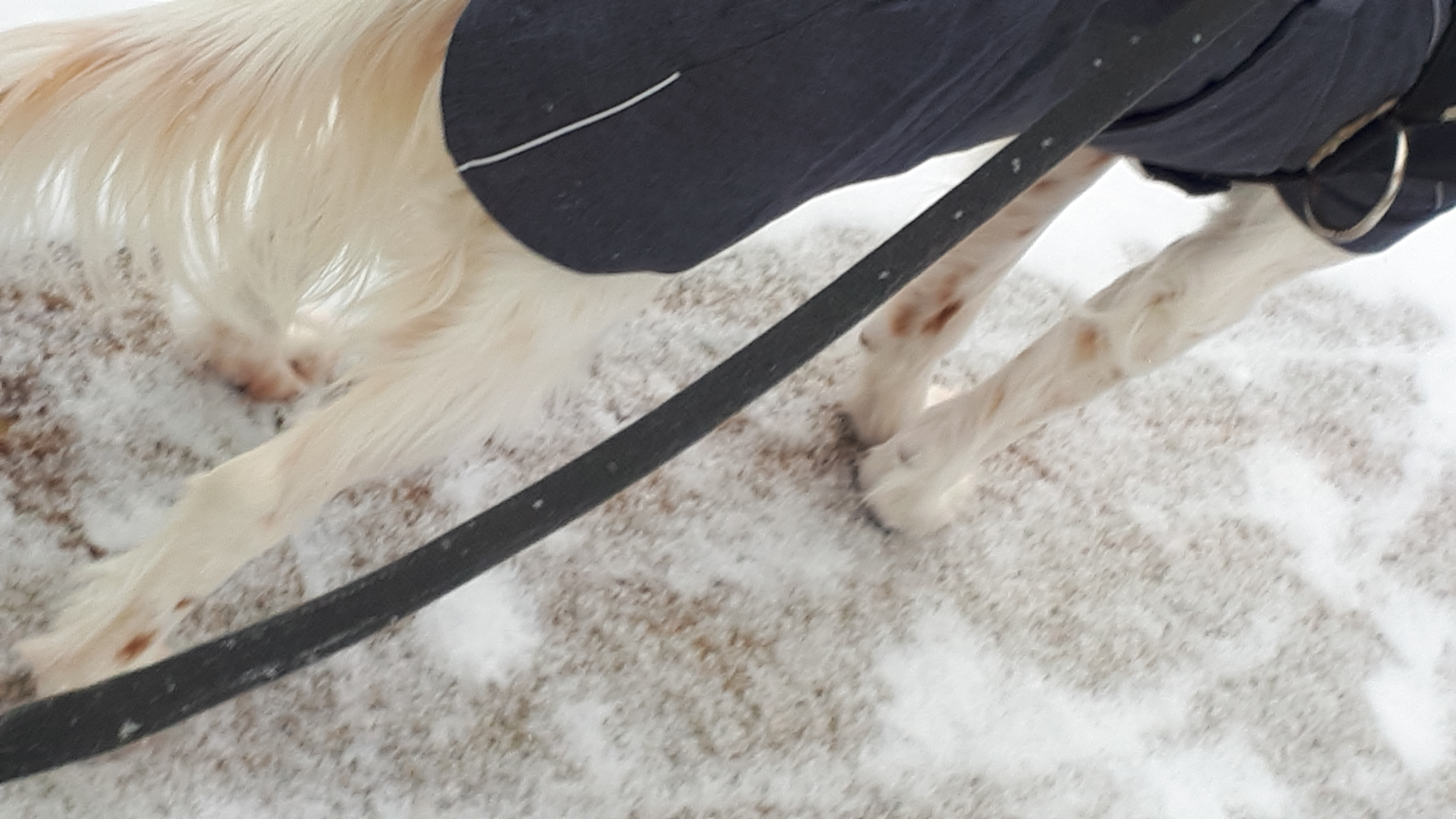
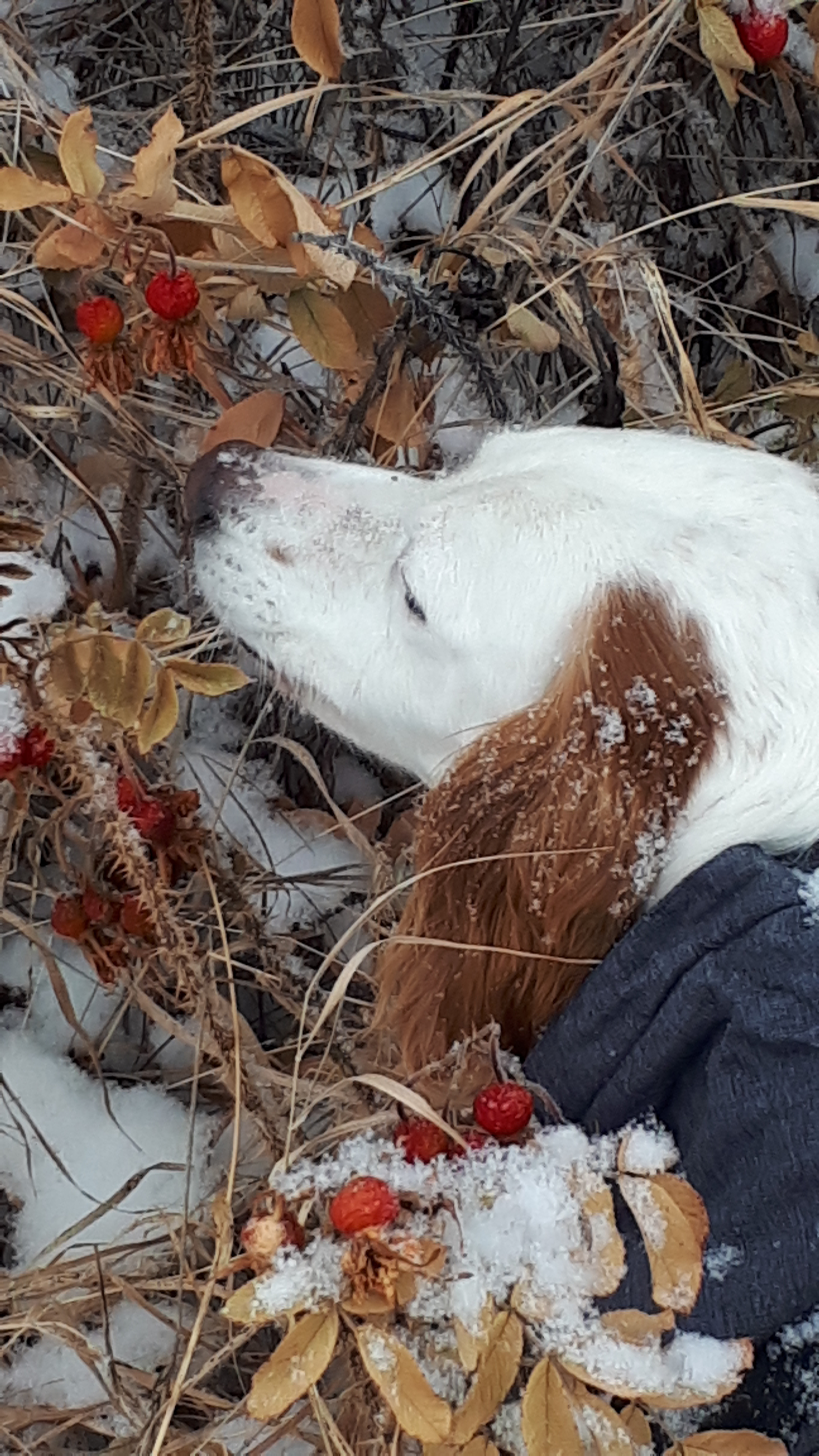
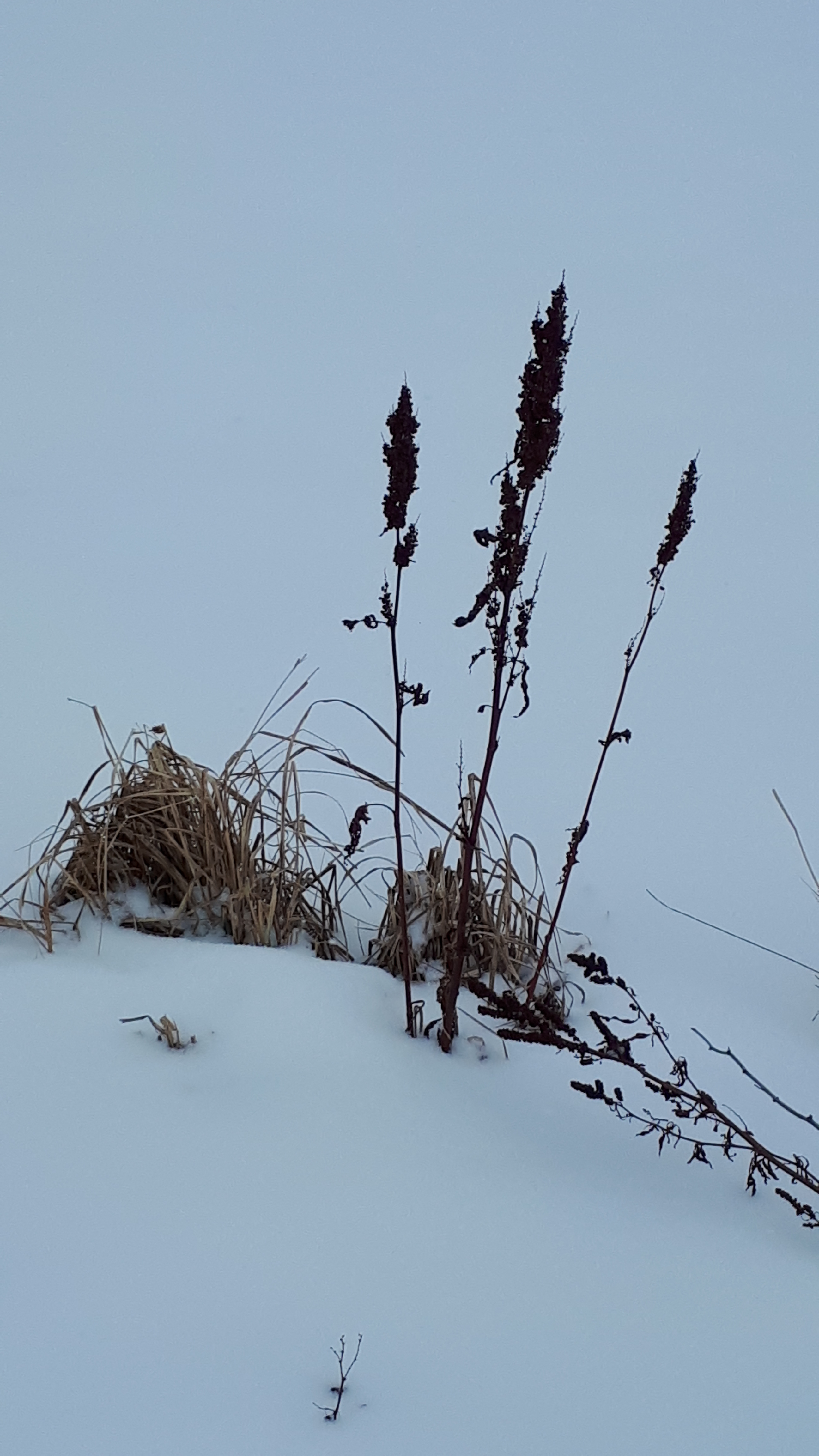
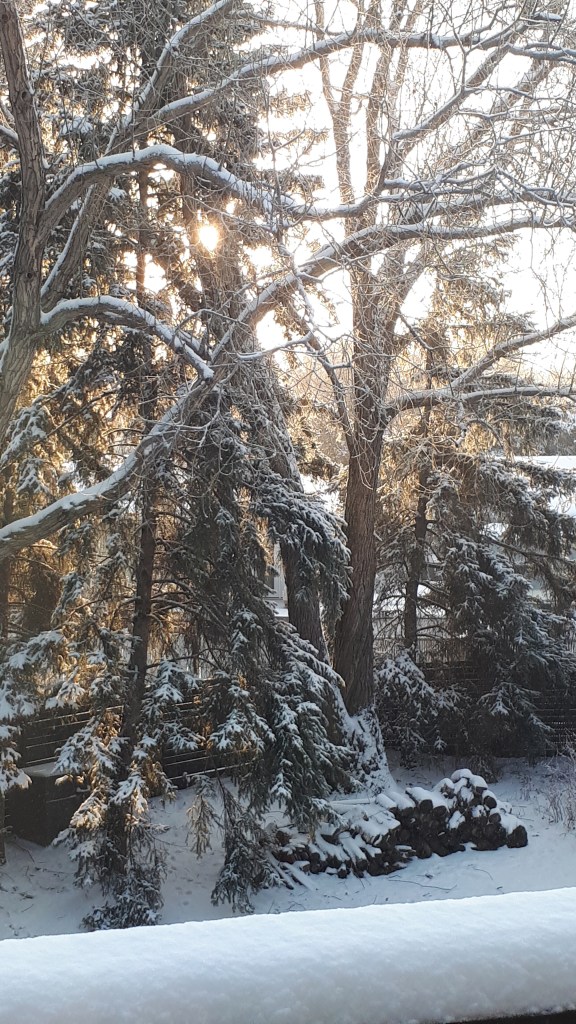
“re-wintering” – what caught my eye as Annie and I walked this week
Every other week I circle up virtually with some dear woman friends. It’s been a way to feel connection and offer support to each other during these continued covid times. We begin, as is our way, following The Circle Way practice, with a reading of some kind to help us land and settle in with each other and ourselves. A bell rung once, twice and we begin to check in with each other, often in response to what has been evoked by the reading, or by whatever is personally stirring and needing to be spoken aloud to the centre.
Last week I as I walked past my bookshelves to fetch my bells, grabbed by the title on the spine, I grabbed “The Wild In You: Voices from the Forest and the Sea” (2015) by Canadian poet, Lorna Crozier. (Lovely synchronicity in that as I’m sitting here tapping away, in the background I hear The Road Home’s Bob Chelmick read from Lorna’s 2018 volume, The God of Shadows.) A beautiful compilation of poetry and Ian McAllister’s photography, I quickly flipped through the pages, arriving at “A Winter’s Sleep,” companioned by a magnificent wolf sleeping on the seaside sand.
A Winter’s Sleep
So much sleeping in this place. Think of all that lies beneath the snow, lake trout below the ice, bears in their dens, their warm snores drifting above the treetops that are sleeping, too, high above your own long sleep.
Even raven, with so much to say and do, closes his eyes, tucks his beak under his wing and sinks into the season’s dream-rich dark where all his stories start.
Lorna Crozier, 2018
As is our way, we meander in a conversation punctuated that evening by long pauses and the shared recognition of how fatigue, grief and the need for Nature’s stillness were embroidering our days of late. One shared another poem, another mentioned a book, Wintering, the title of which evoked a memory that I’d written about it. When I read aloud from the post I’d written last February, I knew it was an idea worth repeating here. That even though my interior state has shifted from what I described then, today, as the winds blew a constant icy cold, the temperature plummeted, and too, the hours of daylight here on the Canadian prairies, it is wintering.
WINTERING, originally posted February 1, 2021
“Dashed and disheartened – again,” I emailed a friend. What with last week’s winds having blown in Arctic cold temperatures and flat light skies, reading up on my country’s vaccination rollout debacle and delays, virus variants that are proving to be highly contagious and perhaps more deadly than the original, and a speculated move to mandated mask wearing outside, this might be an understatement. Certainly enough to have been stalled again in writing here, having missed two of my usual Monday postings. Plumbing a bit deeper, what with my husband having celebrated his first “Covid” birthday two weeks ago, we realized with age, and life as we’ve known it “on hold,” we’re feeling quite wistful. Most apparent for me is missing traveling and all that it gives me, more fully appreciated now in its absence. I’m resigned to the probability that this will be another year, and most likely then some, of staying put. Too, the whisper of a question held this past year, “Will I – we – ever travel again as in the past?”
A few days ago, somewhat warmer with soft snowflakes fluttering down, Annie and I walked, she happy for her full-length coat, and NOT having to wear her fleece boots. I plugged into a recent On Being podcast, curious having read Krista’s weekend letter:
“Katherine May, in her book, Wintering – The Power of Rest and Retreat in Difficult Times (2020), meditatively explores ‘wintering’ as a season of the natural world but also as a place our bodies and psyches need to go, a season that recurs again and again across a life. We cheat and dismiss this in life as we’ve been living it, but it has presented itself insistently in a pandemic year we might reimagine as one long communal wintering.
We can’t move forward without grieving all we’ve lost in the past year. Closer to the ground, this means we have to let in the fact of sadness — a precursor to pain and fear — with some reverence. If happiness is a skill, Katherine May says, so is unhappiness. Winter embodies the strange complexity of reality. It is the bitterest season, we blithely say. And all the while it manages not to be the death of the life cycle, as Katherine May reminds, but its crucible.”
Krista Tippet, The Pause, January 23, 2021
Wintering.
That would be the odd place in which I found myself last spring and summer. Whereas I’d used the words “fallow” and “lost”, as I listened to Katherine May, I recognized in her words a fuller, more accurate description of those several months lying cold and low, when all around me blushed and blossomed.
“…wintering is a metaphor for those phases in our life when we feel frozen out or unable to make the next step, and that that can come at any time, in any season, in any weather; that it has nothing to do with the physical cold…”
Katherine May, On Being podcast, January 21, 2021
Not bound to season as we know it, but a necessary and recurrent place to drop into when we appreciate the cyclical nature of our lives. Thinking back, during an actual winter fifteen years ago, I dropped into depression. Not major, but enough that I and others noticed I was not myself. Little energy and enthusiasm, waning concentration, major exertions of effort to get through a day of work and home chores. Enough that once on the other side that spring, I’d mentioned it to my family doctor, and upon closer examination, recognized its cyclical nature. Perhaps a bit of seasonal affective disorder with some inherited family predisposition towards the winter “blahs.” Never since as severe, though I have a letter I wrote to myself then, upon the suggestion of my doctor, “to be opened in the dark days, to remember.” I’ve never needed to, though I know it’s perched on my desk amidst a collection of mementos. And that brings reassurance enough.
“Plants and animals don’t fight the winter; they don’t pretend it’s not happening and attempt to carry on living the same lives they lived in the summer. They prepare. They adapt. They perform extraordinary acts of metamorphosis to get them through. Wintering is a time of withdrawing from the world, maximizing scant resources, carrying out acts of brutal efficiency and vanishing from sight; but that’s where the transformation occurs. Winter is not the death of the life cycle, but its crucible.”
Katherine May, On Being podcast, January 21, 2021
I wonder if because we are mostly acculturated out of such natural rhythms and rituals, those embedded deep within our DNA and beneath our consciousness, we find ourselves in “winter” out of season? That if we heeded Nature’s signs and stirrings, we’d ready ourselves, with each other, for wintering’s alchemical invitation. I feel a growing love and appreciation for winter, the season, since being unfettered by work’s imposed schedule, demands, and need for driving. And as many of us have felt during the pandemic, in lives slowed and diminished of obligation, its paradoxical gifts.
“It’s a time for reflection and recuperation, for slow replenishment, for putting your house in order. Doing these deeply unfashionable things — slowing down, letting your spare time expand, getting enough sleep, resting — is a radical act now, but it’s essential.”
Katherine May, On Being podcast, January 21, 2021
Recently I came upon these words from Toko-pa Turner’s book, Belonging: Remembering Ourselves Home. They echo the hidden transformative gifts in this crucible of winter and wintering:
“Like the bowl that has yet to be filled, there is an emptiness that precedes creativity that is alive with potential. With ordinary eyes, it’s easy to mistake this emptiness for stagnancy. We may think, “I have nothing of substance to offer! I have no original ideas!” But down at the invisible base of things, there is a holy dance taking place. Though we may want to run from the tension, the polarities are in constant motion, readying themselves into harmony. Far from dormant, this dance is the active receptivity that calls things into form. We are such a vessel. These times of nothingness are actually busy with living into a new capacity.
Originality comes when you stay close to that emptiness, making it a welcoming place, adorning it with your divine longing, learning the shape of it, and filling it with your questions. Every great artist I know is obsessed with a question, and their artworks are less attempts to answer that question than they are exaltations of asking. As Jean Cocteau says, ‘The poet doesn’t invent. He listens.'”
I listened last summer as I wintered, lost and fallow. I remembered it as a familiar season of my life and followed its nudges to find my way through. Walking with Annie. Reading and writing. Photography and painting. Making love notes to friends. Cooking and circling up with women friends. And now in the fullness of its season, I sleep longer, nap more, give myself permission to pause the writing until I feel stirred. I let myself feel, once again, dashed and disheartened, trusting them to be worthy of these times. And I wonder.
“I recognized winter. I saw it coming a mile off, since you ask, and I looked it in the eye. I greeted it and let it in. I had some tricks up my sleeve, you see. I’ve learned them the hard way. When I started to feel the drag of winter, I began to treat myself like a favored child, with kindness and love. I assumed my needs were reasonable and that my feelings were signals of something important. I kept myself well fed, and I made sure I was getting enough sleep. I took myself for walks in the fresh air and spent time doing things that soothed me. I asked myself, what is this winter all about? I asked myself, what change is coming?”
Katherine May, Wintering – The Power of Rest and Retreat in Difficult Times (2020)
Krista Tippett: Somewhere you say that snow creates a “liminal space, a crossing point between the mundane and the magical.”
Katherine May: I think snow — what I love about snow is the way that it makes a clean break. It transforms the landscape. Everything’s different. Everything sounds different. The quality of light is different. The light kind of sparkles off it. You know, before you open your curtains, that snow has landed. And for me, I just think that’s such a gift. I know it’s less of a gift if it’s there for five or six months. But it’s a break in the routine. It’s a little bit like a kind of pause. You can’t go about your normal business. School chucks out. But you get to see your world in a different way. And it’s beautiful.
I grew up in quite an unbeautiful place, and snow used to make it beautiful. And I used to absolutely love that. And I now live in a very beautiful place, and snow makes it magical instead, when it comes.
On Being with Krista Tippett, January 21, 2021
Inspired by their conversation for Monday’s blog on Wintering, and given the recent snow and its transformation of so much around me, I had to include Katherine’s poetic rendering here, as Friday’s photo and poem feature.
“Dashed and disheartened – again,” I emailed a friend. What with last week’s winds having blown in Arctic cold temperatures and flat light skies, reading up on my country’s vaccination rollout debacle and delays, virus variants that are proving to be highly contagious and perhaps more deadly than the original, and a speculated move to mandated mask wearing outside, this might be an understatement. Certainly enough to have been stalled again in writing here, having missed two of my usual Monday postings. Plumbing a bit deeper, what with my husband having celebrated his first “Covid” birthday two weeks ago, we realized with age, and life as we’ve known it “on hold,” we’re feeling quite wistful. Most apparent for me is missing traveling and all that it gives me, more fully appreciated now in its absence. I’m resigned to the probability that this will be another year, and most likely then some, of staying put. Too, the whisper of a question held this past year, “Will I – we – ever travel again as in the past?”
A few days ago, somewhat warmer with soft snowflakes fluttering down, Annie and I walked, she happy for her full-length coat, and NOT having to wear her fleece boots. I plugged into a recent On Being podcast, curious having read Krista’s weekend letter:
“Katherine May, in her book, Wintering – The Power of Rest and Retreat in Difficult Times (2020), meditatively explores ‘wintering’ as a season of the natural world but also as a place our bodies and psyches need to go, a season that recurs again and again across a life. We cheat and dismiss this in life as we’ve been living it, but it has presented itself insistently in a pandemic year we might reimagine as one long communal wintering.
We can’t move forward without grieving all we’ve lost in the past year. Closer to the ground, this means we have to let in the fact of sadness — a precursor to pain and fear — with some reverence. If happiness is a skill, Katherine May says, so is unhappiness. Winter embodies the strange complexity of reality. It is the bitterest season, we blithely say. And all the while it manages not to be the death of the life cycle, as Katherine May reminds, but its crucible.”
Krista Tippet, The Pause, January 23, 2021
Wintering.
That would be the odd place in which I found myself last spring and summer. Whereas I’d used the words “fallow” and “lost”, as I listened to Katherine May, I recognized in her words a fuller, more accurate description of those several months lying cold and low, when all around me blushed and blossomed.
“…wintering is a metaphor for those phases in our life when we feel frozen out or unable to make the next step, and that that can come at any time, in any season, in any weather; that it has nothing to do with the physical cold…”
Katherine May, On Being podcast, January 21, 2021
Not bound to season as we know it, but a necessary and recurrent place to drop into when we appreciate the cyclical nature of our lives. Thinking back, during an actual winter fifteen years ago, I dropped into depression. Not major, but enough that I and others noticed I was not myself. Little energy and enthusiasm, waning concentration, major exertions of effort to get through a day of work and home chores. Enough that once on the other side that spring, I’d mentioned it to my family doctor, and upon closer examination, recognized its cyclical nature. Perhaps a bit of seasonal affective disorder with some inherited family predisposition towards the winter “blahs.” Never since as severe, though I have a letter I wrote to myself then, upon the suggestion of my doctor, “to be opened in the dark days, to remember.” I’ve never needed to, though I know it’s perched on my desk amidst a collection of mementos. And that brings reassurance enough.
“Plants and animals don’t fight the winter; they don’t pretend it’s not happening and attempt to carry on living the same lives they lived in the summer. They prepare. They adapt. They perform extraordinary acts of metamorphosis to get them through. Wintering is a time of withdrawing from the world, maximizing scant resources, carrying out acts of brutal efficiency and vanishing from sight; but that’s where the transformation occurs. Winter is not the death of the life cycle, but its crucible.”
Katherine May, On Being podcast, January 21, 2021
I wonder if because we are mostly acculturated out of such natural rhythms and rituals, those embedded deep within our DNA and beneath our consciousness, we find ourselves in “winter” out of season? That if we heeded Nature’s signs and stirrings, we’d ready ourselves, with each other, for wintering’s alchemical invitation. I feel a growing love and appreciation for winter, the season, since being unfettered by work’s imposed schedule, demands, and need for driving. And as many of us have felt during the pandemic, in lives slowed and diminished of obligation, its paradoxical gifts.
“It’s a time for reflection and recuperation, for slow replenishment, for putting your house in order. Doing these deeply unfashionable things — slowing down, letting your spare time expand, getting enough sleep, resting — is a radical act now, but it’s essential.”
Katherine May, On Being podcast, January 21, 2021
Recently I came upon these words from Toko-pa Turner’s book, Belonging: Remembering Ourselves Home. They echo the hidden transformative gifts in this crucible of winter and wintering:
“Like the bowl that has yet to be filled, there is an emptiness that precedes creativity that is alive with potential. With ordinary eyes, it’s easy to mistake this emptiness for stagnancy. We may think, “I have nothing of substance to offer! I have no original ideas!” But down at the invisible base of things, there is a holy dance taking place. Though we may want to run from the tension, the polarities are in constant motion, readying themselves into harmony. Far from dormant, this dance is the active receptivity that calls things into form. We are such a vessel. These times of nothingness are actually busy with living into a new capacity.
Originality comes when you stay close to that emptiness, making it a welcoming place, adorning it with your divine longing, learning the shape of it, and filling it with your questions. Every great artist I know is obsessed with a question, and their artworks are less attempts to answer that question than they are exaltations of asking. As Jean Cocteau says, ‘The poet doesn’t invent. He listens.'”
I listened last summer as I wintered, lost and fallow. I remembered it as a familiar season of my life and followed its nudges to find my way through. Walking with Annie. Reading and writing. Photography and painting. Making love notes to friends. Cooking and circling up with women friends. And now in the fullness of its season, I sleep longer, nap more, give myself permission to pause the writing until I feel stirred. I let myself feel, once again, dashed and disheartened, trusting them to be worthy of these times. And I wonder.
“I recognized winter. I saw it coming a mile off, since you ask, and I looked it in the eye. I greeted it and let it in. I had some tricks up my sleeve, you see. I’ve learned them the hard way. When I started to feel the drag of winter, I began to treat myself like a favored child, with kindness and love. I assumed my needs were reasonable and that my feelings were signals of something important. I kept myself well fed, and I made sure I was getting enough sleep. I took myself for walks in the fresh air and spent time doing things that soothed me. I asked myself, what is this winter all about? I asked myself, what change is coming?”
Katherine May, Wintering – The Power of Rest and Retreat in Difficult Times (2020)







 A Wabi Sabi Life