Trusting the Threads

grounded in Nature’s altar

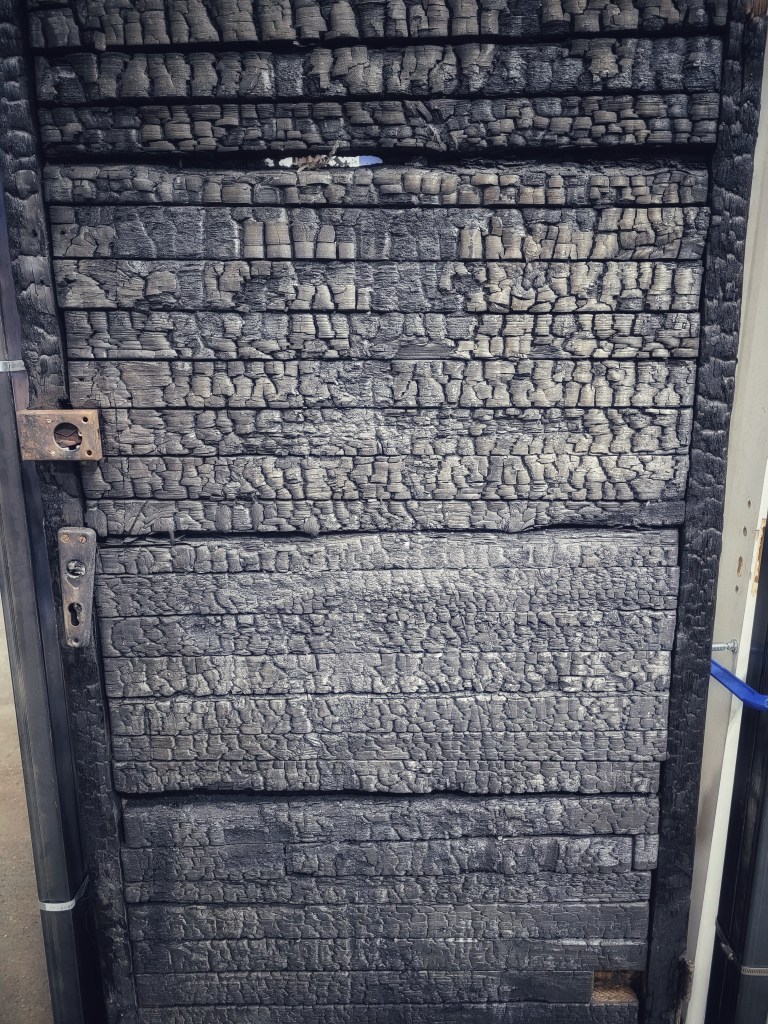
I wondered if last Friday’s photo and poem feature were simply too much for readers, as few opened the post, either here or on social media. Perhaps if I’d titled it, “I Am NOT Happy,” and posted another photo, instead of using the title of Ilya Kaminsky’s poem, “We Lived Happily during the War,” with my photo of an actual Ukrainian door burned in the invasion, it might have evoked more curiosity and less reluctance. Please know this is not a critique, simply an observation AND acknowledgment of so much fatigue, despair, rage and fear, AND the wise self-care choices we each need to make, including what to click and read, and what to pass on. Though I must take a moment to acknowledge, with deep and abiding gratitude, another’s post that cracked open and gave me permission to name what I’d named in mine.

Karen Maezen Miller, an ordained Soto Zen priest, wrote last week, I Am Not Free,” in which she unabashedly and vulnerably shared the impacts of and her feelings about the current goings on in the USA. I won’t go into detail, but to read a Zen priest – one whose writings have always hit the mark for me, and to whom I have occasionally, naively attributed a well-practiced, placid, equanimity – use the words “terrified,” “furious,” and “hate,” was one of the most reassuring pieces I’d read in weeks. One from which I did feel free.

Last week I attended a session hosted by my library’s new writer-in-residence. “Music and the Practice of Poetry,” it ended up being a wonderfully playful experience in understanding the importance of rhythm to writing and reading aloud poetry. As recommended, I brought something to write on, in this case my black journal of bits and pieces of writing transcribed over the years from my journals, letters, emails, social media posts. A collection of “seeds” that when I reviewed, saw how several had sprouted and blossomed into poems and essays. Like this piece, written in 2014, its essence rooted in last Monday’s post, “Rest.”

“I hear a murmuring of rest, OK, yes and then
the air smelling sweet and cool.
There are berries to pick and laundry to hang.
Groceries to buy and friends to call.
This could be enough. For right now is enough.
Ease back into life here at home.
Give thanks and send blessings
to all those suffering.”

Or this one, that I wrote and posted on Facebook exactly six years ago today. Its simple truth and prescience like Kaminsky’s poem.

And how I’ll end this post:

“There are the times when a poem becomes a prayer,
an image the beautiful antidote to the day’s atrocities.”

Much love and kindest regards, dear friends.

“We Lived Happily during the War”

We Lived Happily during the War

And when they bombed other people’s houses, we

protested
but not enough, we opposed them but not

enough. I was
in my bed, around my bed America

was falling: invisible house by invisible house by invisible house â€”

I took a chair outside and watched the sun.

In the sixth month
of a disastrous reign in the house of money

in the street of money in the city of money in the country of money,
our great country of money, we (forgive us)

lived happily during the war.

~ Ilya Kaminsky, Deaf Republic. 2019 ~

I first heard Kaminsky’s poem in June 2021, read by Padraig O’Tuama in his Poetry Unbound podcast. Written in 2009, its powerful prescience grabbed me then, before hell was unleashed in Ukraine when Russia invaded in February 2022. And it hasn’t let go. Its grip now tighter as the American Republican administration, thinking it is the “great country of money,” backed by men in their “houses of money,” threatens my country, its people, and our livelihoods. Already killing the land, people and livelihoods of Ukraine, Gaza, and beyond.

I am not happy. In all honesty, I feel the rage that comes with such betrayal; fear; sadness; and, in moments, an unsettling hatred towards these men intent on destroying our world. Their acts are evil, committed without empathy and in full consciousness of the consequences of irreparable suffering and death.

Below is my post, written shortly after Russia’s invasion of Ukraine, in which I first included Kaminsky’s poem and the wise words from Canadian elder, Stephan Jenkinson, suggesting “it is no accident that we were born at a time when the culture that gave us life is now failing.

No one lives happily during war. It is madness to think otherwise, despite the lies and bravado to the contrary. Thankfully, our world is too connected, and blessedly our hearts, to ignore the assaults and violence being perpetrated. Admittedly, it does not make for easy living.

Much love and kindest regards, dear friends. May you keep well. You are needed. We need each other.
Life as Poem and Prayer

“It’s a piece of deep psychological acuity, carried in many religious traditions: that each of us is defined as much by who our enemies are and how we treat them as by whom and what we love.”

Krista Tippett, On Being, October 31, 2013

Fitting food for thought as we, the world, contemplate the current circumstances unfolding in Ukraine. A simplistic response to vilify the invaders and yet…

We see Russians courageously take to their streets and squares in protest. We read of notables resigning from posts refusing payment from their government. We know people who know people, Russians whose roots run deep and like us all, whose hearts bleed red.

Today I watched an English subtitled speech given on Friday by Ukraine’s president to Russia’s people. Clarifying misinformation, stating his position and boundaries on behalf of his country’s people, imploring Russians to remember themselves and their relationships with the people of Ukraine. Fiercely compassionate is what comes to mind.

Over the past few days, scrolling social media and participating in online seminars, I’ve been struck with the extent to which we are calling forth the balm found in poetry and prayer, in the arts, dance and song. Evoking the highest good in us, for us all. With poetic irony and prescience, this published in 2009 by Ilya Kaminsky, a poet born in Odessa, Ukraine, now living in the United States after being granted asylum with his family:

We Lived Happily during the War

And when they bombed other people’s houses, we

protested
but not enough, we opposed them but not

enough. I was
in my bed, around my bed America

was falling: invisible house by invisible house by invisible house—

I took a chair outside and watched the sun.

In the sixth month
of a disastrous reign in the house of money

in the street of money in the city of money in the country of money,
our great country of money, we (forgive us)

lived happily during the war.

Let us hold the centre, dear friends. Present with what is unfolding. Poised amidst conflict within and without. Persistent in remembering the best in who we are.

Let us take note of the ever-present beauty around us. Remain open to the mystery in the mundane. Tenacious in our tenderness. Committed in our care.

Living our lives as poem and prayer.

“Do you think it’s an accident that you were born at a time when the culture that gave you life is failing? I don’t think it is. I think you were born of necessity with your particular abilities, with your particular fears, with your particular heartaches and concerns…
I think if we wait to be really compelled by something… something big, well… we’re going to wait an awful long time and I don’t know if the state of our world can tolerate our holding out until we feel utterly compelled by something. I think it’s more like this, that we have to proceed now as if we’re utterly needed given the circumstances. That takes almost something bordering on bravado, it could be mistaken for megalomania easily, though I don’t think it is. It had a certain amount of nerviness in it or boldness for sure, something that’s not highly thought of in the culture I was born into unless you’re a star or something… regular people aren’t supposed to have those qualities. I say they are of course. That’s what we’ve got to bring to the challenges at hand, not waiting to be convinced that we’re needed but proceeding as if we are. Your insignificance has been horribly overstated.”

Stephan Jenkinson

Much love and kindest regards, dear friends.