Trees

I’ve posted it before and its beauty continues to awe

“A tree is a light-catcher that grows life from air.”

Maria Popova, “Why Leaves Change Color,” The Marginalian, October 26, 2021

That line stopped me for its simple truth and eloquent beauty.

This morning, basking in the “fall back” gift of an extra hour’s sleep, lingering over coffee with Annie beside me on “her” aptly named loveseat, I started to read Maria Popova’s wondrous words in her weekly newsletter, The Marginalian (formerly Brain Pickings). A click back to last week’s issue, an essay on the process – both scientific and philosophic – of photosynthesis and the colour of autumn leaves. “Could anyone write more beautifully about the magic of this process, this season, and its connotations?” I whispered to myself.

“Autumn is the season of ambivalence and reconciliation, soft-carpeted training ground for the dissolution that awaits us all, low-lit chamber for hearing more intimately the syncopation of grief and gladness that scores our improbable and finite lives — each yellow burst in the canopy a reminder that everything beautiful is perishable, each falling leaf at once a requiem for our own mortality and a rhapsody for the unbidden gift of having lived at all. That dual awareness, after all, betokens the luckiness of death.”

Maria Popova

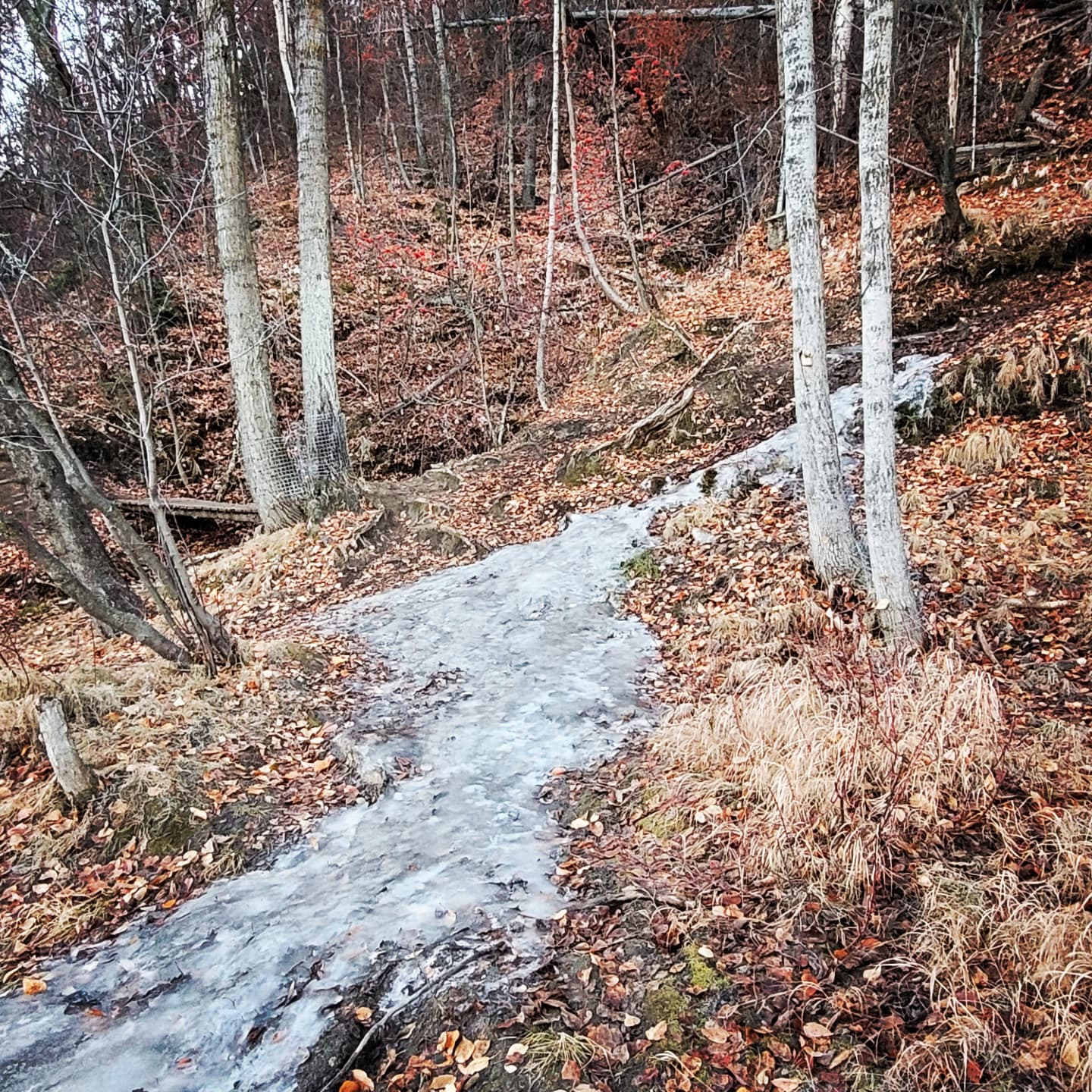
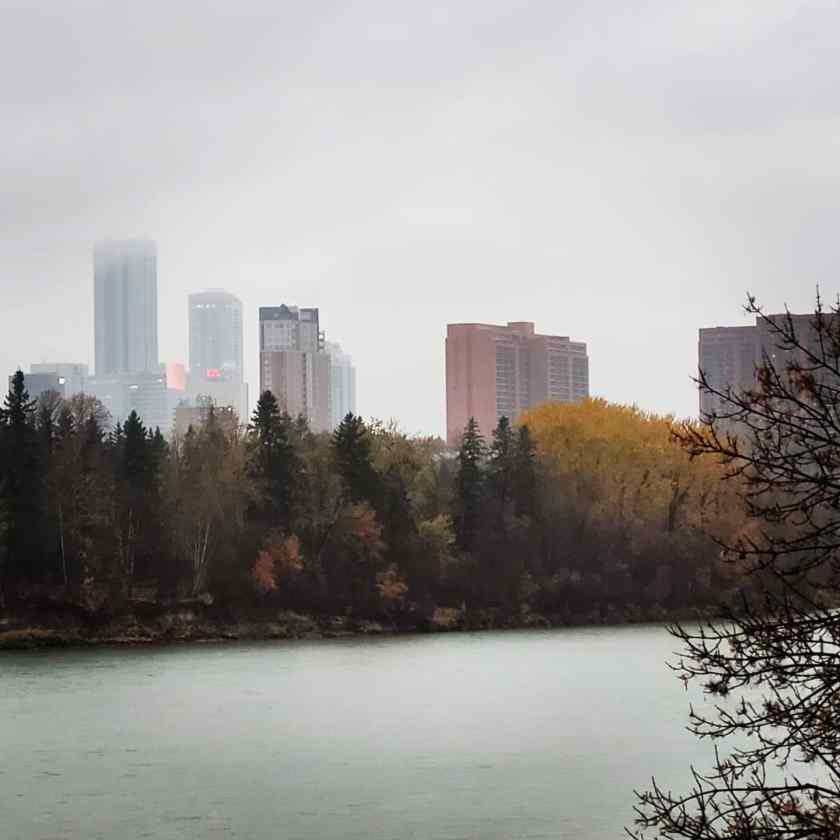
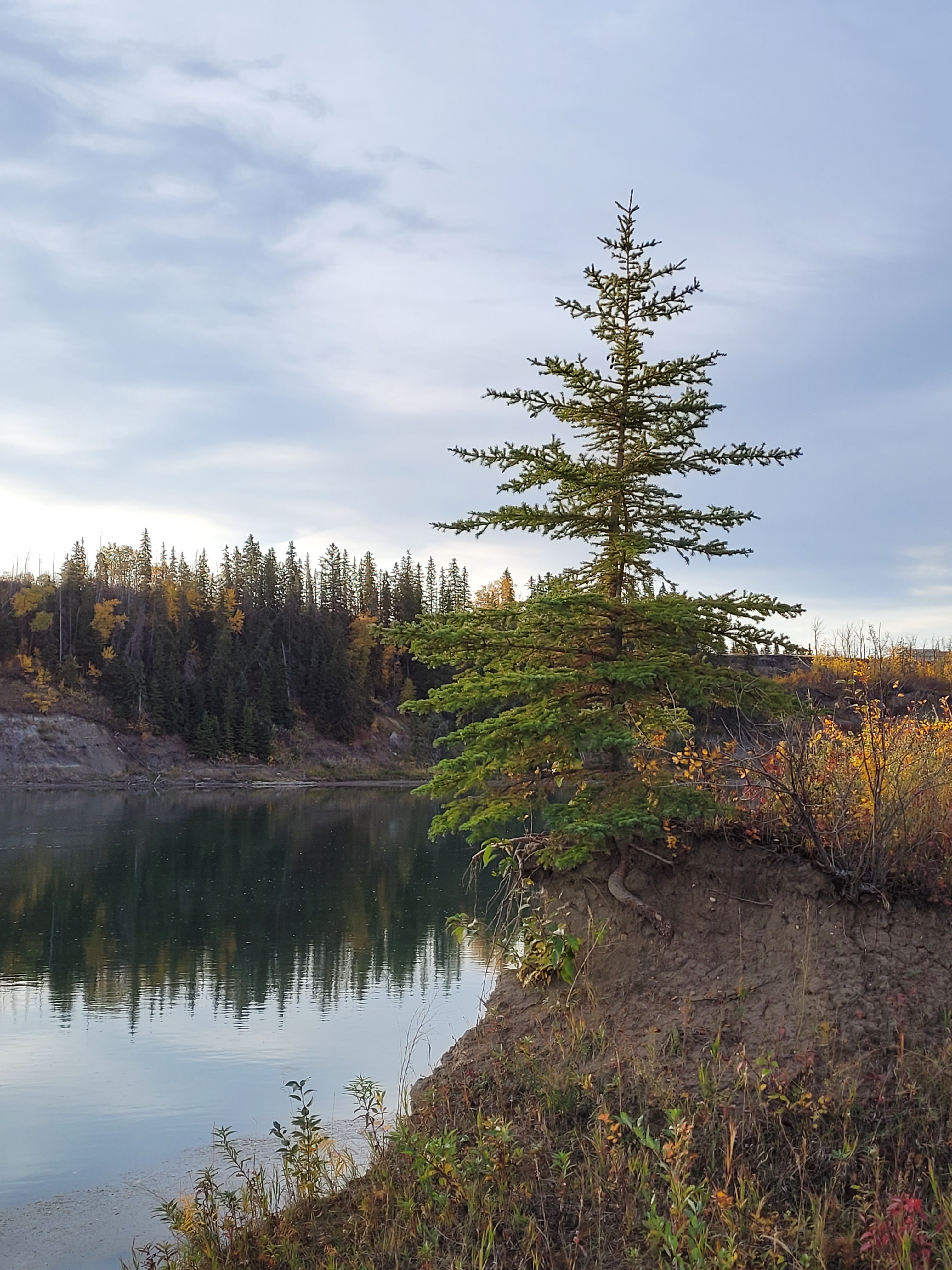
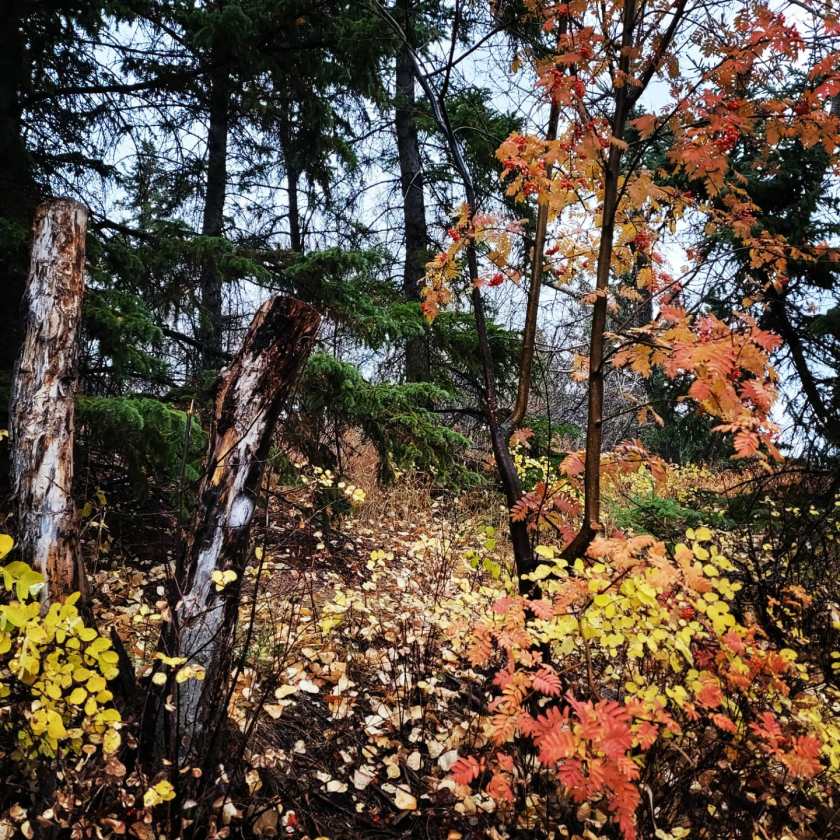
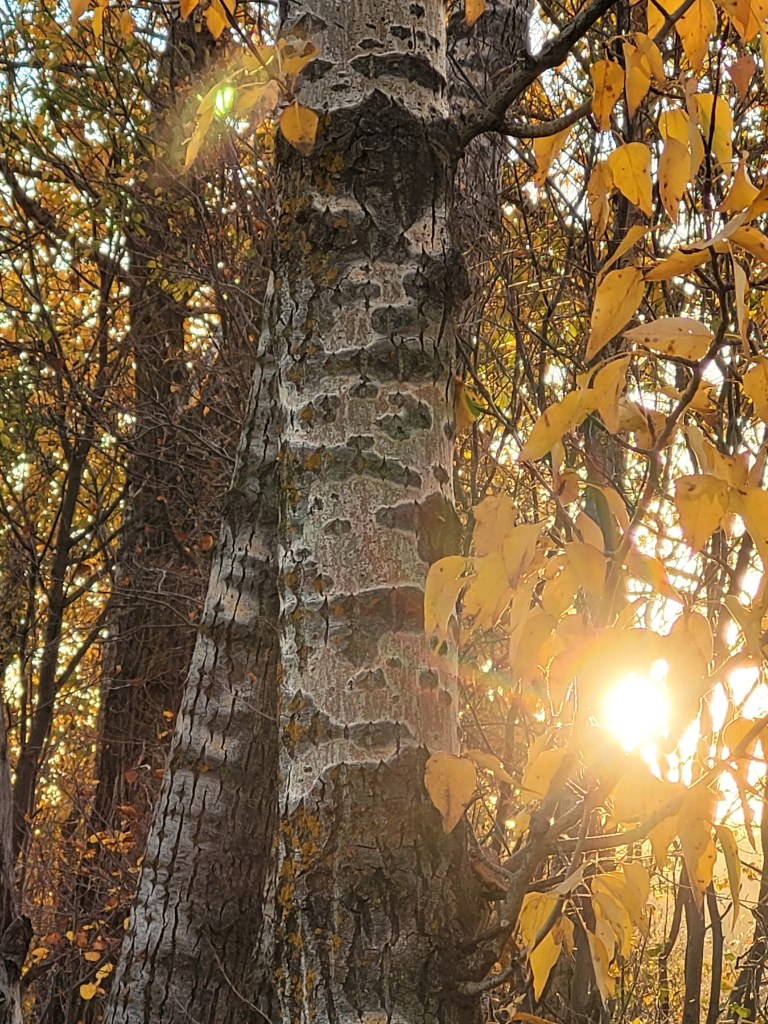
Every Saturday morning finds me walking in the autumn splendor of Edmonton’s North Saskatchewan River Valley. Having just completed the ninth of twelve weekly stages, I continue to be in awe of the season’s vibrant colours. Too, with the exceptional lack of snow, though this week saw a skin of ice on a large pond, and a patch of thick frozen runoff. Every week, I make photographs from what I see, from what especially shimmers and shines. And without fail, most of those photos are of trees in their golden, vermillion, russet, and bronze glory. Of their transition from fully “dressed” to bare limbed. Some resplendent with red, black, and purple berries; some with tight portending buds. Yesterday I remarked to my husband that no one can say we don’t have colourful autumns here on the prairies. He reminded me that we don’t typically have massive globes of colour from the towering hardwood oaks and maples. Yes, here one must look closer in, not so high up, nearer to the ground for such treasures.
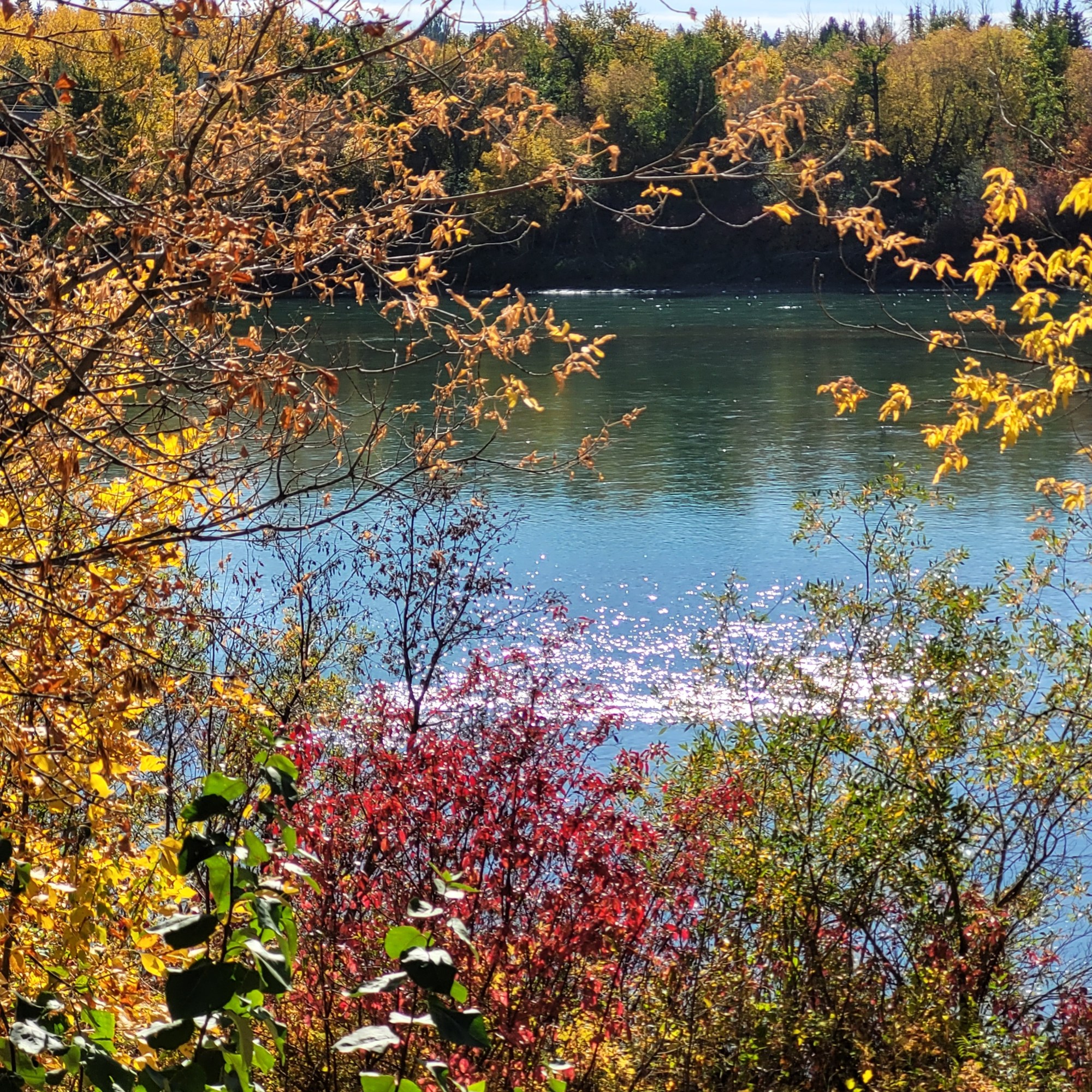
“As daylight begins fading in autumn and the air cools, deciduous trees prepare for wintering and stop making food — an energy expenditure too metabolically expensive in the dearth of sunlight. Enzymes begin breaking down the decommissioned chlorophyll, allowing the other pigments that had been there invisibly all along to come aflame. And because we humans so readily see in trees metaphors for our emotional lives, how can this not be a living reminder that every loss reveals what we are made of — an affirmation of the value of a breakdown?”

Maria Popova

As I’ve written before, my earliest memory is of laying in my baby buggy, looking into trees – the new green maple leaves and the spaces in between onto the sky. The fluttering and swaying, in the growing warmth of spring, caught my budding curiosity, creating a life-long affinity for their beauty and recognition of their healing balm and wisdom.

So it is that I appreciate Popova’s naming other, less ‘attractive’ metaphoric connections between ourselves and trees – death and breakdowns. And why this poem of Mary Oliver rings so deeply true:

WHEN I AM AMONG THE TREES
When I am among the trees,
especially the willows and the honey locust,
equally the beech, the oaks and the pines,
they give off such hints of gladness.
I would almost say that they save me, and daily.
I am so distant from the hope of myself,
in which I have goodness, and discernment,
and never hurry through the world
but walk slowly, and bow often.
Around me the trees stir in their leaves
and call out, “Stay awhile.”
The light flows from their branches.
And they call again, “It’s simple,” they say,
“and you too have come
into the world to do this, to go easy, to be filled
with light, and to shine.”

Much love and kindest regards, dear friends.

,

Walking

“I suspect that the mind, like the feet, works at about three miles an hour. If this is so, then modern life is moving faster than the speed of thought, or thoughtfulness.”

Rebecca Solnit, Wanderlust, 2001

Text on Friday night from my friend: Are you planning on walking tomorrow? It’s supposed to be raining all day.

Me: Yes, I saw the forecast, and yes, I plan to walk. I made the commitment to myself to walk every stage, come rain, sun, sleet or snow. So, yes, I’ll be walking.

Friend: Thumbs up emoji

Text on Saturday morning – well before dawn – to my friend: Hmmmm, I’m reconsidering walking. It’s been raining all night, the forecast is for rain all day. I don’t want to get chilled and cold and sick. What about you?

Friend: I’m up and already dressed.

Me: Well, then…

Friend: We can always go, see if anyone else comes, and what’s happening.

Me: Good idea. Thumbs up emoji

“Go out and walk. That is the glory of life.”

Maira Kalman, My Favorite Things, 2014

So at 7:35 am I drove the short distance to the park for the 8:00 am rendezvous for Stage 7 of the local Camino de Edmonton, amazed at how much darker it was from a week ago, due to heavy cloud cover and the shortened days.  We’re now past the midway point, with twelve stages in total, ending the last Saturday in November at the city’s west end of the river valley, when my drive will be much further. A repeat of last year’s camino, now with the stages in reverse order, we’ve had glorious fall weather every weekend until now.

And there we were, ten of us hardy “peregrinos” ready to embrace the day, stepping through puddles, agreeing it would be a good day to test our gears’ waterproofness. Mine – boots, pants and jacket – failed miserably by the end of the 13.5 km circuit, my feet and quads wet to the skin. Once home, showered and dried, wet clothes laundered, boots aired, I began researching remedies and replacements. Several pairs of boots ordered, a couple of jacket styles eyed and waiting, hopefully, for a Black Friday sale (yup, those Arc’teryx jackets are an “investment” to quote my friend ), and waterproofing wash and spray purchased to renew the life of my pants.

“The pieces that I chose were based on one thing only — a gasp of DELIGHT.
Isn’t that the only way to curate a life? To live among things that make you gasp with delight?”

Maira Kalman, My Favorite Things, 2014

Every week I post pictures of the week’s walk on social media. Last week in response, another friend asked if I ever wrote about my “camino” experience, relaying how my posts brought to her mind the hauntingly beautiful composition, “camino,” by the late Canadian violinist, Oliver Schroer, created in May and June, 2004, as he walked one thousand kilometers of the Camino Frances, with his partner Elena, and two friends, Peter Coffman and Diane Laundy.

“In my back pack, I carried my violin like a wooden chalice, like my own precious relic, carefully packed in its reliquary of socks and underwear and waiting to work a miracle. My pack also contained a portable recording studio. When I found a church or cathedral that was acoustically enticing…and open…I played my violin and recorded in those spaces. I played some of my older fractal and spiritual pieces. I improvised a lot. Walking for weeks, new pieces came to me – one hill, one valley at a time. In two months, I played and recorded in twenty-five different churches…

…The music still sings on these recordings. The sense of place is strong here – pilgrims praying, children playing, birds, bells, footsteps, passing snatches of conversation, the sounds of the buildings themselves. Each space has it sown distinct character and resonance.”

Oliver Schroer, “camino” journal notes, 2005

My photographs are glimpses into the sense of place I encounter as I walk – “that magical stuff of ‘the moments inside the moments inside the moments.’” (Maira Kalman). What shimmers – audaciously or subtly – and has me gasp with delight, or stop and turn around to really take in the moment? What is different or the same this year, from when I walked the same stage last year? What memories are evoked, impressions stirred, conversations silently replayed, or spoken anew now?

“With the utmost love and attention the person who walks must study and observe every smallest living thing, be it a child, a dog, a fly, a butterfly, a sparrow, a worm, a flower, a man, a house, a tree, a hedge, a snail, a mouse, a cloud, a hill, a leaf, or no more than a poor discarded scrap of paper on which, perhaps, a dear good child at school has written his first clumsy letters.”

Henry Thoreau, The Walk, 1861

Last year walking, it was a friend’s question about what I did with my photos – having watched me pause many times that glorious Saturday, to frame the image and focus my camera, fall behind the group and then catch up – that planted the seed for creating a photo journal of how I experienced my life during the pandemic. The first volume of one hundred pages, from March to December, 2020, and now a second volume almost at capacity with three months of this year still to enter. Too, my husband suggested I make a photo book exclusively of my Camino photos in appreciation for the co-ordinator’s efforts in planning and hosting all thirteen stages last year. As our host didn’t follow along on social media, it was the first time he saw in its entirety the beauty of what he had envisioned and coordinated for us, through the beauty I had captured and created for him.

“…the genius of walking lies not in mechanically putting one foot in front of the other en route to a destination but in mastering the art of sauntering – which word is beautifully derived “from idle people who roved about the country, in the Middle Ages, and asked charity, under pretense of going a la Sainte Terre, to the Holy Land, till the children exclaimed, “There goes a Sainte-Terrer,” a Saunterer, a Holy-Lander. “

Henry Thoreau, The Walk, 1861

Since 2000 I’ve waxed and waned with the dream of walking a camino, ever since I read Shirley MacLaine’s memoir. She brought to mainstream consciousness the ancient pilgrimage through France and northern Spain to Santiago de Compostela, today known as The Way, or Camino Frances, the same one walked by Oliver Schroer. There are many camino routes, ending at Santiago, or Italy’s Vatican, or through the forests and shrines of Japan. Last year, walking the Camino de Edmonton I learned that my way of walking is to saunter. I need to take my time to notice, to observe, to photograph, to hum a tune, sing a made-in-the-moment, soon-to-be-forgotten lyric. I enjoy conversation, and have had some delightful, edifying ones. And then what I notice – the shiny and the shimmer, the magic that suddenly catches my eye and speaks to my heart – shifts my attention.

And so, thinking more intentionally about a long distance “saunter” to Santiago, through Portugal, next year, the “easy walk” – taking several more days than the typical two week allocation – with ample time to rest and appreciate the ambiance of local villages, having my accommodations with breakfasts pre-booked, and luggage transferred, viscerally has me gasp with delight and settle my covid concerns. New impressions…the moments inside the moments…the magical stuff…the glory of life.

And hearing inside my heart, Oliver Schroer’s homage to the Camino de Santiago, “Field of Stars.” (Click the link to listen.)

“I went because I knew others who had gone, and the experience filled them with wonder.”

Peter Coffman, Camino, 2017

Much love and kindest regards, dear friends.

How To Be Alone

It all begins with knowing
nothing lasts forever.
So you might as well start packing now.
But, in the meantime,
practice being alive.

There will be a party
where you’ll feel like
nobody’s paying you attention.
And there will be a party
where attention’s all you’ll get.
What you need to do
is know how to talk to
yourself
between these parties.

And,
again,
there will be a day,
— a decade —
where you won’t
fit in with your body
even though you’re in
the only body you’re in.

You need to control
your habit of forgetting
to breathe.

Remember when you were younger
and you practiced kissing on your arm?
You were on to something then.
Sometimes harm knows its own healing
comfort its own intelligence.
Kindness too.
It needs no reason.

There is a you
telling you a story of you.
Listen to her.

Where do you feel
anxiety in your body?
The chest? The fist? The dream before waking?
The head that feels like it’s at the top of the swing
or the clutch of gut like falling
& falling & falling and falling
It knows something: you’re dying.
Try to stay alive.

For now, touch yourself.
I’m serious.

Touch yourself.
Take your hand
and place your hand
some place
upon your body.
And listen
to the community of madness
that
you are.

You are
such an
interesting conversation.

You belong
here.

-Pádraig Ó Tuama –

This Beauty

“In difficult times you should always carry something beautiful in your mind.”

Blaise Pascal

August has arrived in a heat wave, though not the “dome” that brought in July. Wave, dome – both feel pretty damn hot with a bit of wind blowing, deluding one into thinking “ahhh, it’s cooler now.” Cloudless skies continue, but the persistent blue of a month ago has given way to haze with smoke from the still burning forest fires that have disintegrated villages and have others on evacuation notice. Sun glowing red in the morning, redder at night, now later to rise and earlier to set.

Though less now, I’m still attuned to school year rhythms, where notions of work would begin to appear on the horizon, readying for start-up later in the month. It was a few years ago I wrote that August – always for us in the northern hemisphere, the last month of summer – feels to me like one long Sunday night. Today, Sunday, this first day in August – almost a decade since I left full-time employment to free-lance – I still feel that flutter in my belly. A cocktail of anxiety, ambivalence, anticipation, acceptance – the ingredients in this order, though amounts may vary.

I’ve alluded to and explicitly written over the past several weeks, that it’s been a “wobbly” time, difficult even some days. Writ large: the world trying to move beyond a virus that simply will not let us go, mutating faster, and exponentially more contagious. Here and abroad, again a season of relentless burning and unprecedented flooding, evidence that while the world was in retreat for eighteen months, climate change was not. Fractured and collapsed infrastructures. An apocalyptic unveiling of grievous global injustice and racism. Right now to my way of thinking, the Tokyo Summer Olympic Games appear the perfect metaphor. Writ small: me trying to find footing in a “re-opened” community, and province deciding to toss out all covid public health protocols, where I continue to monitor if and who to hug, how close to sit, where and when to wear masks, when to travel to see my parents. Sleep disrupted by the heat and a habit of worrying about unknown “what nexts”? Sensing another turn of the wheel and breaking of the “kitsugi” bowl to allow something – yet defined – room to emerge, then to be mended with gold. Sitting in such threshold space is often difficult for me when it activates old trauma reactions that vacillate between brittle anxiety and a listless, deadening loss of focus – both leaving me wrung out.

“The beauty that emerges from woundedness is a beauty infused with feeling.”

John O’Donohue, Beauty: The Invisible Embrace, 2004

And so I turn to gazing into the backyard sky and trees, onto the garden beds that are finally reviving. I walk Annie early before it’s too hot, enjoying the silence of our slowly waking streets. I listen to the water falling in the fountain – and while a far cry from my beloved Niagara River – let it soothe. I light the kitchen candle when loss’ grief comes calling. I take pen to page, not as often, and often reluctantly, to write anew.

imagine a whisper of a breath

“Beauty enchants us, renews us, and conquers death.

Piero Ferrucci, Beauty and the Soul, 2009

Wishing you all that is good and true and beautiful in your lives, dear friends.
Much love and kindest regards.

The Moment

below Athabasca Falls, Jasper, Alberta

THE MOMENT

The moment when, after many years
of hard work and a long voyage
you stand in the centre of your room,
house, half-acre, square mile, island, country,
knowing at last how you got there,
and say, I own this,

is the same moment when the trees unloose
their soft arms from around you,
the birds take back their language,
the cliffs fissure and collapse,
the air moves back from you like a wave
and you can’t breathe.

No, they whisper. You own nothing.
You were a visitor, time after time
climbing the hill, planting the flag, proclaiming.
We never belonged to you.
You never found us.
It was always the other way round. 

– Margaret Atwood –

This poem’s wisdom reminds me of that found in David Wagoner’s poem “Lost”the need to stand still and let the forest find me, for to do otherwise will only guarantee my lostness. Both impart the knowing held by our First Nations’ peoples – being in “right relationship” with Nature; surrendering to its wisdom and power; trusting its medicine to heal and realign us.
In the Mountains, we settlers climbed and claimed and named peaks – ususally after people -which for hundreds, if not thousands of years before, had been named by the land’s first peoples in honor of the powers and gifts, the placeholding for tradition, ceremony, and travel direction. As an act of reconciliation, many people today are asking that we restore those original names – to acknowledge the Mountains never belonged to us, we didn’t find them. That it was and always will be the other way round.


Finding A Way

Maybe I have been languishing a bit. It’s been a month since I last wrote here. While most Fridays I’ve managed to post my photo and poem features, sometimes offering a bit of explanation as to why this poem now, I haven’t had the jam to write much else on this platform.

I have been writing. A couple of pieces for EdmontonEats (that sweet official writing gig), magazine submissions, poetry contests, and an application to an online summer writing session where, if accepted, I want to learn what it means to be a writer and hone my skills. Cover letters, bio notes, project proposals. At times I feel daunted by the newness of it all, and too, with the solitary, at times lonely space in which I am crafting this new identity, word by word. And it comes.

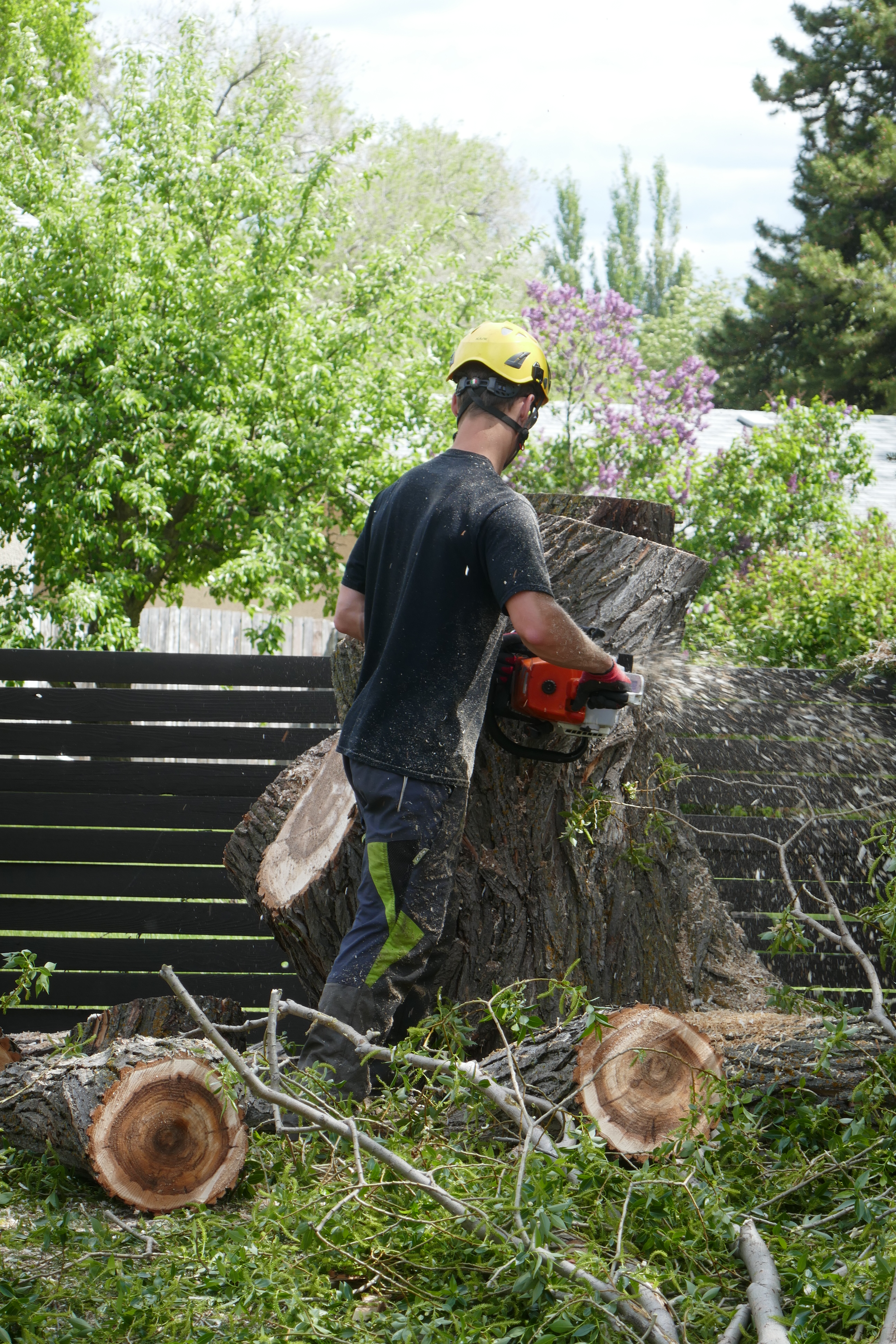
I thought about writing a piece describing last month’s felling of our Willow. I would have titled it “Beloved Willow Be Gone,” for in eight hours, with a three person crew of master arborists roping, climbing, cutting, grinding, and carrying, that magnificent fifty year old tree was no more. I now see too much of the backsides of garages, sheds and houses, and feel exposed unlike ever before during the near forty years we’ve lived here. But I do see an expanse of sky unlike I’ve ever seen, and we have more sun in the morning, making coffee on the deck a lovely start to the day. Winds have blown very strong many days since, and I am relieved not to wonder and worry would Willow finally give way, crashing into those garages, sheds and houses. Soon the stump will be ground and we’ll plant a new tree…a Mayday with its signature prairie spring perfume and white wedding bouquet blossoms…a quick growing canopy that will eventually begin to fill the still, stark void.

I simply didn’t have the gumption to write more than my “four word sad story” about the recent “discovery” of hundreds of unmarked indigenous children’s graves on the grounds of a residential school. The original reported number, 215, is now over 1000 after other grounds were explored, and is expected to rise significantly as all school sites across Canada are examined. My country’s dark secrets are literally being unearthed and coming to light. It is time, long overdue. I knew my words would be trite and so commit to listening, learning, and being open to being disturbed into wise and respectful action.

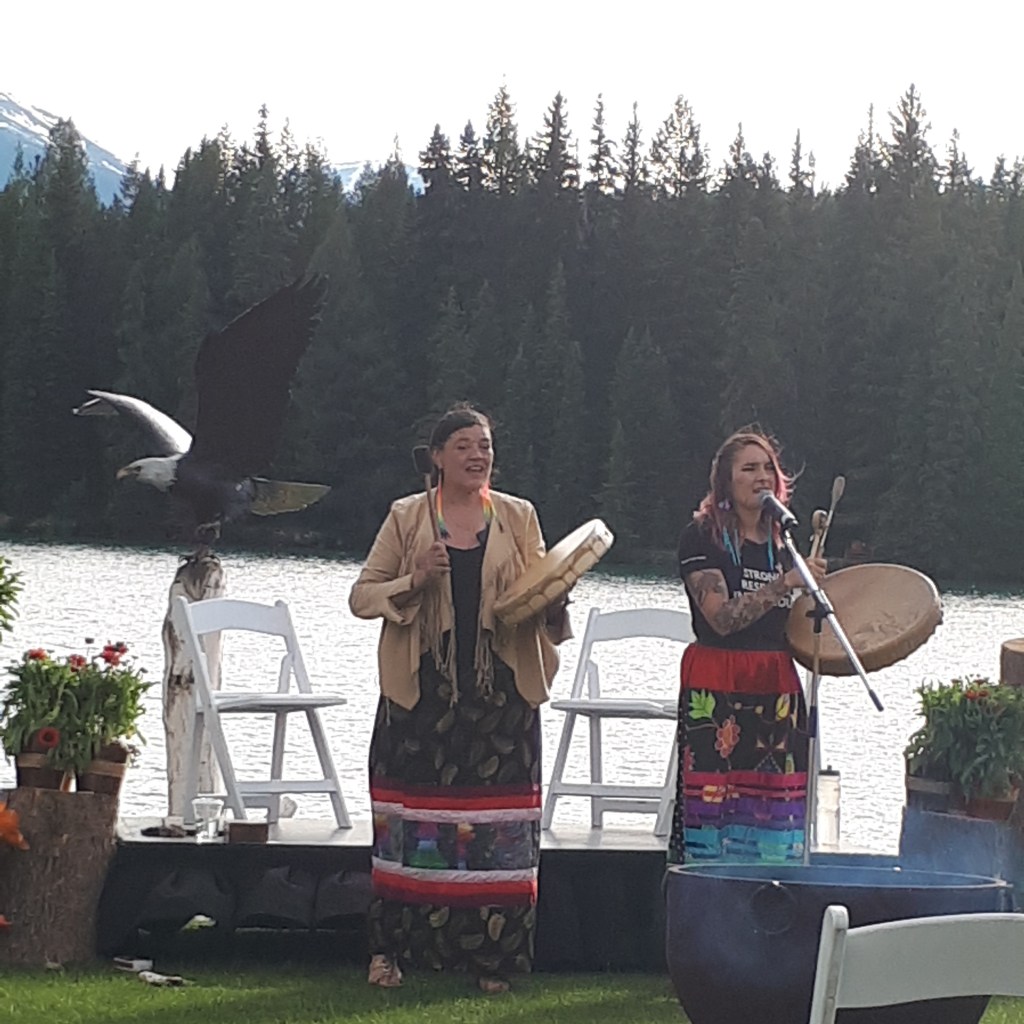
National Indigenous Day Celebrations, Jasper, Alberta

And then there’s the pandemic which, by the sounds of it, might become history next month, which is only a few days away. My province is intent to remove all safety measures come July 1st. Other provinces are following suit sooner than later. Vaccinations feel like a “get out of jail” pass. And while I’ve received both shots, I’m hesitant, skeptical even with this abrupt and arbitrary “end” while cities around the world are going back into lockdown as more virulent variants take hold.

Last week we drove to the mountains for a few days. Our first trip since this all began last March. Sitting on the dock our first evening, a balmy summer solstice, I felt myself decompress with every sigh, releasing months of anxiety and uncertainty. I imagined Nature having a mighty big job ahead as she transmutes everything released by people letting go of all we’ve carried these many months. But I don’t think we’re out of the woods yet.

Every week I receive a wonderful letter, The Pause, written by poet Pádraig Ó Tuama, giving insight into the coming week’s On Being podcasts. This week, he describes the conversation Krista Tippett has with Joanna Macy and Anita Barrows about their new translation of Rilke’s Letters to a Young Poet. You know I’m a Padraig fan, quoting him here often. Once again, his words resonate and offer me a fitting conclusion to my meanderings today:

“The world — as it is envisaged in Rilke’s letters — is not a tame place. It is filled with pain and potential; joy and separation; war and wonder. These are not meant to be easy companions, and this is part of the marrow of the letters to a young poet: find a way to hold yourself while being in the world that is around you.”

Much love and kindest regards, dear friends.

A Settlement

A SETTLEMENT

Look, it’s spring. And last year’s loose dust has turned
into this soft willingness. The wind-flowers have come
up trembling, slowly the brackens are up-lifting their
curvaceous and pale bodies. The thrushes have come
home, none less than filled with mystery, sorrow,
happiness, music, ambition.

And I am walking out into all of this with nowhere to
go and no task undertaken but to turn the pages of
this beautiful world over and over, in the world of my
mind.

***

Therefore, dark past,
I’m about to do it.
I’m about to forgive you

for everything.

– Mary Oliver –
What Do We Know, 2002

An Early Spring Medicine Walk

The day before Spring officially arrived, I took a walk with a dear friend. She and I have evolved a soft and fluid pattern of getting together as our respective cultures’ holy days are either waxing or waning. In the interim, especially this past year, we occasionally text or fob an email back and forth or send each other a “love note” in the mail. We’ve held the intention to meet for a walk these past many months of needing to maintain a safe, social distance and so it was that a few weeks ago she sent a message offering a couple of afternoons. I suggested we pencil in both, weather permitting, knowing how much can change on a dime. With the long-range forecast looking good for Friday, she suggested we meet at Bunchberry Meadows, a nature conservancy west of the city.

snow white paths and aspens

I vaguely recalled having heard of it somewhere, some time ago, so googled and printed off directions. Packed my Deuter daypack with requisite trail mix and water; rain jacket, gloves and toque; first aid kit and camera. Laced on my hiking boots. Grabbed my newly whittled willow walking stick – a gift from the woman who carves in our neighborhood woods. Fuelled up the car – still only a once-a-month ritual – and set out. Zigged once when I should have zagged, but still arrived minutes before my friend coming from a morning of meetings. Hellos said, virtual hugs exchanged on the breeze and we set off.
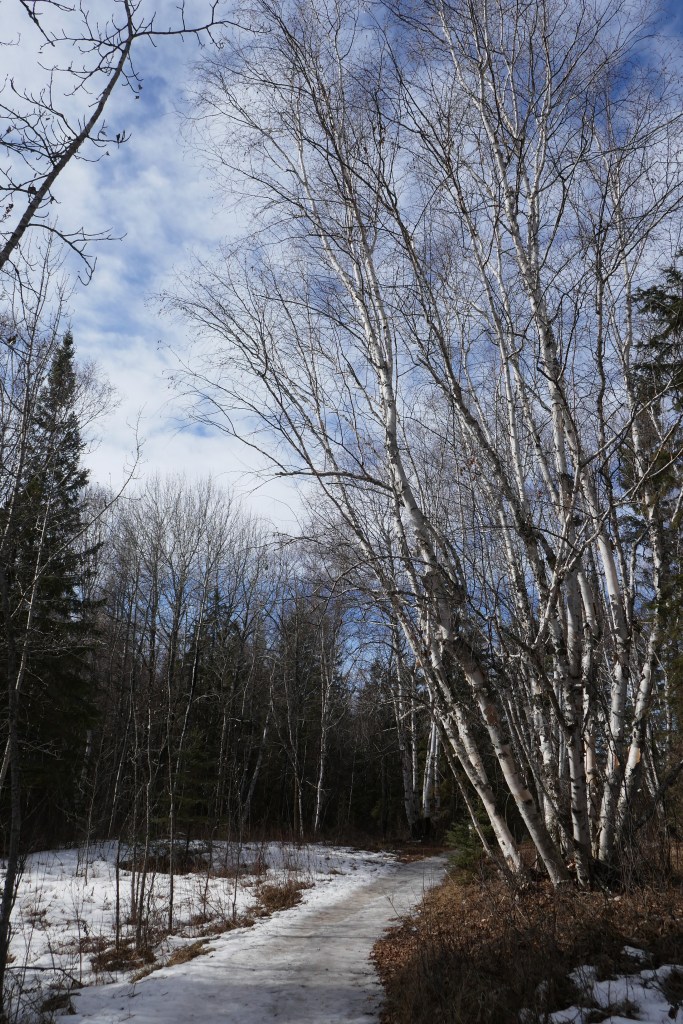
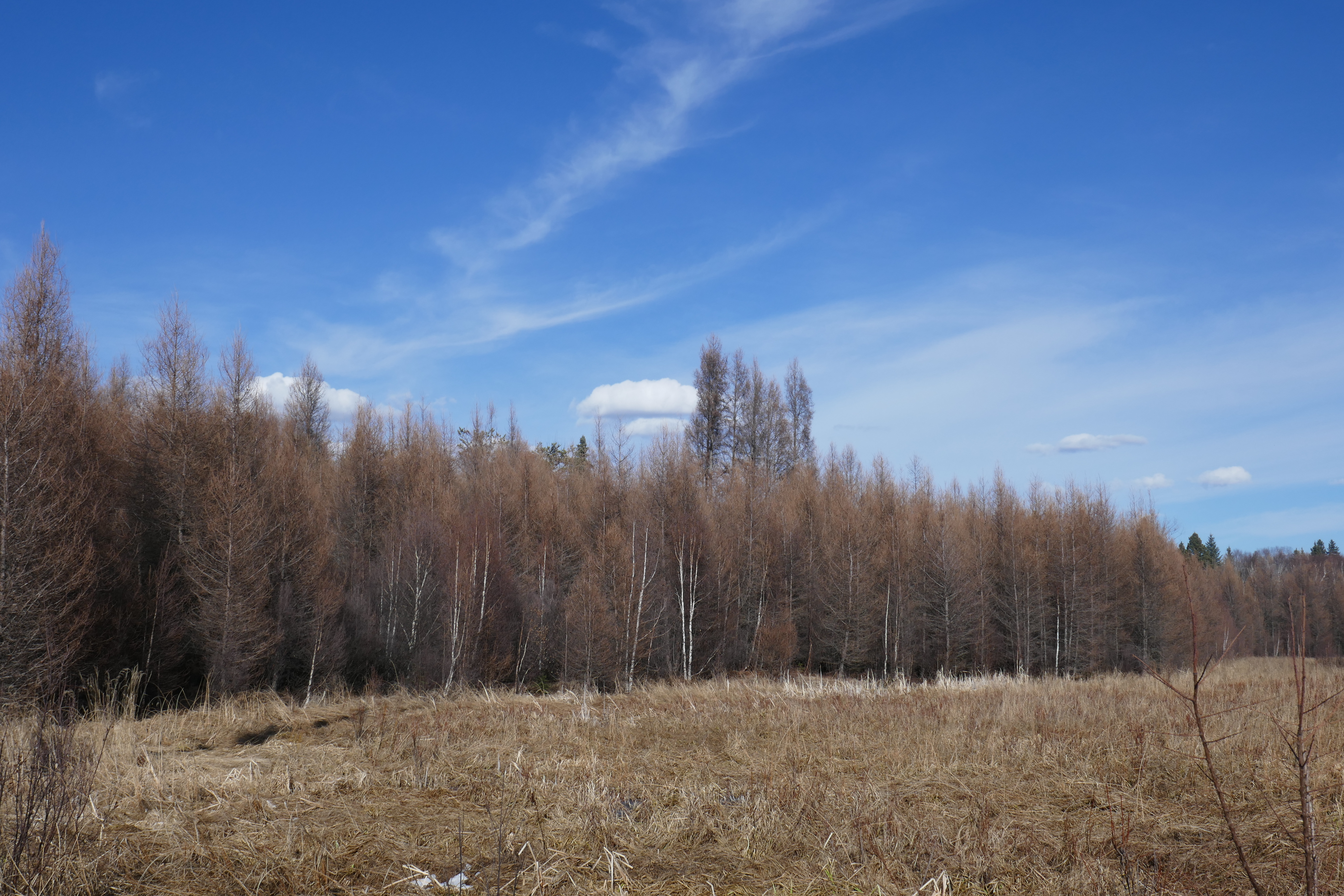
Being familiar with the trails as she comes out at the turn of every season, she pointed the way and said we’d be traversing through several distinct areas of old growth tamarack, white spruce, jack pine, and willow. The past week of more than seasonal warm and sunny weather meant we walked through large snowless expanses of meadow – exposing last year’s dried golden grasses – and forest mottled with white patches of snow. Paths varied in their coverage: soft crystalline snow made for easy gripping; fallen leaf and dropped needles padding evoked summer mountain treks in scent and feel; and ice sheened with melt became the most treacherous, where boot spikes, had I stopped to take them out of my pack, would have been a wise addition.

Bunchberry Meadows

Coming to a long stripped log, perched as a bench and glossed to a smooth sheen by countless others who have taken rest on it, I suggested we sit to soak up the sun shining on our faces, while watching the hawk silently float above the meadow fringed with woods. There we soaked, too, in quiet conversation, punctuated by easy, companionable silences.

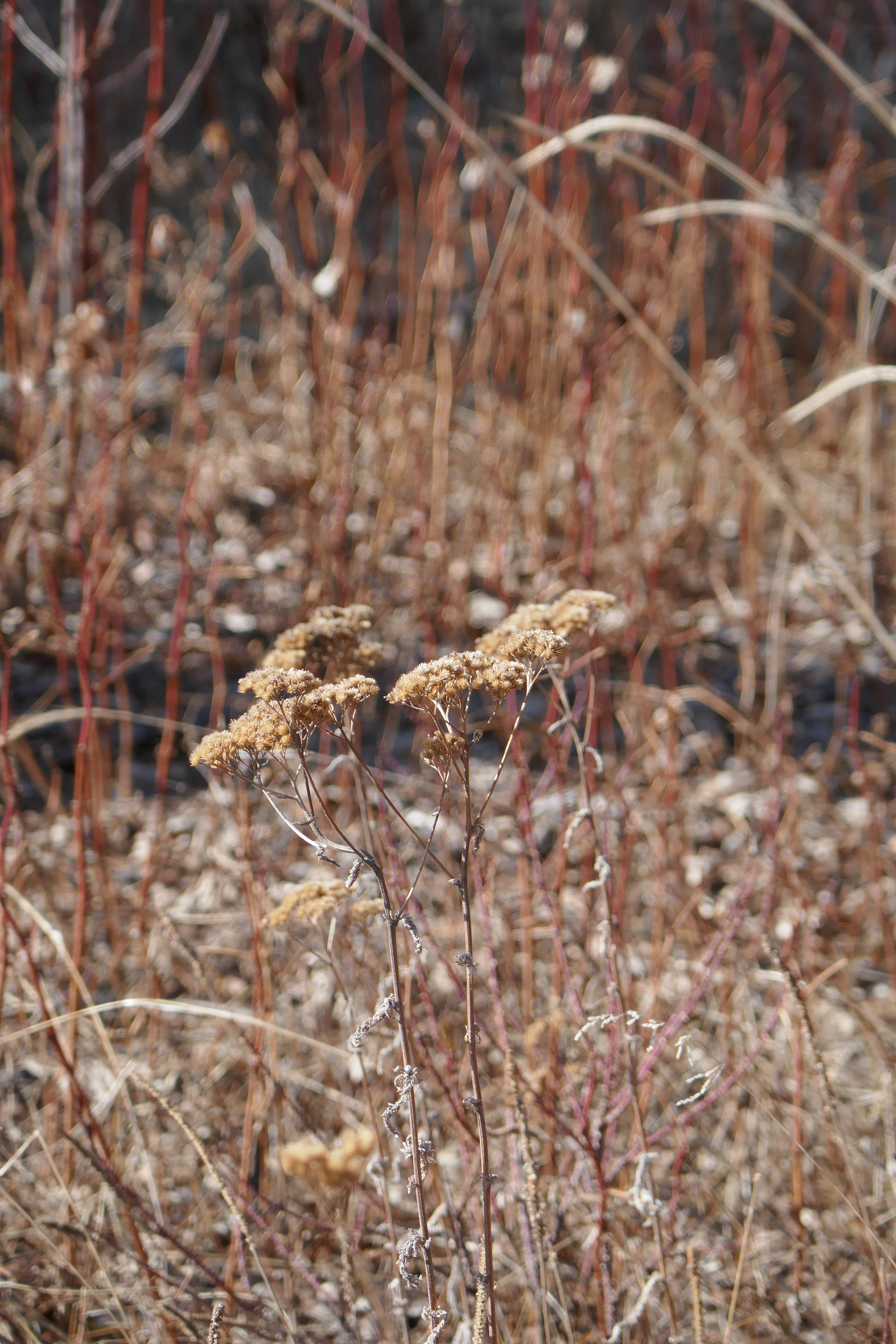
Encountering another woman on the trail, we clarified our location and route back to the parking lot, completed the circuit down a steep snow and ice covered trail, and through the shadowy filigree file of tamarack, sun lighting the end of the way into the berry meadow, now dotted with dried umber yarrow heads.

Up and through a couple more times, the sun now lower in the sky, but still exceptionally warm for three weeks into March day, and we arrived back at our cars to each make the trek home for dinner.

At the outset, I hadn’t thought of this walk being or bringing medicine. It was simply to be a lovely outing with a lovely friend. But at its conclusion, during the freeway drive home where I needed to shift into another way of navigating trails, and several times since, especially now as I’m writing, in the early hours of a pre-dawn Sunday morning, its soothing effects linger.

I’ve missed walking in Nature’s nature. Sure, Annie and I make our way in our suburban bits of natural landscape, but lately I’ve found myself growing irritated with the number of people on the paths of what are really, simply, barely hidden golf fairways and greens. The first I’m putting to words – this nuanced realization that the more we move out of winter into the inevitable golf season, whatever medicine I’d felt on those paths – a medicine that restored and rebalanced me beyond the basic benefits of being out in the fresh air and elements, moving – is now melting away like the snow, exposing its actual, man-made nature.

And as I think about it further in the last week or so, as a less than conscious response, I’ve found myself drawn back to walking on the path in the little wood lot where we’ve occasionally encountered our friend the stick whittler. Just to be a bit closer on the land…to get a bit closer to Nature’s nature…the healing kind.

Much love and kindest regards, dear friends, as we step into spring, or autumn for my southern hemisphere readers.

my neighborhood woodlot in autumn

Waters of March

WATERS OF MARCH

A stick, a stone
It’s the end of the road
It’s feeling alone
It’s the weight of your load

It’s a sliver of glass
It’s life, it’s the sun
It is night, it is death
It’s a knife, it’s a gun

A flower that blooms
A fox in the brush
A knot in the wood
The song of a thrush

The mystery of life
The steps in the hall
The sound of the wind
And the waterfall

It’s the moon floating free
It’s the curve of the slope
It’s an ant, it’s a bee
It’s a reason for hope

And the riverbank sings
Of the waters of March
It’s the promise of spring
It’s the joy in your heart

– Antonio Carlos Jobim –
1972

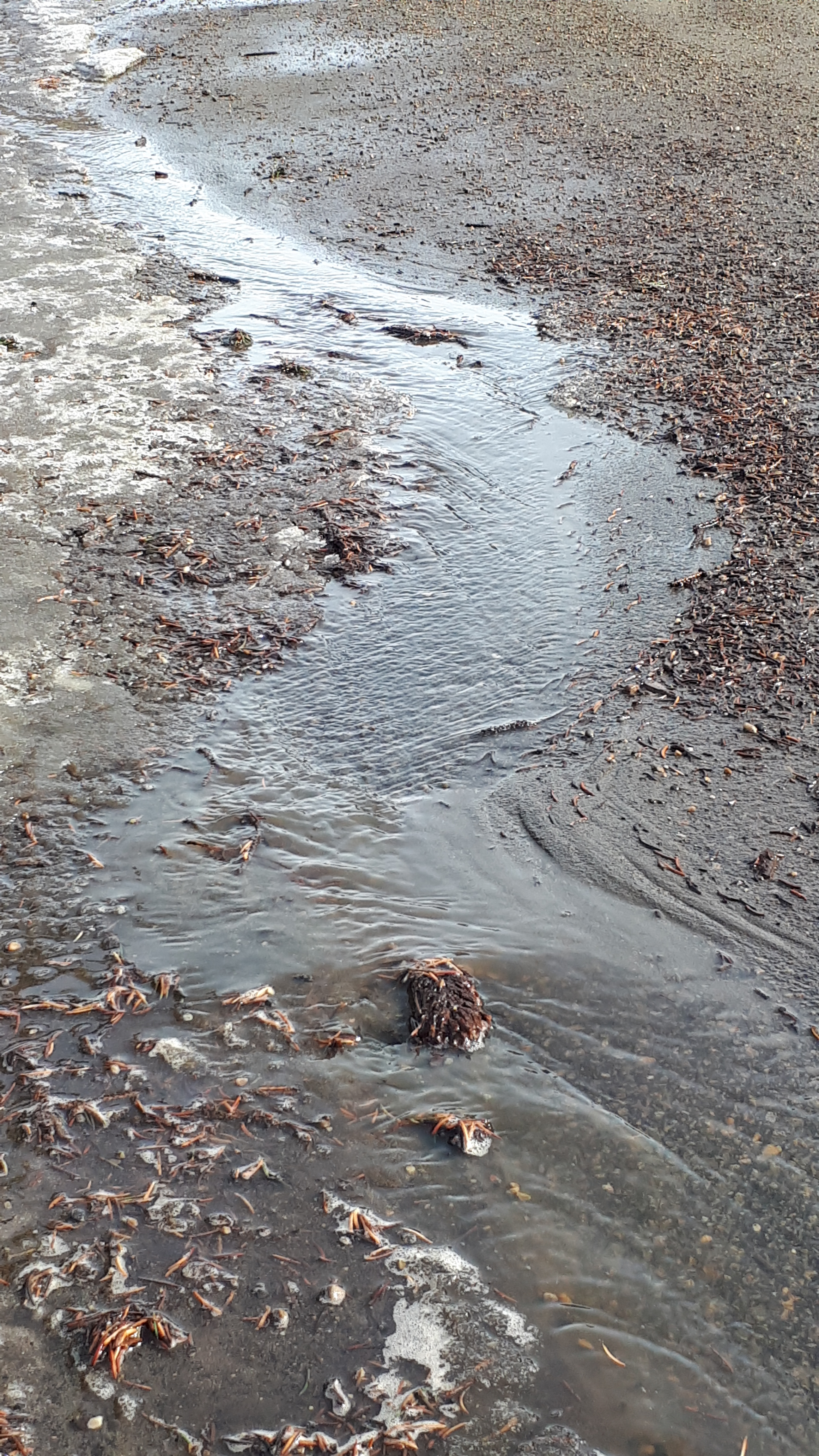
One of Brazil’s greatest songs, inspired by Rio de Janiero’s rainiest month and written in Jobim’s signature bossa nova style, I found myself humming it as Annie and I skirted puddles and crossed street streams during this mild, first week of March.
Click here to watch the most well-known version, sung in Portuguese by Jobim, accompanied by famous Brazilian singer, Elis Regina. And what’s become my favourite version, a high school jazz band playing at the 2015 Barcelona Jazz Festival. And here’s an English version sung by its composer.

While I imagine we’ll get more cold and snow, this week and this song are joyful reminders of what’s to come.

March

Click here if you’d like to listen to this post on my new podcast, A Wabi Sabi Life.

Whew! Today is the first of March. Despite yesterday’s snowfall, amounting to a couple of inches right after The Scientist shoveled, this new month, in northern climes, evokes Spring. And while we who live on the prairies know it and its capricious cousin April can bring the season’s fiercest snowstorms with highway whiteouts and broken power lines and tree limbs, it feels like we’ve crossed a threshold of no return in this year’s cycle of seasons. We know that underneath it all, willows will eventually pop their furry buds, robins will begin their predawn serenades, geese will return to fields and ponds, and the backyard cherry tree will unabashedly blush pink.

Last week as Annie and I walked our usual route, I saw Magpie with a twig the length of his wingspan clamped in his beak. Landing in a leafless tree, he hopped from branch to branch, looking for a place to settle, and begin nest building. Then, in response to another’s caw, he took flight across the snowy green to the thick limbed spruce. “Does he know something I don’t?,” I wondered. “Is this the prairie iteration of Groundhog Day foretelling Spring’s arrival?”

A few days later, after an early morning sitting, I suddenly heard as a clear as a bell, the two note high-low song of the black capped Chickadee through the triple pane windows, purring furnace and ticking clock. The first time such sweet birdsong at dawn.

Sunday’s fetching of the mail from the community postal box brought a welcome greeting from a friend. This card featuring the painting of local artist Gina Adams, with inside note “to chirp you into Spring,” brought a smile and now sits as a reminder of what is to come, eventually.

Last Friday’s posting of Jan Richardson’s poem, Beloved is Where We Begin, struck a chord with friends near and far. One emailed “what a yummy passage.” Another used it as the opening theme for her weekly words to her faith community in their exploration of the geography of the heart. And another said it would be included in the collection of poems read aloud to questers at the Sacred Mountain later this spring as they embark on their three-day silent solo fast.

Remembering we are beloved as we journey inward and outward in our own metaphoric wildernesses, through a Winter still to come to a Spring yet to arrive, brings me a similar comforting reassurance as today, the first of March.

Much love and kindest regards, dear friends.