Gratitude

thankful for the still flowering gift from my friend

“Gratitude is so much more than a polite “thank you.” It is the thread that connects us in a deep relationship, simultaneously physical and spiritual, as our bodies are fed and spirits nourished by the sense of belonging, which is the most vital of foods. Gratitude creates a sense of abundance, the knowing that you have what you need. In that climate of sufficiency, our hunger for more abates and we take only what we need, in respect for the generosity of the giver.”

Robin Wall Kimmerer, The Serviceberry

I had no idea what to write for this, my last post of the year. I’d read some favourite bloggers who, too, wondered, knowing social media would be replete with eye-catching memes, inspirational quotes, thoughtful musings, and the perfect poem. But walking with Walker yesterday, noticing how much colder the temperature after a week of balmy days, and nearer to the horizon the mid-afternoon sun, I listened to an Emergence Magazine podcast wth Robin Wall Kimmerer reading her essay, The Serviceberry (known in these parts as the saskatoon berry). The above quote stood out as I struggled to keep the earbuds snug and the leash loose, my first time time navigating both since Annie’s passing. I knew I had a way in to writing, even if it meant I’d be adding more of the same to the year-end mix.

Looking back on this year, with its highs and lows, loves and losses, misunderstandings and reparations, I knew gratitude’s strong and persistent thread had, as always, had carried me across chasms of felt separation into the folds of belonging. I knew that by writing poems, walking long distances, seeing beauty in the imperfection and photographing its shimmer, I was saying “thank you.”

As I continue to walk the uneven and unpredictable terrain of the “eldering landscape” – a phrase I coined at the beginning of this year – I know with growing certainty that I am companioned by others. Friends and family who, further along, offer guidance and point out it waymarkers, and folks yet to cross its inevitable threshold. For this I am thankful, for it can be an arduous and sometimes lonely trek.

In the coming days, duing the great pause between exhaling this year and inhaling a new one, may I remember that infinite possibilities reside in its vast unknown. May I remember my sovereign capacity to shape a kinder, more generous and grateful future. May we all.

“Openness of hand, tenderness of embrace, spaciousness of heart, graciousness of home, blessedness of earth, vastness of sky, for all the spaces that bid me welcome, I give you thanks.”

Jan Richardson
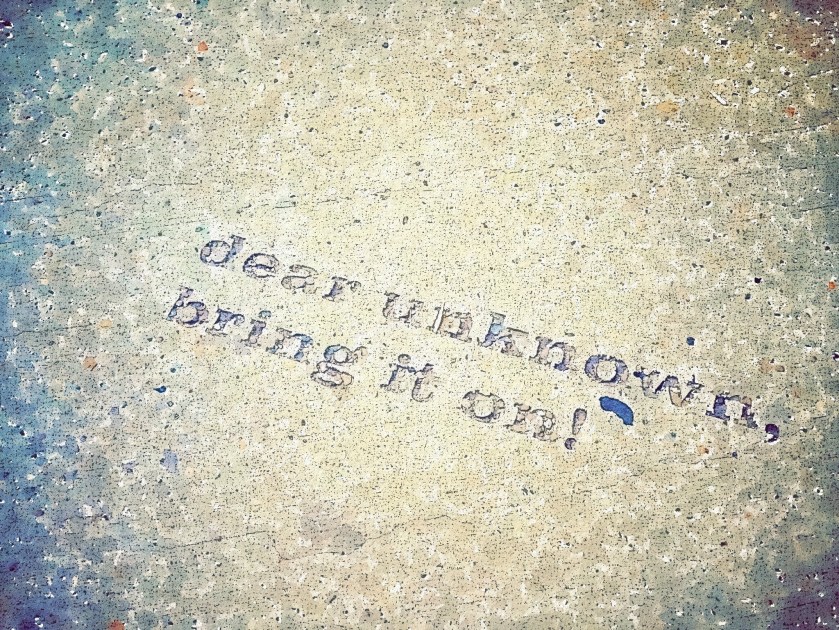
Dear friends, thank you for companioning me here on these pages. I appreciate knowing my words matter.

Much love and kindest regards…

Love Letters to Life

“We were lovers who … decided to make the world a better place by slowing down long enough to pay for its improvement—by paying attention, the reverent, even holy attention of love.”

Brian McLaren, The Galápagos Islands 

My understanding of “paying attention” as a form of gratitude and reciprocity for the abundance we receive from the natural world first came to my awareness when I read Robin Wall Kimmerer’s Braiding Sweetgrass. A couple of years ago, I wrote here about its impact on me. Now, reading last week’s daily meditations from Father Richard Rohr’s Center for Action and Contemplation, with the theme “Befriending Nature,” and listening to podcasts wherein the notion of “anima mundi” had been mentioned, I re-remembered a gift of walking alone, or with another but silently: the slowing down to notice… to really take in… to pay with my attention.

Since July, I have walked over 400 km solo, accompanied by the soft tapping of my poles on dirt and pavement paths; voices heard through my earbuds narrating novels and poetry, or in podcast conversations; urban infrastructure; people and their dogs and babies. During every outing, along routes that have become like familiar friends, I’d stop several times to simply breathe deeper and take in my surroundings: the unusual birdsong; the season’s changing colours; temperatures warmed or cooled by a sudden breeze; the river’s surface. During every outing, always an image or several made with my phone to reflect some essence of that day’s beauty. And after every walk, I’d record the steps, kilometers, and time walked and post it together with my photos and a brief description of my experience. The longer I did this, the more I realized that what I was really doing was composing love letters to life. By showing up on those paths every other day for weeks and noticing and recording, I was saying:

I am here to be with you, to walk in, and among, and on you.
I am here to notice you, to be in relation with you, to be moved, and changed by you.
I am here to say thank you for always, unfailingly, uplifting me – turning my fatigue into curiosity, my sour mood into a smile or a tear.

When I walked the Portuguese Coastal Camino, most of that distance solo and unplugged, I composed a chant from words I’d read by Thich Nhat Hahn and Rumi, to help maintain my rhythm and bring some ease and pleasure to the long distances:

With every step I kiss the Earth.
With every step I make a prayer.
The Soul comes for its own joy.
Dance on, dance on, dance on.

This time, while I’d only remembered the first line, whisper-singing it in a new iteration as I walked, I was mindful of making prayers for friends unwell and suffering. This summer, and in a few weeks’ time in a country I deeply love, walking a section of the Via Francigena, I slow down long enough to pay my attention…my reverent, holy attention of love.

Much love, kindest regards, and many thanks for your support and encouragement during my preparation.


A Curious Resonance

on the altar of life’s elements

I
Perhaps everything that frightens us is, in its deepest
essence, something helpless that wants our love.

So you must not be frightened if a sadness rises in
front of you, larger than any you have ever seen;
if an anxiety, like light and cloud-shadows,
moves over your hands and over everything you do.

You must think that something is happening with you,
that life has not forgotten you,
that it holds you in its hand; it will not let you fall.
Rainer Maria Rilke

II
the places in our heart
where the world took bites
out of us

may never fully heal
and will likely become
wide open spaces

~ be careful to not fill them
with just anything or anyone

your wounds aren’t supposed
to become attics for you to hoard
unnecessary junk

these holes in our hearts
are holy sites

and we should treat
them as such

so when visiting your old wounds
make sure to take your shoes off
and turn off your cellphone

sit by candlelight
and watch how the shadows
tell the story how brave you are

~ to survive
John Roedel

III
“When a lot of things start going wrong, all at once, it is to protect something big and lovely that is trying to get itself born – and that this something needs for your to be distracted so that it can be born as perfectly as possible.”
Anne Lamott

IV
“Even a wounded world is feeding us. Even a wounded world holds us, giving us moments of wonder and joy. I choose joy over despair. Not because I have my head in the sand, but because joy is what the Earth gives me daily and I must return the gift. “
Robin Wall Kimmerer

I collect poems and quotes for my weekly Friday photo and poem feature. As I scrolled for today’s post, these four came together for me with a curious resonance, echoing from writ small to large, scaling from an individual’s questioning and suffering to Earth’s magnificent mystery.

I offer these selections as a reminder that there are forces seen and unseeen, angels, ancients and ancestors working on our behalf in ways we have little, if any way, of registering. I offer these up to salute the turning of the season, life’s cycles being just one of those vast and wondrous mysteries.

Much love and kindest regards, dear friends, and blessings for the arrival of the Equinox, spring and autumn.

Reroot, Rewild, Retell

Today I enter the third week of “Rewilding Mythology,” hosted and curated by contemporary writer, Sophie Strand, who focuses on the intersection of spirituality, storytelling, and ecology. Compelled by several inspirations including a night time dream; Canada’s Truth and Reconciliation actions; the writings of Robin Wall Kimmerer and Richard Wagamese; and the valuing of the dark, decayed and dead in essays by Perdita Finn and Matt Licata, I enrolled in this 8 week online course, and only afterwards read its description:

“For most of human history, myth was a durable mode of knowledge transmission, kept alive and resilient by the breath-laced web of communal storytelling. Just as we plant a seed in soil, so were vital pieces of agricultural and ecological lore planted into stories that were built to survive environmental and social collapse.

Myth-telling, as primarily oral and embodied, was revitalized by the same ecological cycles that depend on a balance of decay and regrowth: breaking down dead wood to generate new soil. Our culture-creating cosmogonies rarely grew stale because they were refreshed and adapted to new conditions each time they were retold. Myths were the maps of communities intimately dialoguing with their environment. Most importantly, they were contextual.

But the rise of empire depended on the deracination of mythologies. Just as landscapes were stolen and terraformed so were whole pantheons uprooted from their social and ecological contexts, coopted by the very cultures that ensured the demise of their originating cultures. Galilean magicians were turned into militaristic figureheads. Serpentine divinities were transformed into gorgon-headed monsters. Uprooted from their context and from the renewing respiration of communal storytelling, these stories ossified into abstraction and reinforced the anthropocentric hyper-individuality and colonial capitalism of today.”  

Following intuition. Knowing little. Not knowing a lot. Catching wisps – from last week’s poet story-teller, and the depth psychologist featured in Friday’s bonus session – that are coalescing into some kind of vague, embodied comprehension. Yet already it’s been informing what I’m hearing and seeing and talking about. Already, it’s re-shaping my context.

Quoting the host from her invitation: “I can’t wait to see how I’ll be changed by it.” And I wonder, too, “How can we reroot, rewild, and retell?


I’m far from integration, synthesis, or even a coherent articulation about any of it, but from my notes, right now this excites me and grabs my curiosity:

“When you uproot a myth, dogma is the result.”

“Reading our alphabetic language makes it available for capture rather than response, while speaking we feel the energy vibrations in our body.”

“Is there a mode of writing that allows for space, breath and context?”

“Consider anthropomorphism as courtship to learn how to be in conversation and communion with the land and interior world, so that we can cultivate subjectivities that are less commodifying.”

“What if magic wasn’t supernatural but the most natural experience?”

“Magic is the logic of the world when the world is experienced from its own depths.”

“We’re used to listening in an habitual, usual way in the body. Let’s awaken the ancestral faculties of listening through the body to then become hollowed out for lightening to pass through…to be seized by a flow…”

“What stories are living us?”

Last week a friend invited me to his podcast conversation centering on wisdom, creativity, and living with uncertainty. As prompt, he referenced a meme he’d seen posted on my Facebook timeline:

“The ghosts of all the women you used to be
are proud of the woman you’ve become.”

@the global sisterhood

He asked what wisdom I’d have for those ghosts.

As is often the case with such a thoughtful question, in such beautifully contained conversation where we listen and are seen beyond habit, a conversation that is generative and holds the possibility for emergence, I found myself saying out loud things I’d never quite thought about before, let alone spoken. The stories living me. Asking to be spoken and shared.

After a lengthy pause, for his question deserved consideration, I responded that I’d ask about what excites them, grabs their curiosity, incites their wonder.

Theirs and mine. Then and now. To help us “reroot, rewild and retell.”

Much love and kindest regards, dear friends.

Adding to the Universe

In the past day’s reading of several favourite blogs, a few threads of thought shimmered and held my attention enough to ponder and weave together here…

In Transactions with Beauty, my friend Shawna Lemay shared as one of her “20 Things that Might Be Helpful,” the notion from Hafiz that our efforts are not insignificant…that through our humble efforts – none of which are irrelevant nor too important – finding the balance we add to the universe. I love this and gleaned the settling reassurance of being and doing “enough.” Thank you, Shawna, and our beloved Hafiz. Most definitely helpful.

This spun together with Robin Wall Kimmerer, her words imbued with beauty and the wisdom of her ancestors. Cited in another newsletter, she shared the teaching that by “paying” attention we give in return for the gifts we receive from Earth. As one who notices, a lot, this deeply resonated. I could take for granted such a simple gesture, but she reminds me it is an act profound precisely because our attention is fast becoming a limited resource, pulled in many directions and insidiously whittled away by myriad distractions. The question then is to what am I paying attention, and how or what does this attention serve and enliven?

My virtual friend Helen, over at Ageless Possibilities, shared her “October Reflections,” the year past and current. Closing with an invitation by way of questions – Do you do an annual reflection on changes in your life? Do you consider what has remained the same? And does that impact your life decisions? – I realized how in the last couple of weeks I’d been casually reflecting on my new vocation as writer-poet, and healthy pastime, my game of pickleball.

Despite a slow start to my game this summer, on the courts I saw how I’d developed in consistently serving well, handling the speed of a volley at the kitchen line, accurately placing more offensive shots, and in making more and better low and backhand shots. Yes, it’s still a fluke if I return a banger or a slam. The third shot drop still eludes me. And one day’s play can vary from the next. Despite saying at the outset of taking up the game several summers ago, that this would be the perfect practice for kindness – I falter, often, especially with myself. That’s why it’s called “practice,” I remind myself.

In the past year my writing efforts have borne fruits: poems published in two anthologies; writing the foreward and poetry for another; invitations to read at open mic events; my co-editing and featured writing “gig” at Sageing: The Journal of Creative Aging; and preparing a sixty poem manuscript for publication. It comes…word by word…line by line. And though reluctant to call myself “poet,” I know deep in my bones, poet is who and what I am, not just on the page, but in how I live my life.

“…attention generates wonder, which generates more attention … Paying attention to the more-than-human world doesn’t lead only to amazement; it leads also to acknowledgment of pain. Open and attentive, we see and feel equally the beauty and the wounds… Paying attention to suffering sharpens our ability to respond. To be responsible.” 

Robin Wall Kimmerer

While travelling earlier this month, I had a dream which gently guided me to registering for an eight week dive into “rewilding mythology.” In all honesty I have no idea what this is. But host, Sophie Strand, and several of the faculty intrigue and have piqued my sense of wonder, intuiting this will deepen my attention to the “more-than-human world,” and sharpen my ability to notice and respond. Next weekend I’ll travel to Calgary to sit in the presence of and learn from of a beloved poet, Pádraig Ó Tuama, someone I’ve mentioned here for his Poetry Unbound podcast. And in December I’ll participate in a poetry intensive with Alberta poet Alice Major, to learn about aligning my poems into the arc of a collection.

If the “job of a human is to learn,” I’m at least part-time employed. Revisiting my slogan – “making prayer, poetry, and beauty is holy alchemy for social change” – I trust my efforts – neither irrelevant nor too important – are adding to the universe. I trust yours are adding, too.

Much love and kindest regards, dear friends.

Spinning the Sacred Feminine

“Women are spinners and weavers; we are the ones who spin the threads and weave them into meaning and pattern. Like silkworms, we create those threads out of our own substance, pulling the strong fine fibres, out of our own hearts and wombs.”

Sharon Blackie, If Women Rose Rooted, 2016
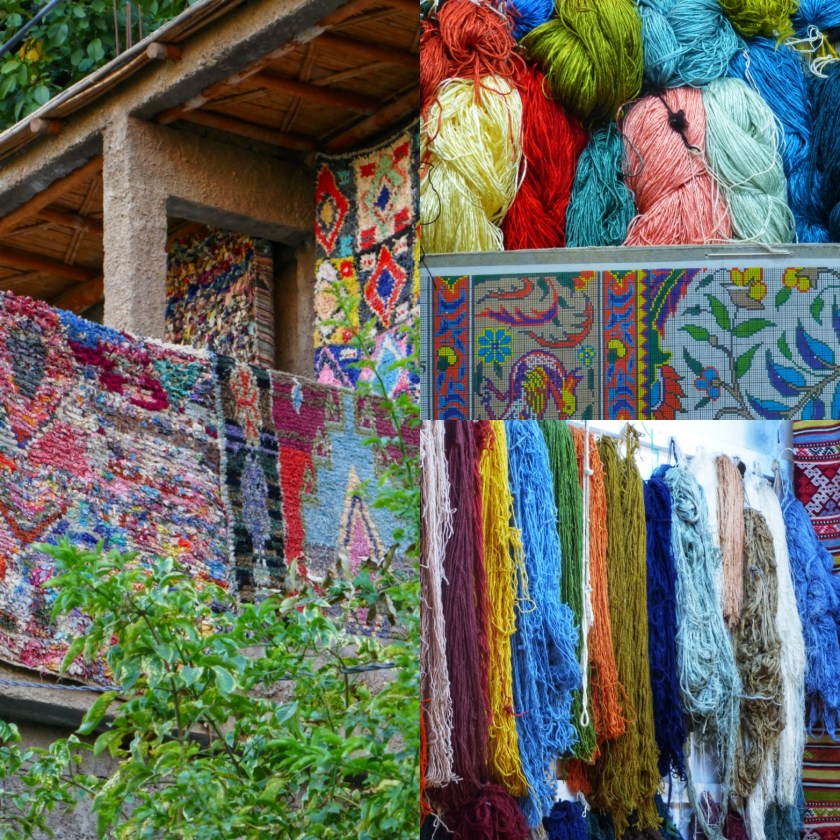
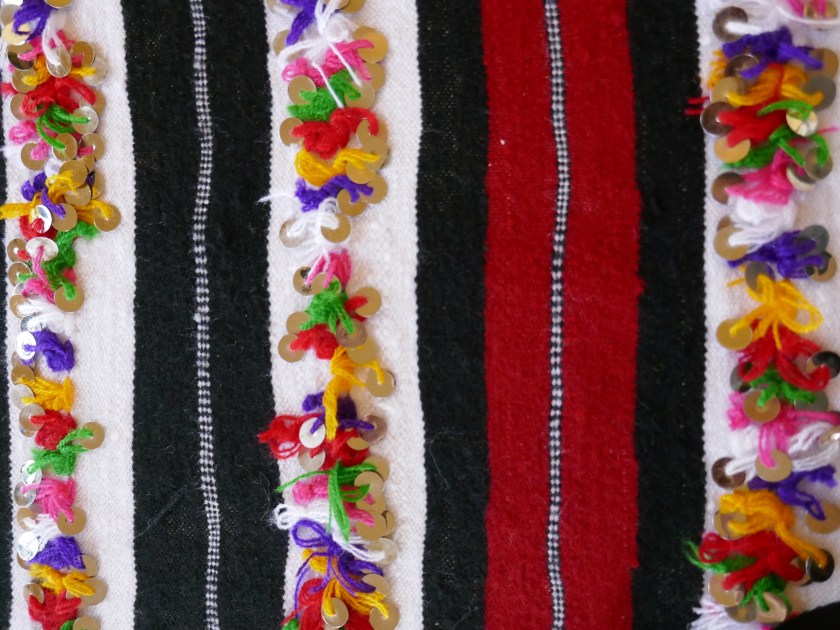
sisters weaving in Errachidia, Morocco, 2019

Gently teasing threads to weave together this week’s post, most vivid are my impressions from the deeply soulful virtual spaces in which I’ve been sitting this month. To name a few:

  • The monthly Poets Corner Sunday gathering featured Ellen Goldsmith and Lynne Ellis reading several of their poems for healing;
  •  “Chai, Love and Prayer,” monthly space hosted by my friend and Sufi scholar, Omid Safi;
  • A masterfully facilitated introductory meeting for thirty women each writing a chapter in an anthology on women leaders in education;
  • A consultation with our local library’s new writer-in-residence, Rayanne Haines, to help me understand judges’ feedback on several poetry submissions;
  • A book salon on Robin Wall Kimmerer’s Braiding Sweetgrass hosted by educational leader, instructor and friend, Kathy Toogood;
  • “Reawaken the Joy, Meaning and Sacredness of Being Alive” – a conversation between authors Sue Monk Kidd and Terry Helwig on Terry’s newest book, Shifting Shorelines: Messages from a Wiser Self;
  • My bi-weekly women’s circle;
  • A brief exploration of the wisdom of Mary and the sacred feminine presented by a favourite teacher-writer, Christine Valters Paintner, over at the Wild Luminaries series from Seminary of the Wild.
silk and wool threads and pattern for carpets in Kusadasi, Turkey, 2014

Spinning together these threads, the pattern emerging is my noticing how, in each gathering, women figured predominantly as sources of inspiration and wisdom – either in founding and-or hosting the groups and conversations, or in presenting, writing, teaching, sharing. Noticing how they, their process, and their offerings to the world, reflect and embody qualities of the sacred feminine as described by Christine Valters Paintner:

  • following intuition
  • attending to synchronicity
  • listening deeply to the natural world
  • surrendering striving
  • trusting the wisdom of underworld of shadow
  • honouring vulnerability as strength
  • embracing slowness and spaciousness
  • valuing being over doing

Struck by the conversation between Sue Monk Kidd and Terry Helwig – long-time friends and supports to each other’s writing – each described how shedding what no longer matters, simplicity, and literally driving in the slow lane to avoid the felt obligation of rush, make it easier to see, hear and embrace what matters now. How women make each other braver to follow their intuition, honour their vulnerability, do their inner shadow work.

“I think midlife is when the universe gently places her hands upon your shoulders, pulls you close, and whispers in your ear:

‘I’m not screwing around. It’s time. All of this pretending and performing – these coping mechanisms that you’ve developed to protect yourself from feeling inadequate and getting hurt – has to go.’

Time is growing short. There are unexplored adventures ahead of you. You can’t live the rest of your life worried about what other people think.”

Brene Brown

In her words written and spoken, Robin Wall Kimmerer poetically teaches students and her readers how to listen deeply to the natural world, to appreciate indigenous world views and the truth in “all my relations.” Echoed in our book salon conversation, rich in individual perspectives, impressions, and associations, I came away with deepened regard and much deeper regret for all that had been taken away and lost through the colonization and residential schooling of our First Peoples.

“It’s time to make some new threads; time to strengthen the frayed wild edges of our own being, and then weave ourselves back into the fabric of our culture. Once we knew the patterns for weaving the world; we can piece them together again.”

Sharon Blackie, If Women Rose Rooted, 2016
fabric woven in Errachidia, Morocco, 2019

On Saturday I woke to an email announcing that my ekphrastic poem written in response to a track from an electronic music album had been accepted for its anthology. For payment! With a contract coming! The feedback and edits from my writer-in-residence were terrific, just what I need to help this self-taught poet-in-process develop, and realize my innovative contribution to the leadership anthology: “poetic” process observation-recordings of our meetings, and synthesizing chapters into poetic “pauses” to introduce or close chapter sections.

Right about now, two years ago, we were getting ready to leave for a winter sojourn in southern Spain. A couple of weeks, mid to late February, travelling by bus and train through Andalusia – Sevilla, Aracena, Cordoba, Granada, Malaga and then back to Sevilla. And then upon our return home, the world would change. Today, nearly two years later, unprecedented impacts from the pandemic continue to roll out like an endless line of falling dominoes.

In response to a friend’s blog last week, I wrote “this seems to be the time and the place where the art, the poem, the story, the prayer, the silence, the conversation, the thank you, the kiss, the embrace may comfort, soothe, sustain and help us find our way.”

“Women can heal the Wasteland.
We can remake the world.
This is what women do.
This is our work.”

Sharon Blackie, If Women Rose Rooted, 2016

And so we do, as we do.

Much love and kindest regards, dear friends.

Purple Asters and Goldenrod

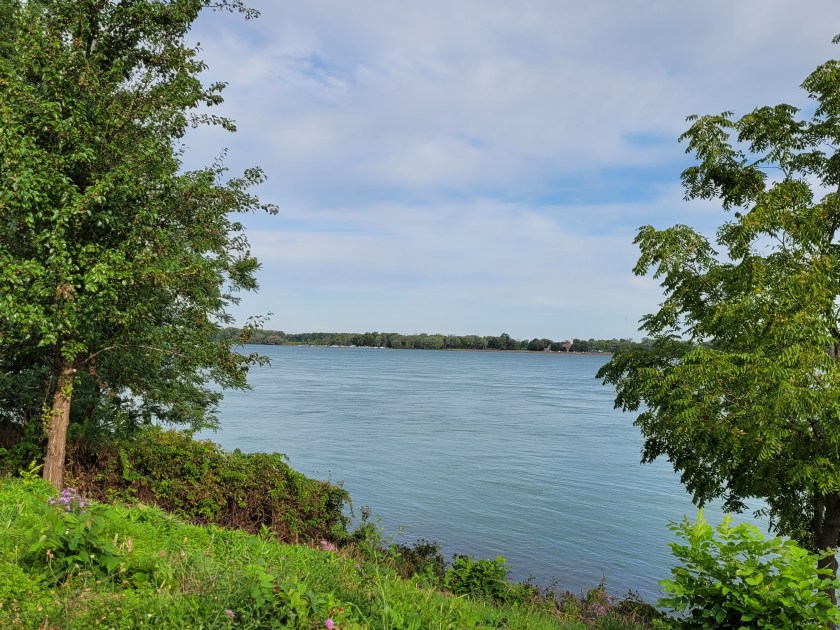
my beloved Niagara River

The last time I posted we were on our way to Niagara to visit our families, the first time in two years. Packing was straightforward, though after forgetting my must-take-daily medication when we drove the few hours west to Jasper in June, I was particularly attentive realizing I was out of practice, that my systems honed with packing a dozen times a year for the last decade needed dusting off. The airport parking lot was full, evidence that while this was our first flight in ages, many were travelling. I’d bought breakfast sandwiches the day before, unsure what, if anything would be open at 6:00 am. While quiet, I was delighted that my favourite Italian food counter was open to get the best coffee in the airport. Piping hot, I sipped while eating my sandwich, looking forward to leisurely drinking the rest once seated on the plane. That proved foolish. Face masks, enhanced with shields made near impossible drinking coffee, let alone anything else. So those Italian deli sandwiches I’d also bought the day before would have to wait for the car ride.

While Ontario and eastern Canada are renowned for spectacular autumn colours, our arrival was several weeks early, so only the sumac and occasional maple blushed red. But the purple asters partnered with goldenrod were abundant in ditches and fields and on the banks of the creek, each siting evoking Robin Wall Kimmerer’s Braiding Sweetgrass.

As I’d anticipated, changes were apparent in our families, both young and old. Children who were infants and toddlers when we’d last visited were naturally wary, needing time to warm up to their “come from away” aunt and uncle. But time with the young adult nieces and nephews and their partners, and our parents felt like yesterday, as we fell into easy conversation and catching up.

sunrise on the Niagara

That Saturday I missed my weekly Camino de Edmonton, a repeat of last year’s multi-stage, multi kilometer walk along Edmonton’s North Saskatchewan River. The weather finally cleared so I dressed to make my ritual walk along my beloved Niagara River, a Camino de Niagara. A chance conversation with my high school friend and her husband, a walk through the cemetery to “visit” my Oma and chosen namesake aunt and notice who in my absence had since passed. Years ago, when my Oma died, and her ashes were put in the granite columbarium, I purchased the slot beside her, with room enough for two, and while not quite a river view, close enough. Funny thing how that purchase always brings a smile, it being one of my best investments, bringing peace of mind knowing I have my final resting place. Hmmmm, whatever that actually means…

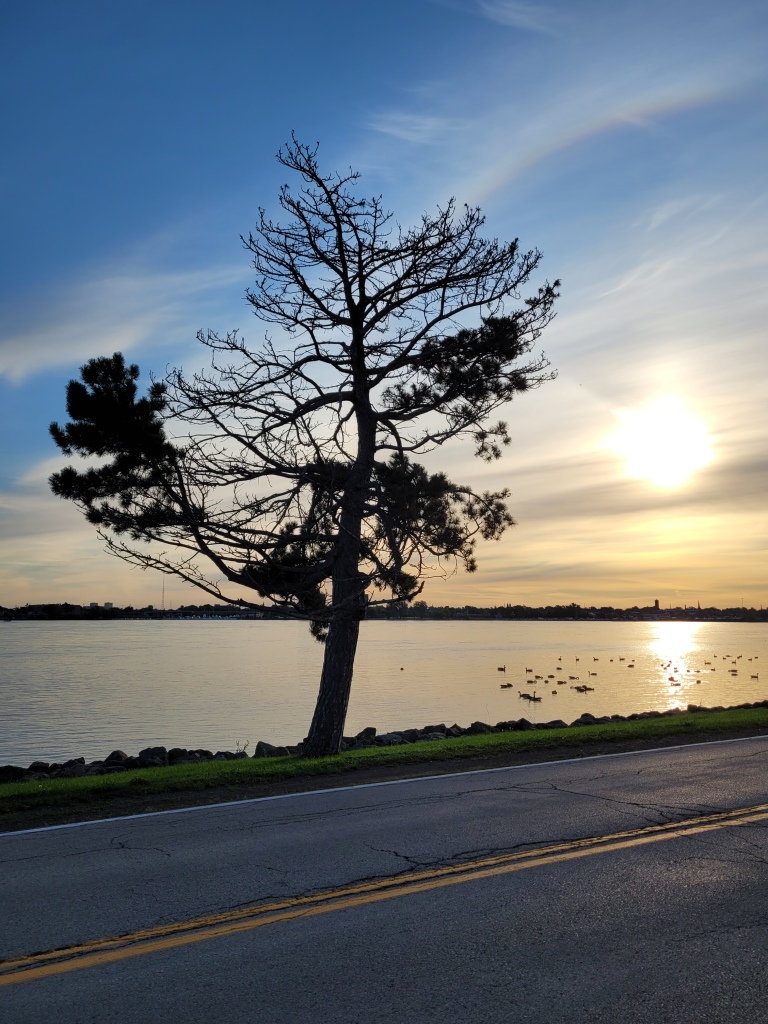
the old pine on the river bank at sunrise

Driving away from my parents’ home to follow the river north to the falls, I wondered, as I do more often now that I and they are older, “Will we see each other again?” “When will I next return, to whom, and under what circumstances?” I don’t belabor it. I can’t. It’s as pragmatic as my mother wondering will she live to see the us and the world through to the other side of Covid. It simply is what it is, a truth of our lives. Like the curious affinity of purple asters for goldenrod.

Much love and kindest regards, dear friends.