The Crack

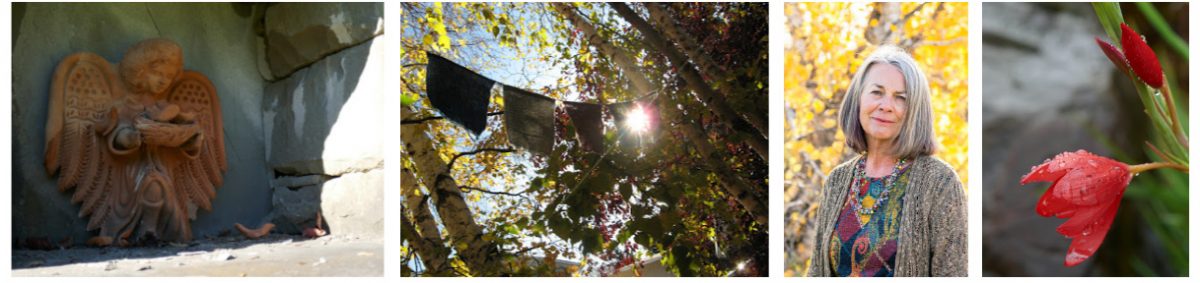
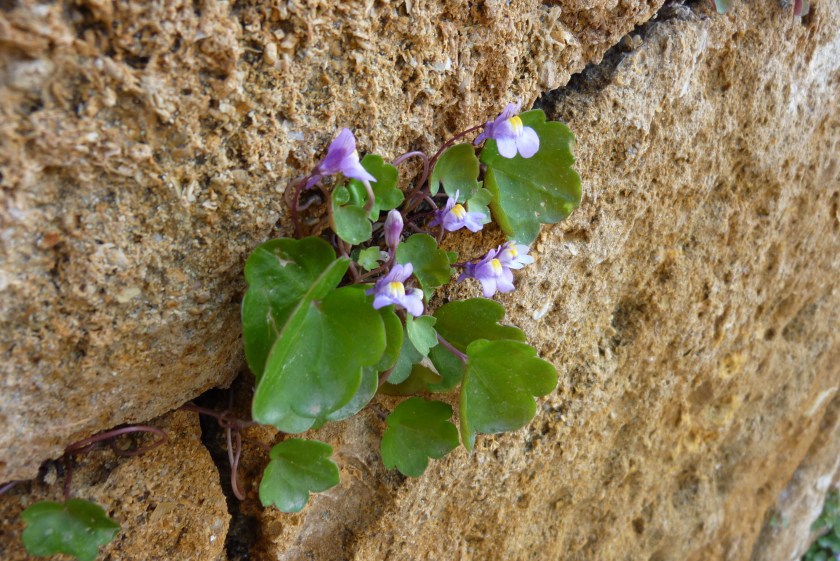
“Cracks do not just let light in, they let world in. When we say cracks come with their own weather, we name their atmospheres of grief and astonishment, their humidity of longing, their winds that do not blow in straight lines. We name the business of becoming undone in ways that make new touch possible. We speak to the climates of feeling that resist tidy names, where sobbing might be a form of measurement, where disorientation is a form of orientation. The crack does not invite repair; it invites reverence. Not sealing, but sensing. Not a plan, but a pulse. “

~ Bayo Akomolafe, Facebook, June 19, 2025

Late posting today, I spent a several minutes scrolling while waiting for my coffee to brew. I came upon Bayo’s post wherein this quote. I had become familiar with this contemporary sage several years ago via his Facebook posts. Last summer walking, I listened to him on several Spotify podcasts. My impression is that his way of thinking defies description. Ever poetic, eccentric (not oriented centrally, but unconventionally), radical (relating to, proceeding from the root), and eclectic (deriving ideas from a broad and deep well) come to mind. Admittedly, while I don’t always understand him, he does provoke and perturb which gets me to thinking more. And isn’t that a good thing?

Since Leonard Cohen wrote and sang his famous phrase about the crack being how the light gets in, I think we’ve taken a kind of reassuring refuge in the possibilities evoked. For me writing about a wabi sabi life, it aligns with noticing and naming the inherent beauty in imperfection.

“The crack does not invite repair; it invites reverence.”

Maybe, no need to fill with gold.

Maybe, the sitting with, sobbing in wonderment. Bittersweet multiplied by life.

Maybe, as Bayo suggests in a later post,

“Be careful with wanting to remove the thorn in your flesh. It may just be that the thorn sits still to teach us that we are wilder than recovery, nobler than the taxonomy of compliance that manufactures wellbeing-so-called. It may just be that the thorn wants to teach our human flesh that we are also plants.”

The alchemy in the crack, created by the thorn, containing its own medicine.

Much love and kindest regards, dear friends.

Still Wrapped

“But I don’t look like a sun,”
a young star still wrapped in swaddling
veils said.


To which I replied,
“But you will, my dear. You will, mashuq.
So don’t worry. Don’t fret.”

Daniel Ladinsky, A Year with Hafiz (2011), December 22

My day began before dawn, quiet and dark, lighting the final candle of the Advent wreath. Curious, Walker stood close, watched the flare of the match, the flickering of the four candles, and then left to keep silent vigil sleeping in his bed. I thought of family and friends, the passing of time, the moments of melancholy with the missing…thresholds crossed and yet to be.

It’s now Sunday evening, quiet and dark. I have just listened to poet Elizabeth Alexander read the final chapters from her memoir, The Light of the World. Recommended in Allison Wearing’s online memoir writing course, it’s the lyrical account of the sudden death of her beloved husband…beautiful, poignant, poetic.

A deep breath, a pause to reflect, and to register the sanctity of her story and the liminality of these holy days.

Then, I turned to the book beside me: The Dreaming Way, Toko-pa Turner’s brilliant invitation to the practice of dreamwork. The chapter, “Wisdom of Sophia.” Its essence, as the embodiment of paradox and the continuous chaotic cycle of creation and destruction, leads us to a refinement of our life force aligned with nature.

“Not only is there more to your story beyond this anguish, but one day you story will be the starlight for another to follow out of their own darkness.”

Toko-pa Turner, The Dreaming Way (2024)

Another deep breath and pause to let Toko-pa’s words land. And just before I turned off the floor lamp, I fetched from my box of sacred books and journals, Hafiz by way of Ladinksy to read today’s contemplation.

There’s a thread running through this day…revealed in the elements described here. And a blessing for you, dear friends, that you may trust in your own, perhaps still wrapped, starlight.

Much love and kindest regards.

Sleeping in the Forest

I thought the earth
remembered me, she
took me back so tenderly, arranging
her dark skirts, her pockets
full of lichens and seeds. I slept
as never before, a stone
on the riverbed, nothing
between me and the white fire of the stars
but my thoughts, and they floated
light as moths among the branches
of the perfect trees. All night
I heard the small kingdoms breathing
around me, the insects, and the birds
who do their work in the darkness. All night
I rose and fell, as if in water, grappling
with a luminous doom. By morning
I had vanished at least a dozen times
into something better.

– Mary Oliver –

This poem arrived shortly after I had posted Monday’s blog, Love Letters to Life. Its imagery brings to life what I could only hope to have conveyed. That by walking alone along the same river routes for weeks, I began to know and feel my relationship with earth, with life, and its relationship with me. That as I re-remembered this, so, too, was I being remembered, taken in, and held by earth.

A few minutes ago, I wished my friend “buona notte” as we concluded our monthly Zoom call. Held within our mutual love and respect for each other, our conversations always bring gifts – an insight, deeper clarity, more to ponder. Knowing that in a week’s time I’ll be in Italy, feeling its imminent “realness” and growing excitement and curiosity, with her invitation I was able to speak my intention for walking, alone-together with women, currently strangers, but soon to be walking mates.

May we feel remembered by the earth.
May we “sleep as never before,” rising each morning rested, refreshed, and ready for the day’s stage.
May our thoughts “float as light as moths among the branches of perfect trees,” and not weigh heavy as stones in our packs.
May we feel the presence, support, and joy of being with each other, inviting each other and ourselves into “something better.”

This will be my last Friday photo and poem feature until my return in mid-October. I expect to post “love letters” on Facebook if you’d like to follow along. Until then, much love and kindest regards, dear friends.

Love Letters to Life

“We were lovers who … decided to make the world a better place by slowing down long enough to pay for its improvement—by paying attention, the reverent, even holy attention of love.”

Brian McLaren, The Galápagos Islands 

My understanding of “paying attention” as a form of gratitude and reciprocity for the abundance we receive from the natural world first came to my awareness when I read Robin Wall Kimmerer’s Braiding Sweetgrass. A couple of years ago, I wrote here about its impact on me. Now, reading last week’s daily meditations from Father Richard Rohr’s Center for Action and Contemplation, with the theme “Befriending Nature,” and listening to podcasts wherein the notion of “anima mundi” had been mentioned, I re-remembered a gift of walking alone, or with another but silently: the slowing down to notice… to really take in… to pay with my attention.

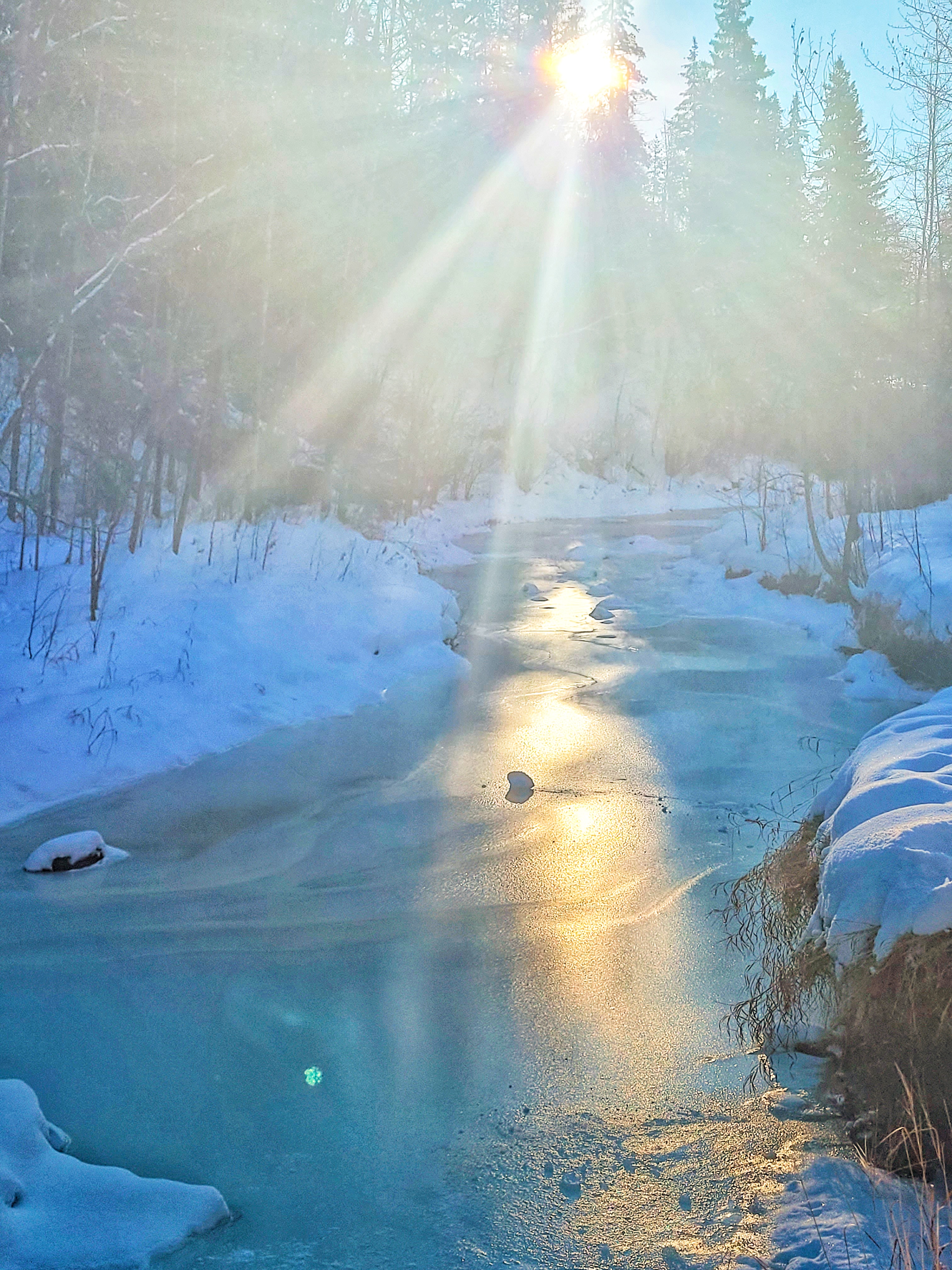
Since July, I have walked over 400 km solo, accompanied by the soft tapping of my poles on dirt and pavement paths; voices heard through my earbuds narrating novels and poetry, or in podcast conversations; urban infrastructure; people and their dogs and babies. During every outing, along routes that have become like familiar friends, I’d stop several times to simply breathe deeper and take in my surroundings: the unusual birdsong; the season’s changing colours; temperatures warmed or cooled by a sudden breeze; the river’s surface. During every outing, always an image or several made with my phone to reflect some essence of that day’s beauty. And after every walk, I’d record the steps, kilometers, and time walked and post it together with my photos and a brief description of my experience. The longer I did this, the more I realized that what I was really doing was composing love letters to life. By showing up on those paths every other day for weeks and noticing and recording, I was saying:

I am here to be with you, to walk in, and among, and on you.
I am here to notice you, to be in relation with you, to be moved, and changed by you.
I am here to say thank you for always, unfailingly, uplifting me – turning my fatigue into curiosity, my sour mood into a smile or a tear.

When I walked the Portuguese Coastal Camino, most of that distance solo and unplugged, I composed a chant from words I’d read by Thich Nhat Hahn and Rumi, to help maintain my rhythm and bring some ease and pleasure to the long distances:

With every step I kiss the Earth.
With every step I make a prayer.
The Soul comes for its own joy.
Dance on, dance on, dance on.

This time, while I’d only remembered the first line, whisper-singing it in a new iteration as I walked, I was mindful of making prayers for friends unwell and suffering. This summer, and in a few weeks’ time in a country I deeply love, walking a section of the Via Francigena, I slow down long enough to pay my attention…my reverent, holy attention of love.

Much love, kindest regards, and many thanks for your support and encouragement during my preparation.


Consider the Life of Trees

Consider the life of trees.
Aside from the axe, what trees acquire from man is inconsiderable.
From their mute forms there flows a poise, in silence;
a lovely sound and motion in response to wind.
What peace comes to those aware of the voice and bearing of
trees!
Trees do not scream for attention.
A tree, a rock, has no pretense, only a real growth out of itself
in close communion with the universal spirit.
A tree remains in deep serenity.
It establishes in the earth not only its root system but also
those roots of its beauty and its unknown consciousness.
Sometimes one may sense a glisten of that consciousness, and with
such perspective, feel that man is not necessarily the highest form of life.

Cedric Wright in Earth Prayers From Around the World, 1991

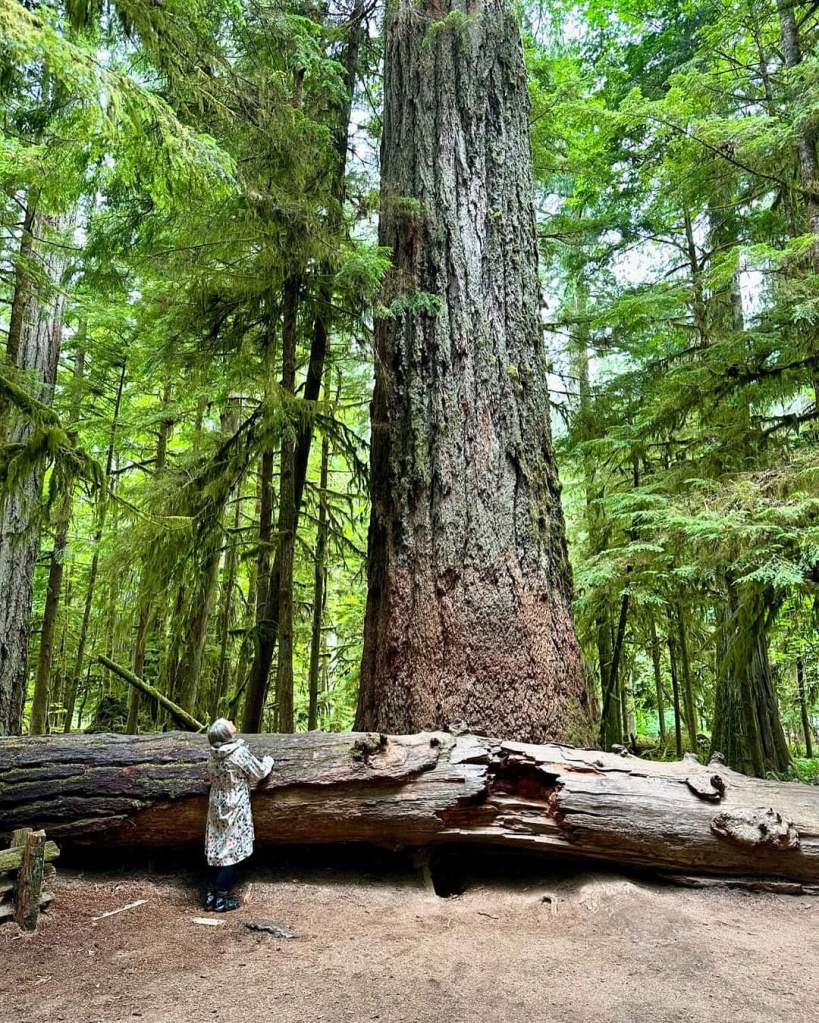
I returned home last night from four days on Vancouver Island, visiting dear friends whose home and hospitality make for a soul-restoring haven. They graciously show me their favourite sights, trusting I’ll delight in what they’ve discovered since relocating there a few years ago. This year, the weather was more in keeping with a Pacific Northwest autumn: cool, overcast, misty with showers, giving us plenty of conversation time in the warm glow of their indoor and outdoor fireplaces. Tuesday, we drove to Cathedral Grove, a popular tourist site along the Tofino highway, graced by a stand of giant, ancient Douglas Firs. It was my first time encountering these enormous stately sentinels. I was rendered awestruck and silent in their presence, taken to the place I have named “before, beneath and beyond words.” One hundred photos later, my friend’s one of me standing in that awe in front of the grove’s largest tree, one estimated to be over 800 years old, and taller than Italy’s Leaning Tower of Pisa, confirmed the perspective that neither man nor woman are the highest form of life.

perspective

Much love and kindest regards, dear friends. And a heart full of gratitude to my friends for the unforgettable experience.

Our Joined Sorrows

LANGUAGE OF LIGHT
Next to the garden beds I wait
while summer’s profusion wanes

the sycamores stand in unity rows
guarding a path for the recently dead

arboreal complexion of limbs and trunk
sentient camouflage in pale olive and tan

trees older than first-born stars
leaves shimmering in the language of light.

Diana Hayes, Language of Light, 2023

I’ve started my preparation for another autumn long walk in Italy. This time, a small women’s group walking a small portion of the ancient Via Francigena from San Miniato, Tuscany to Rome. No doubt obvious to you who follow me here and on social media, I am smitten with Italy, and am borrowing a page from a once friend who said there was something about returning repeatedly to the same place, to venture deeper in.

I feel good going into this summer’s training. Last year’s foot injury has healed. So, too, my heart – mostly – from Annie’s year-ago passing. Following the same program developed by my friend, I’m starting a month earlier and so feel an ease and confidence I didn’t last summer. Every other day, alternating with pickleball, and a rest day, my chiropractor approves.

Today it rained. I opted for a slow start hoping for the forecasted three-hour break in the showers. Eventually I decided to dress for the weather and set out with my new floral knee-length rain poncho. I “ruck,” meaning when I walk, I carry at least ten pounds of weight in my pack, use my poles and wear my hiking boots, and made of today an experiment in waterproofing and breathability. Better to test here than thousands of miles and another continent away.

Last year, my friend accompanied me on many walks. This year, plagued by her own chronic foot injury, I’ll be walking alone most days. And I’m quite OK with that, given my proven way, even in groups, of often walking solo, in silence, with my camera ever ready. And so it was, Tuesday and today (Thursday), I resumed my lapsed practice of listening to podcasts. Several On Being with Krista Tippett episodes, the last one featuring a conversation with poet, essayist, teacher, and community gardener Ross Gay on The Insistence of Joy. His closing words struck deep:

Is sorrow the true wild?
And if it is — and if we join them — your wild to mine —
what’s that?
For joining, too, is a kind of annihilation.
What if we joined our sorrows, I’m saying.
I’m saying: What if that is joy?

Step by step, mulling his concluding words, that powerful question, as light showers grew heavier, I switched over to another of my favourite podcasts, Ellipsis Thinking, created and hosted by my dear friend, Greg Dowler-Coltman. In this episode a conversation with Saltspring Island poet Diana Hayes, the author of today’s chosen poem. Greg had gifted me with Diana’s chapbook, Language of Light, an exquisite collection borne of her near inconsolable grief for her mother’s too-soon death from breast cancer, the same cancer she suffered at the same time. As I listened, struck again by Greg’s talent for deep listening and thoughtful questions emerging from his innate and kind curiosity, I felt a kindredness with Diana’s way of being in the world and as a poet.

Bittersweet is what comes to mind. Knowing oneself and another when we are vulnerable in disclosing and joining our sorrows. The poignant, piercing joy that can result when we do.

Much love and kindest regards, dear friends.
To Say Nothing But Thank You

TO SAY NOTHING BUT THANK YOU

All day I try to say nothing but thank you,
breathe the syllables in and out with every step I
take through the rooms of my house and outside into
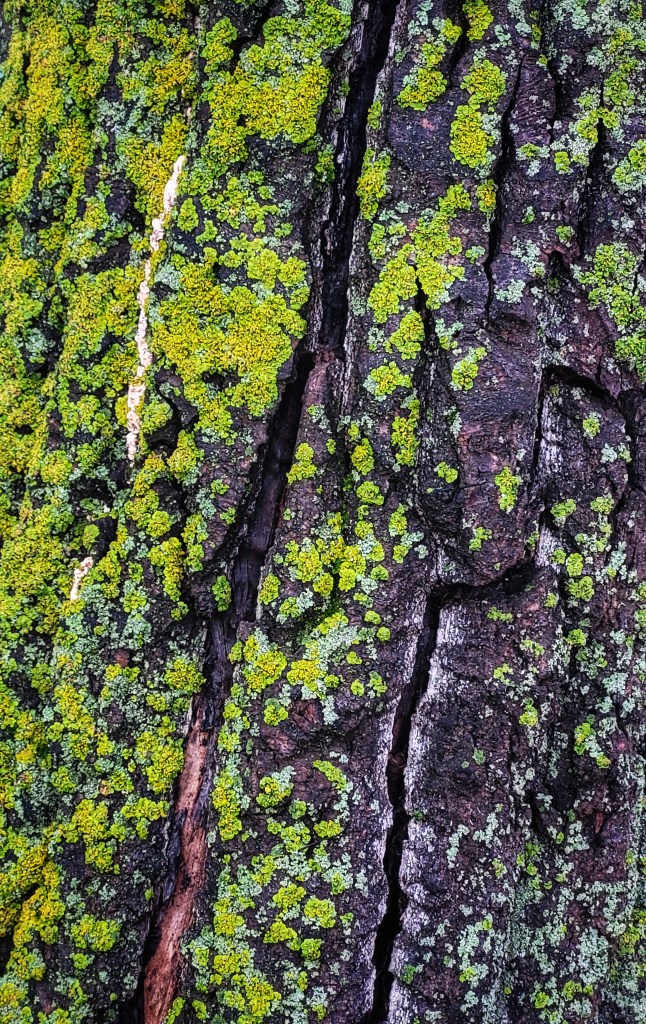
a profusion of shaggy-headed dandelions in the garden
where the tulips’ black stamens shake in their crimson cups.

I am saying thank you, yes, to this burgeoning spring
and to the cold wind of its changes. Gratitude comes easy
after a hot shower, when my loosened muscles work,
when eyes and mind begin to clear and even unruly
hair combs into place.

Dialogue with the invisible can go on every minute,
and with surprising gaiety I am saying thank you as I
remember who I am, a woman learning to praise
something as small as dandelion petals floating on the
steaming surface of this bowl of vegetable soup,
my happy, savoring tongue.

– Jeanne Lohmann –

Whew! I’m glad I’d clipped and saved this poem, shared on social media last week by Parker Palmer. Despite sitting here for a couple of hours writing, and up most weekday mornings to log onto a 7:00 am Zoom writers’ circle, I was ready to power off when I remembered today’s photo and poem feature. This one feels perfect, as it no doubt did for Parker when he posted it.

“I am saying thank you, yes, to this burgeoning spring/and to the cold wind of its changes.” Alberta springs are notorious for their capricious nature: warm one day, snow the next; north winds blowing strong and cold, drying puddles, and disappearing shady pockets of crusty snow. Depending on the location, here you can ski in the morning and golf in the afternoon. Maybe because we had an exceptionally mild winter, thanks to El Nino, most of us have felt more bewildered than usual by spring’s ambivalent arrival. Toss in a solar eclipse, a new moon, and now a full moon, and yesterday’s collective lack of focus on the pickleball courts – wearing toques and gloves after two preceding days of short sleeves and shorts – might indicate our resiliency, or discombobulation! And that’s not writing a word about everything else going amuck in the world. “Weather and world weary,” would suffice.

So yes, I say “thank you” as I remember I am a woman praising something small…like the three browning hares who’ve taken to nestling under the spruce bough, or up against its trunk, the ones I call “honey bunnies,” happy to see them as they bring back memories of Annie fixated on them as she’d stand at the front window. As I do now.

Thank you to the sun that rises earlier and sets later, every day, now necessitating wearing an eye mask to fall asleep. To the robins I’m just beginning to hear singing their mating song. To the geese honking as they fly in pairs or in V formation. The murder of crows nest-making. Catkins and ice pads.

spring’s juxtaposition

And to you, dear friends, thank you for being here.
Much love and kindest regards.

River

In celebration of Earth Day, today its 54th anniversary, my community hosted a free showing of the 2021 documentary, River, produced in Australia, narrated by actor Willem Dafoe, and described as “a stunning exploration of the timeless relationship between human civilization and Earth’s rivers, in all their majesty and fragility.”

Writing in earlier posts that I call myself a “daughter of Niagara,” having been conceived, born, and raised in the land bordered by that mighty river, this film, with its breath-taking photography, orchestral score, and poetic narration, touched that place deep within me where river resides.

“…Our early destiny was shaped
by the will of rivers.
We both feared and revered
them as forces of life,
and of death.
We worshiped them as Gods.

Rivers inspired us as a species,
allowing us to thrive.
Over time, they became the
highways by which trade,
and technology spread inland,
and along them also flowed poetry,
stories and religions,
politics and conflict…”


– Willem Dafoe, River, 2021

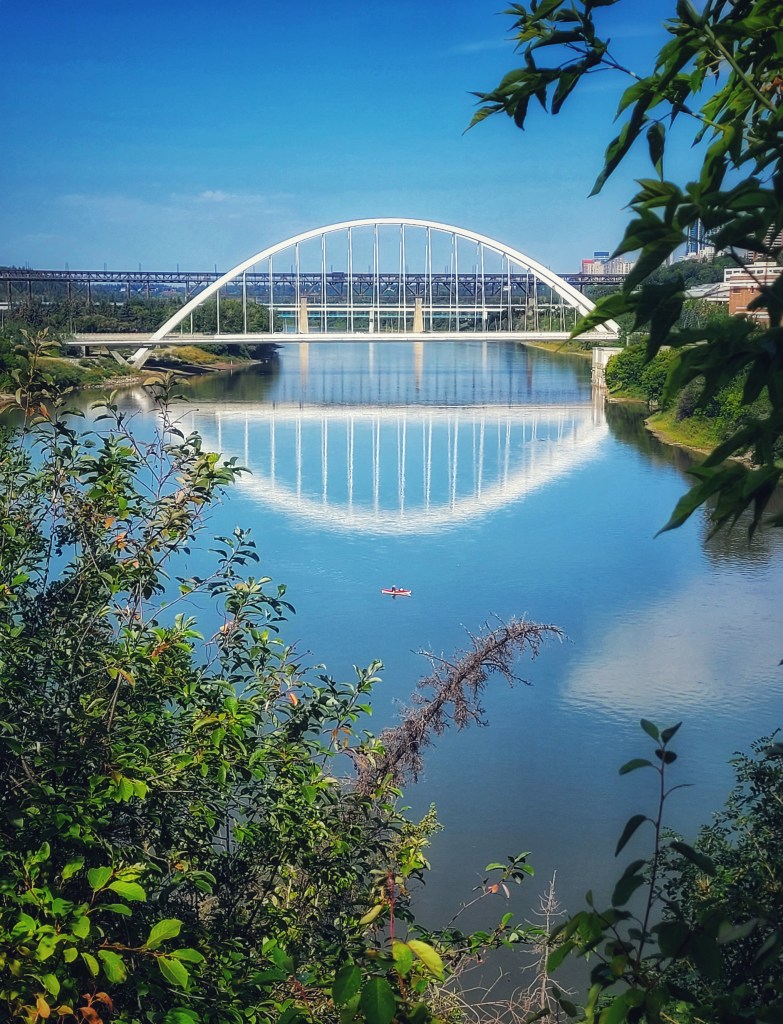
For the last forty-five years, I’ve made home near another mighty river, the North Saskatchewan. While not in my sightline every day, and in only a few ways resembling my river from home, at least once a week, as I drive into Edmonton or walk along its valley with my Saturday morning Camino group, I feel deep pleasure and appreciation for its presence in my life, for how it invites, metaphorically and in an embodied reflection, wise action for living.

By flowing with the power of its current; recognizing the value of being contained by its banks; attending to its shallows, hidden depths, and eddies, its seasonal highs and lows influenced by rainfall, snowpack, heat and cold – in sum, recognizing its innate alive wildness as mirror of possibility for my own.

“…For eons, running water
obeyed only its own laws.
Patient and persistent,
it wore mountains away.
It looped and meandered
laying down great plains
of lush, rich silt.
Where rivers wandered,
life could flourish.
For rivers are world-makers.
They have shaped the Earth,
and they have shaped us as a species.
For thousands of years
we worshiped rivers,
as the arteries of the planet,
the givers of gifts,
the well-springs of wonder…”


– Willem Dafoe, River, 2021

Like a sonnet’s volta, or a river’s ninety-degree turn, the film shifted perspective to show the impact on rivers of our interventions and interference in their natural flow, albeit while acknowledging their unpredictable, destructive capacities:

“…we devised extraordinary
means of controlling them,
of harnessing their force
and taming their wildness.
We discovered how to
regulate and manage them,
how to run them like machines.
We shifted from seeing
rivers as living beings
to seeing them as resources.
Our gods
had become our subjects…”


– Willem Dafoe, River, 2021

Repeatedly, I was held in awe by the film’s aerial photography showing the shape and flow of rivers and their profound resemblance to trees. Staggering to learn was that the amount of water in the hydrosphere, the Earth’s original water account, hasn’t changed since the beginning of time, while our numbers, in contrast, have grown beyond comprehension. Too, that worldwide, there is hardly a river unspanned, undammed or undiverted, and that the largest dams have held back so much water, they’ve slowed the Earth’s rotation.

“…The mystery and beauty
of a wild river is beyond our ability to comprehend
but within our capacity to destroy.
Rivers that have flowed for eons
have been cut off in decades.

Time and again,
upstream need and upstream greed
have led to downstream disaster.

We have become Titans,
capable of shaping our world
in ways that will endure for
millions of years to come…”


– Willem Dafoe, River, 2021

Throughout, I kept thinking back to John O’Donohue, and his poem, Fluent:

I would love to live
Like a river flows,
Carried by the surprise
Of its own unfolding.

Such simple eloquence that holds reverence for – not interference with – river’s sovereignty.

If you, too, are enamored of rivers, I encourage you to find the film and take the 90 minutes to watch it. For Earth Day…which, IMHO, should be every day.

Much love and kindest regards, dear friends.
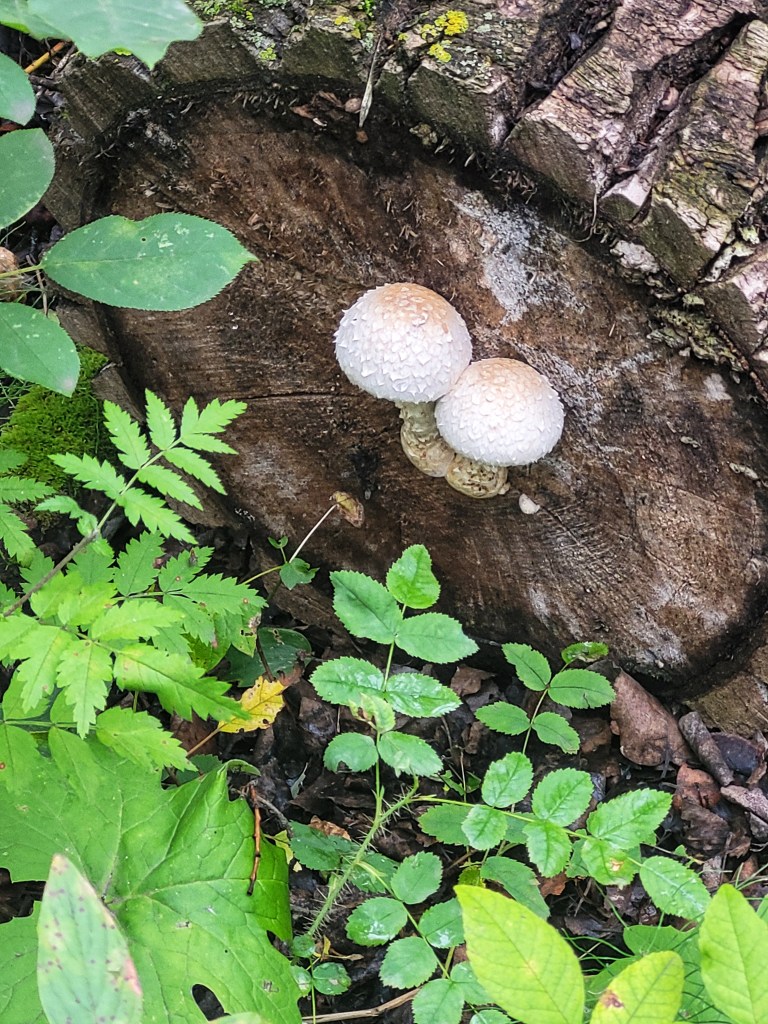
Standing Back

STANDING BACK

If this is the best you can do, citizens of the world,
I resolve to become summer shadow,
turtle adrift in a pool.
Today a frog waited in a patch of jasmine
for drizzles of wet before dawn.
The proud way he rose when water
touched his skin –
his simple joy at another morning –
compare this to bombing,
shooting, wrecking,
in more countries than we can count
and ask yourself – human or frog?

– Naomi Shihab Nye, Voices in the Air, 2018 –

Talk about prescience.
This poem was published in 2018, though most likely written months, if not years earlier. Given the poet’s Palestinian father, Naomi Shihab Nye has always had her eye on, and heart attuned to the chronic strife in her father’s homeland.

I wrote at the bottom of the poem’s page, after yesterday’s reading and in response to growing tensions and extended involvements, “Are we poised for WW3? And too, Ukraine and Russia since February 2022…” My question as reasonable as the poet’s, but I pray, not prescient.


I’ve been away for a several days, hence the pause. Writing, but not in this space. It’s nice to be back until I set off again in a few weeks. Much love and kindest regards, dear friends.

A Long Slow Walk

“I think that this sense of well-being that comes with timelessness, the sense of being at peace – it must be very, very old. And it must be like a stylus dropping into a groove on the surface of the planet and making this music. And we are, our bodies are, that stylus, and we’re meant to move at this RPM that comes with the movement of our bodies.”

Paul Salopek, “A Path Older Than Memory,” Emergence Magazine

Last week, I took the time to open, click, listen, and read the conversation with Paul Salopek and Emmanuel Vaughan-Lee, founder of Emergence Magazine, an award-winning magazine and creative production studio that explores the threads connecting ecology, culture, and spirituality. An hour later, so intrigued with their conversation, I shared it on Facebook, logged onto their follow up ZOOM conversation live streamed from the UK this past weekend, and recommended it to my local Camino group at the start of our Saturday walk.

Salopek, an award-winning journalist, embarked ten years ago on a winding course retracing the migration pathway of early humans out of Africa, across Asia, eventually to cross the Bering Strait, down the Americas to Patagonia. Both in Emergence and more fully on the National Geographic page hosting this epic photo story, he describes how his personal relationship to time and the sharing of meaningful stories has deepened while moving through the world at three miles (5 km) per hour, or as my friend Christina Baldwin writes, “at the pace of guidance” and story.

“And I thought this would be an interesting experiment in slow storytelling or slow journalism, a way of slowing down my methodology and immersing myself in the lives of the people who inhabit the headlines of our day. So it’s been kind of a giant kind of a planet-sized studio to think about how stories are connected—not just kind of mega stories, say the climate crisis or human conflict, but our individual stories as well. And one way that I’ve found that does it really well is by slowing myself down and walking from person to person. That’s basically the premise of this. It’s a listening project where the destination almost always is another person.”

Paul Salopek, “A Path Older Than Memory,” Emergence Magazine

I love to walk. I have been walking more or less every Saturday morning in Edmonton’s famed river valley with my local chapter of the Canadian Company of Pilgrims, a “yes” I’d said several years ago on a wintry morning in January, and easily the most significant “yes” I’d said that year. What initially started as one member’s quest to train for his first Camino de Santiago trek, where walking was the raison d’etre, has evolved into a time for us to walk, be in community, and enjoy coffee at local cafes. True to my style, some Saturdays find me more extraverted, engaged in a series of edifying conversations along the path, while others, like this past weekend, ask of me to surrender to the silent restorative of its sunny, almost balmy morning. Stopping for a moment near the trail end, I smelled and felt those faint stirrings of spring, in time with this week’s celebration of Imbolc, the first day of spring in Celtic tradition.

I didn’t grow up in a walking family. Though recently it registered that I may have “inherited” an affinity for trekking from my father, who as a young teen at the conclusion of WWII, found himself alone, displaced, and dodging prisoner of war camps in Germany, taking months to walk his way home to the Black Forest where his mother held her breath waiting for his safe return.

Germany’s Black Forest

I used to regularly hike in the Rocky Mountains, though it’s been well over a decade, and I miss those outings with my women friends. Since Covid, I’ve made two long distance walks, the Portuguese Coastal Camino to Santiago de Compostela, Spain in May-June 2022, and most recently, the Via di Francesco, from Assisi to Rome in September-October 2023. I’ve discovered, like Paul, and many of us, my pace is about 3 miles (5 km) per hour…even when sauntering, my preferred way of moving (when I’m not kitchen dancing.)

“You do not have to, you know, make your way to the jungles of northeastern India to experience this thing. I think it’s there for you. And it might be a little tougher to see and experience if it’s part of your daily life, whether you’re living in a small town or a megalopolis or anything in between, because, as usual, if we stay sedentary, we get scales over our eyes, and we stop realizing the wonders of the everyday world around us because they become over familiar. But walking peels those scales off and allows you to rediscover the extraordinariness of so-called ordinary things. And that includes a walk through your town, a stroll out into the fields, or a park near your house—indeed, your backyard, if you choose to go micro, right?

Paul Salopek, “A Path Older Than Memory,” Emergence Magazine

Walking with Annie was an invitation in peeling off the scales. As I wrote in a post during what would be her last days, “Walking Annie is no longer exercise. It’s fresh air, the gift of being outside noticing life around us.” Admittedly, still missing her, it takes a bit more presence and intention to notice life around me, scales off, without her. And yet, more often than not, I experience what Paul Salopek describes as an:
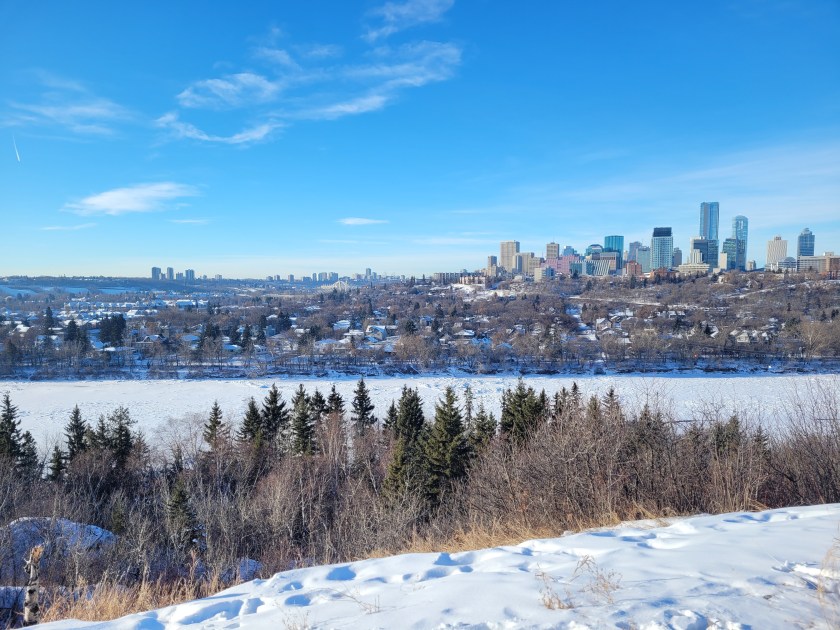
“astonishing internal metronome that’s built inside of us, inside of our body, that distinguishes us from almost every other animal…this goodness that’s kind of humming in our bones, waiting to be let out.”

Listening and reading and looking at Paul’s journey, I’m stoked to envision my next long, slow walk, wondering what memories will be evoked, people encountered, stories conjured, bones set to humming, all waiting to be let out?

Much love and kindest regards, dear friends.